Machinery & tooling
Most of the difference between a good floor and a bad one is decided by machines you never see.
Dust-free sanding is a claim about an extraction system. Matching a repair is a claim about a moisture meter. A stair that does not move is a claim about anchorage. These pages turn those claims into things you can check before you sign anything.
What this section is
A specification of what each class of work requires, written so you can hold any quote — ours included — against it. It is not an asset list, and it does not claim a particular machine sits in our shop. Where our published method already implies a capability, the page says which practice it follows from and links it.
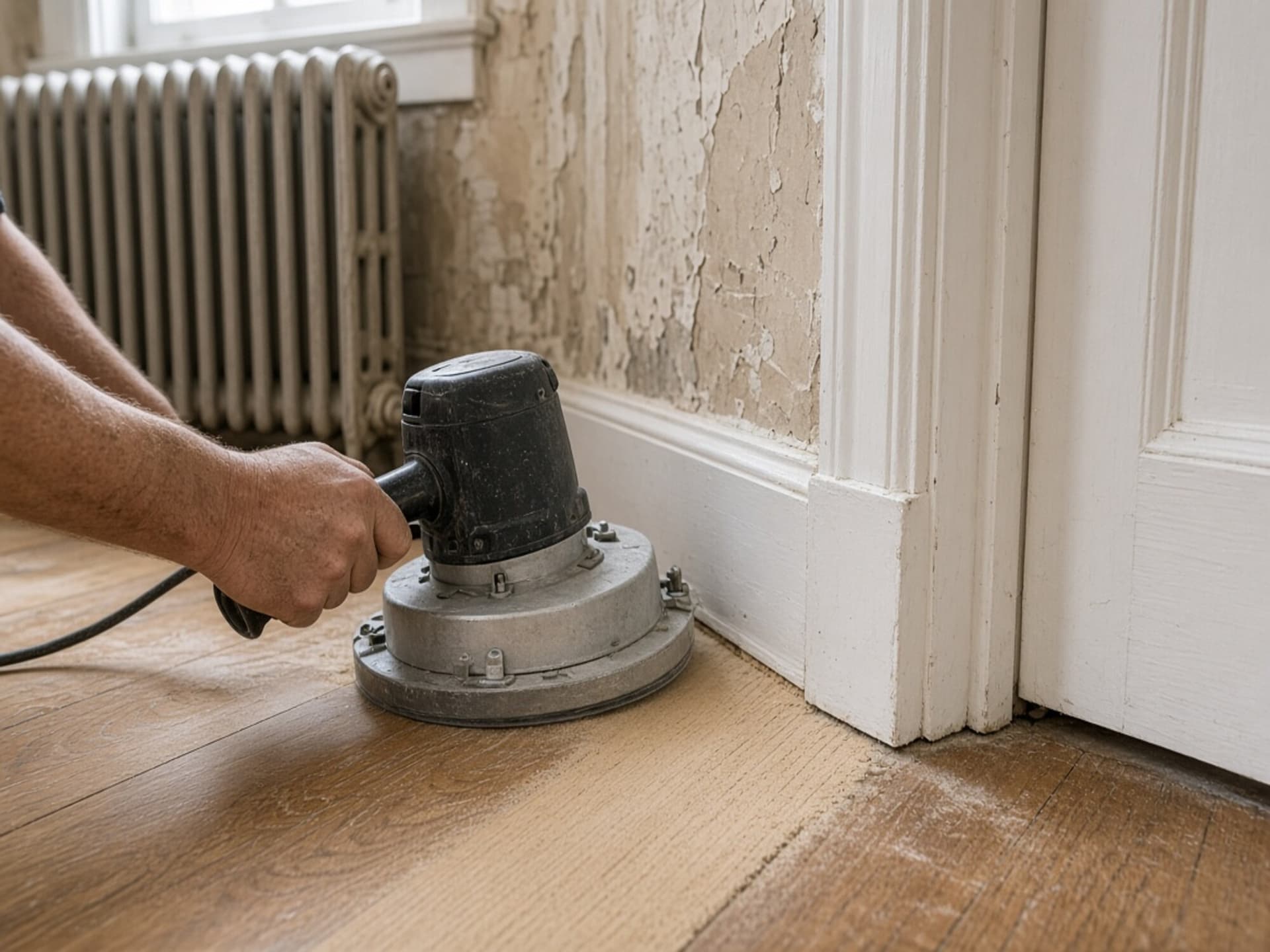
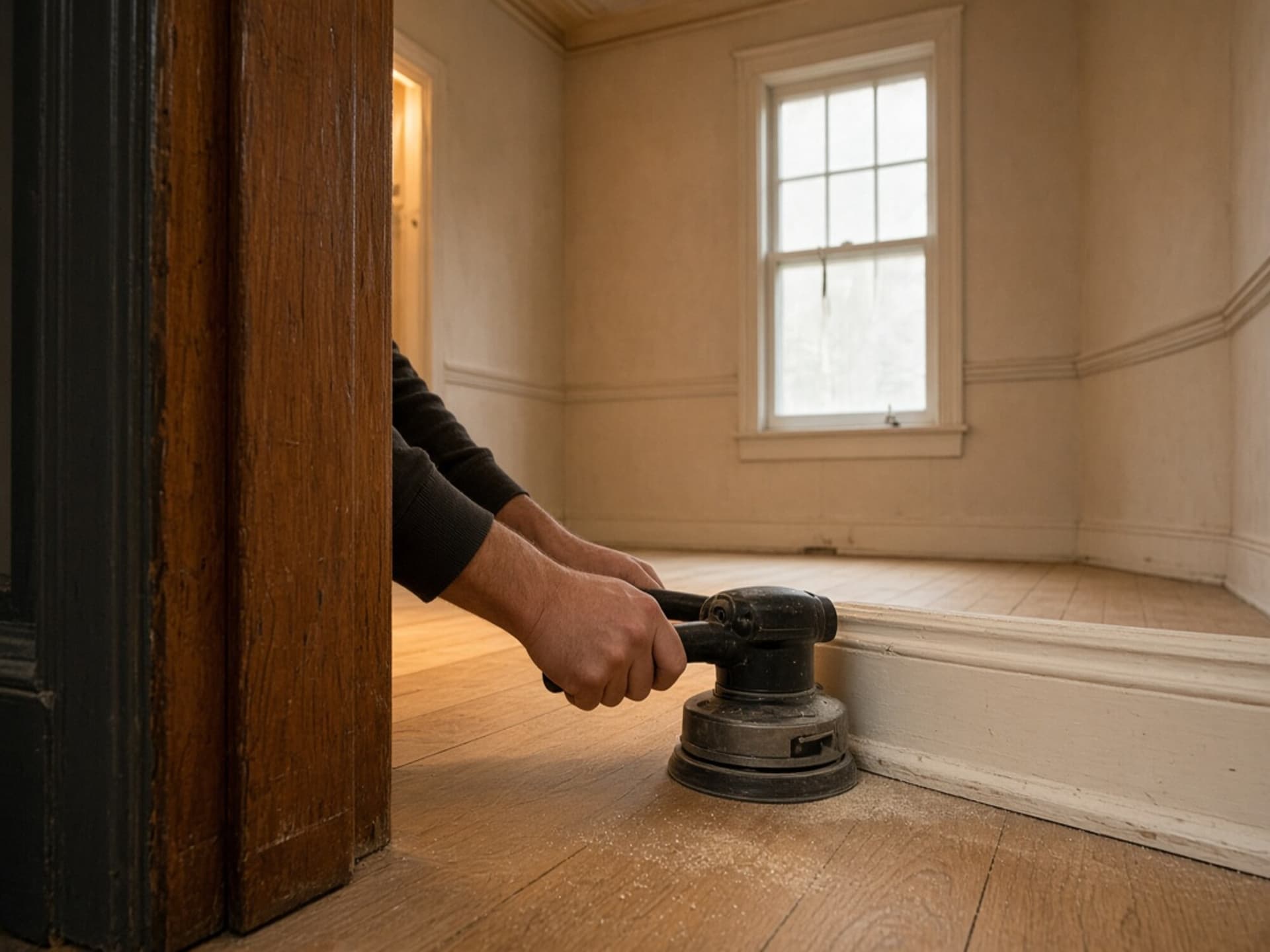
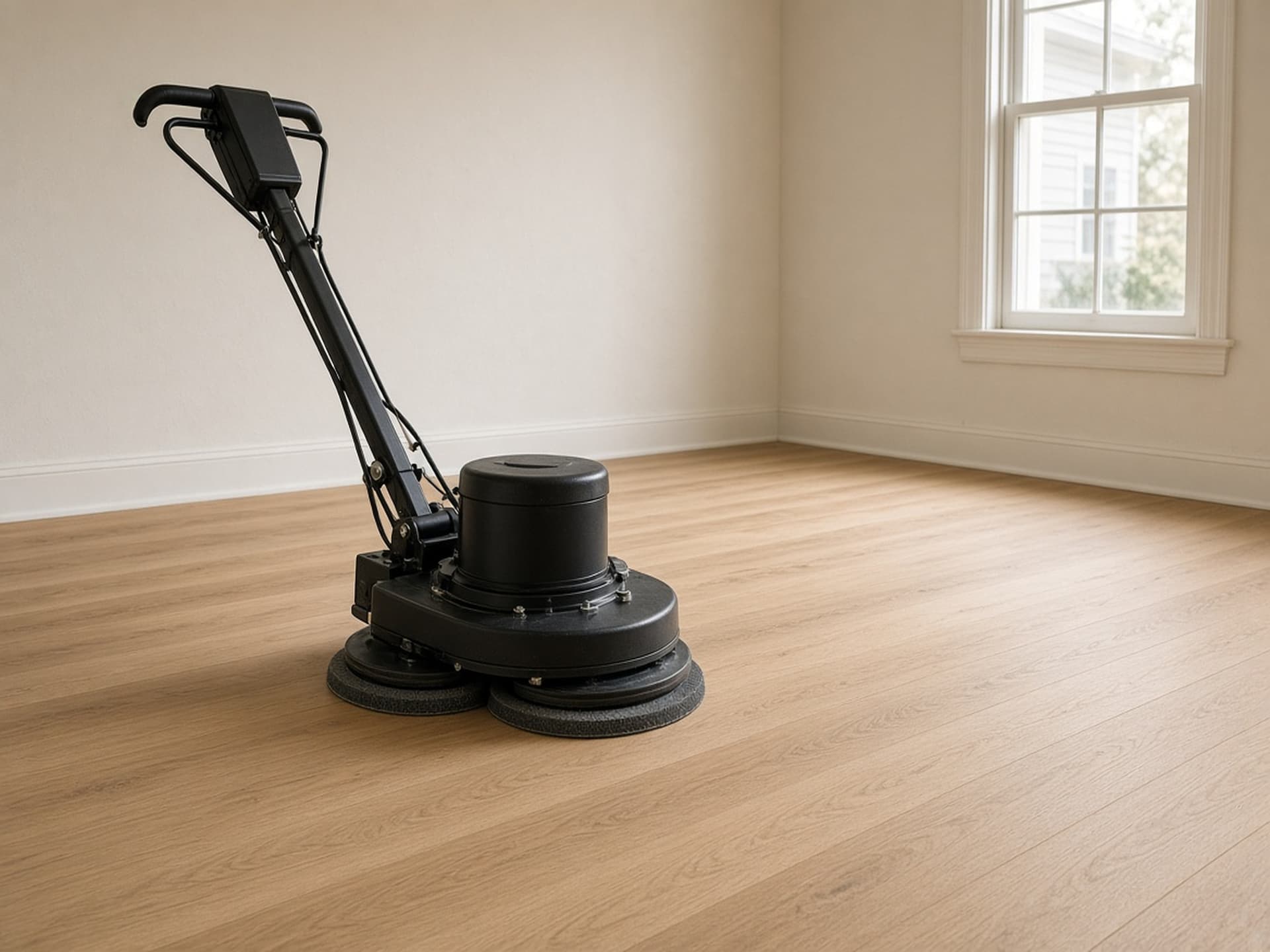
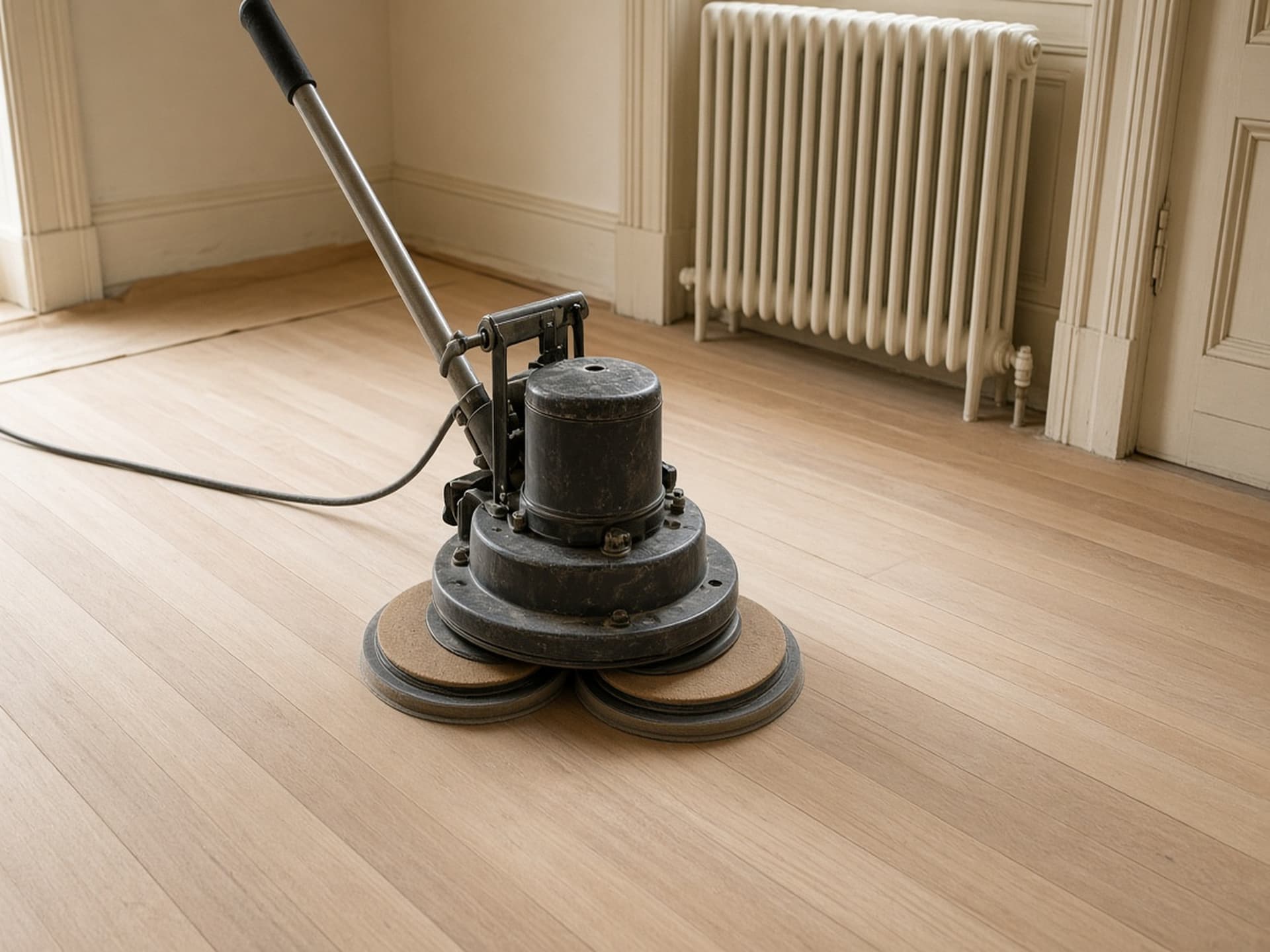
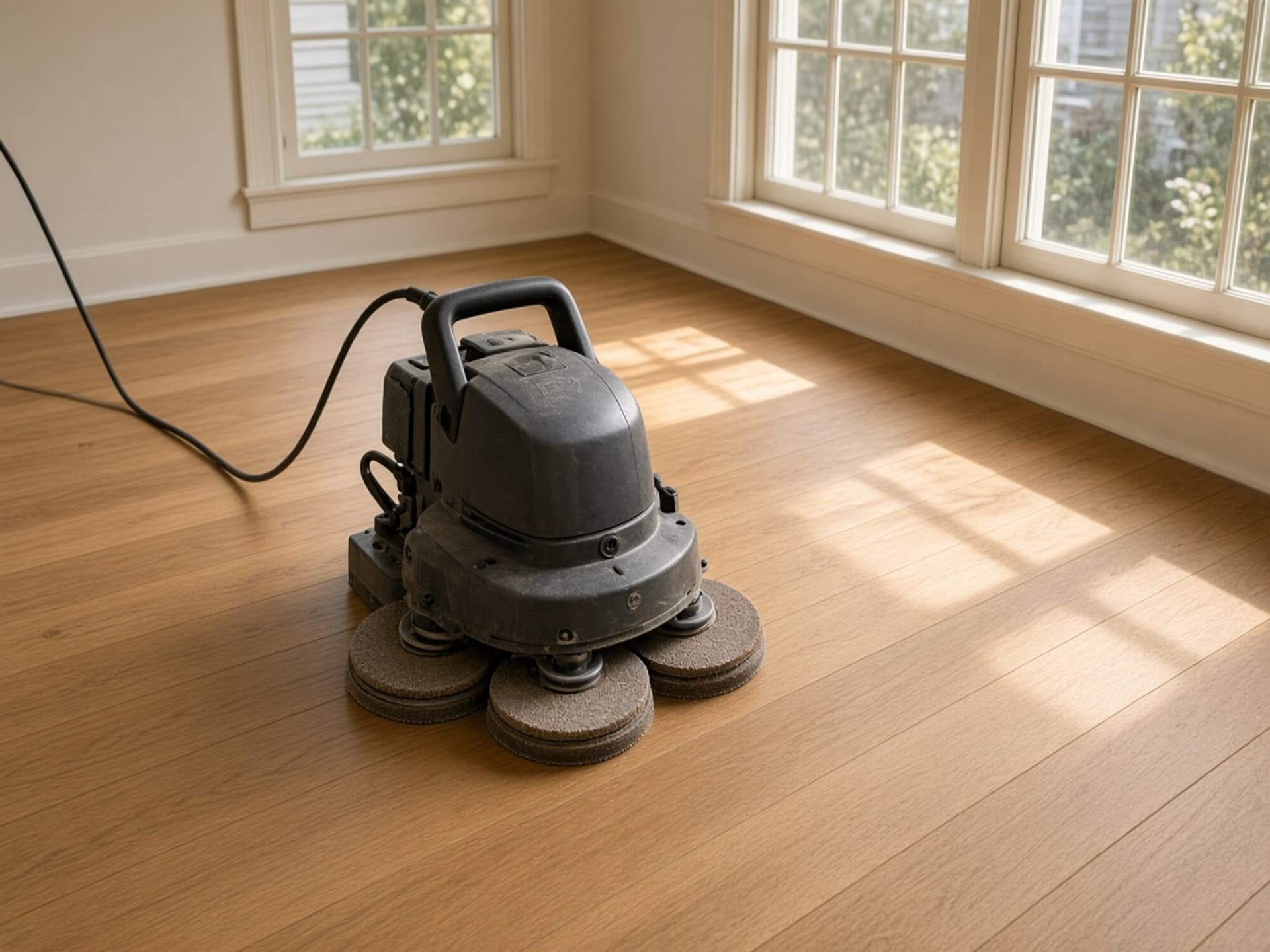
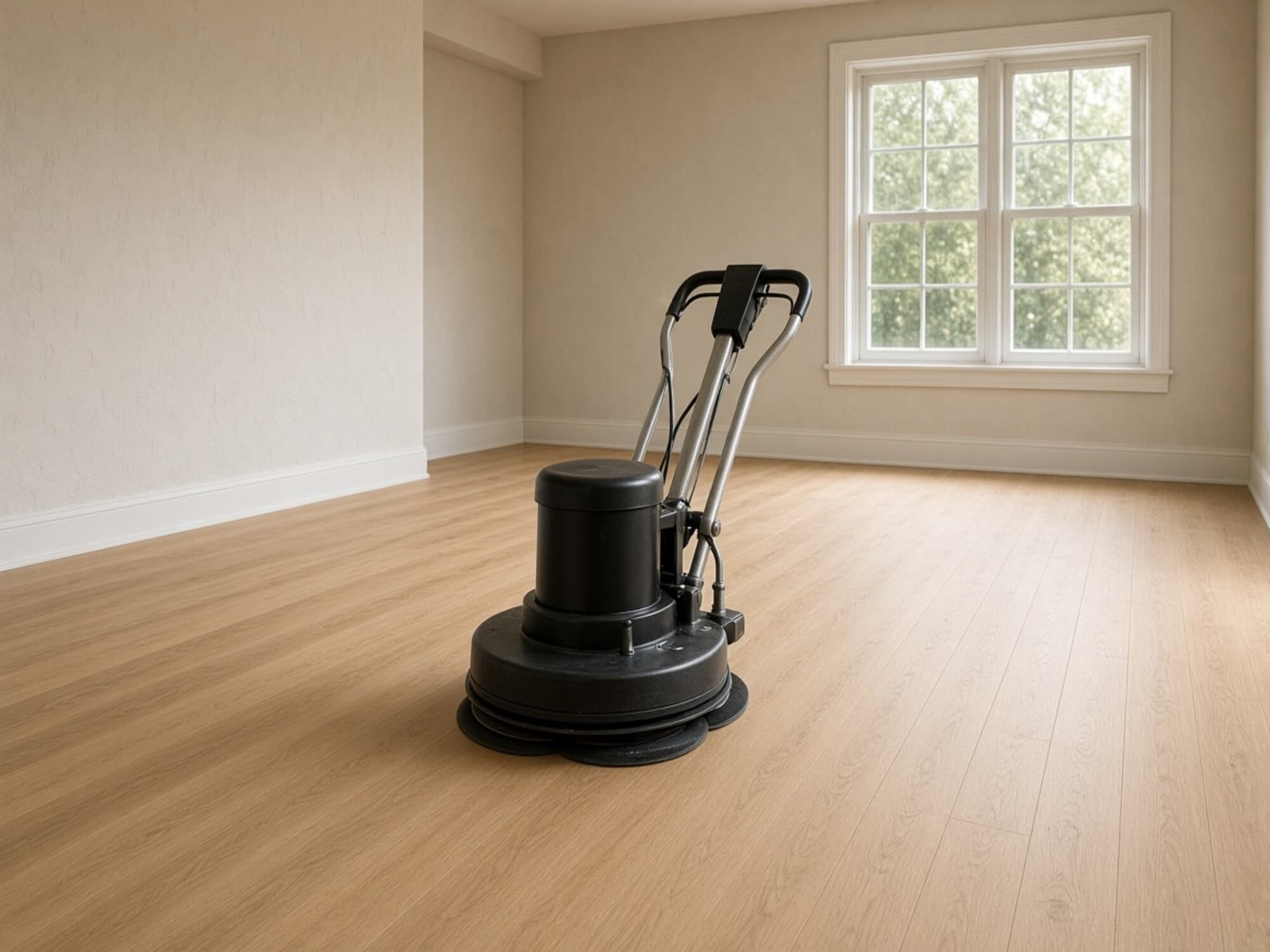
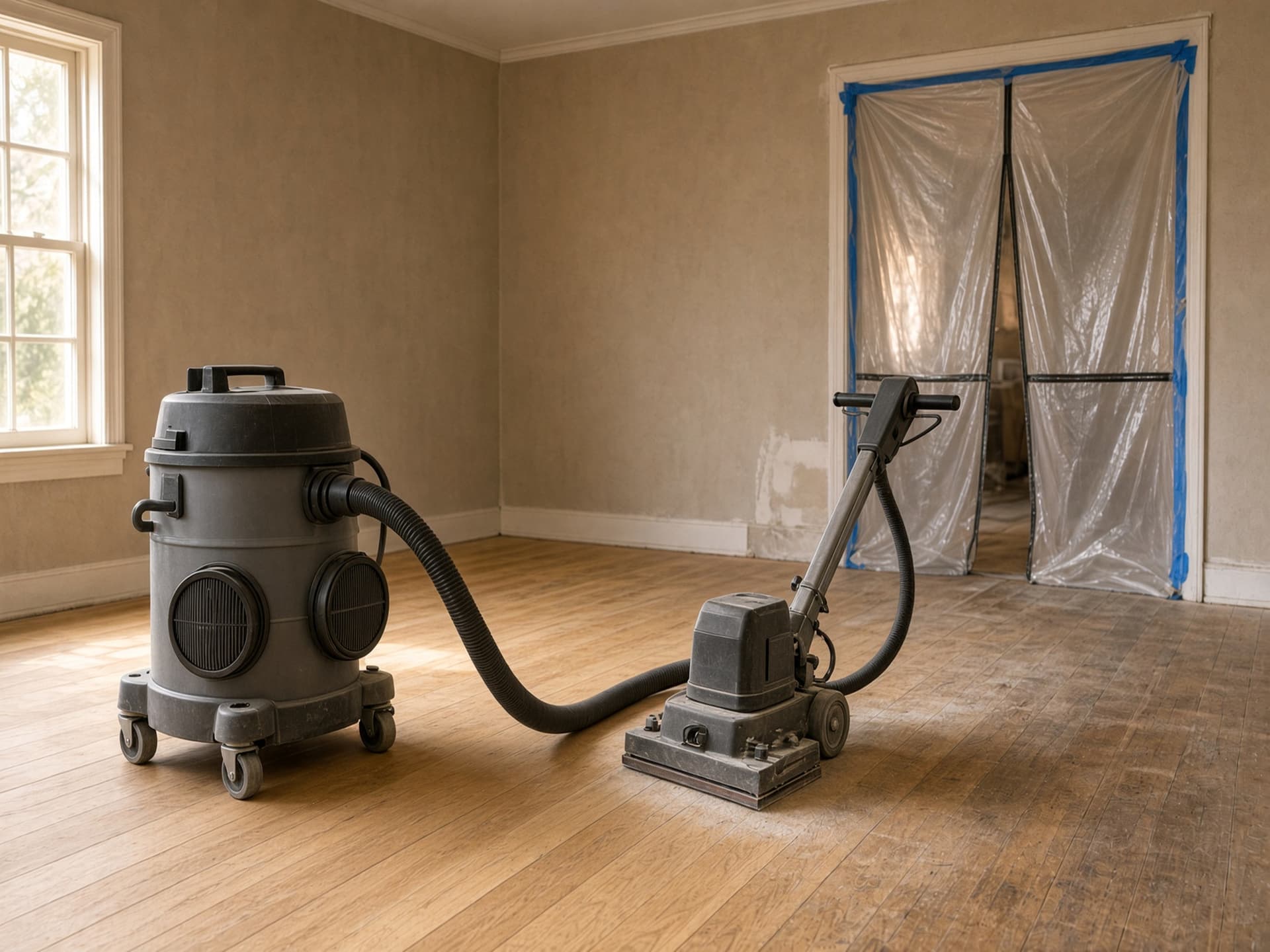
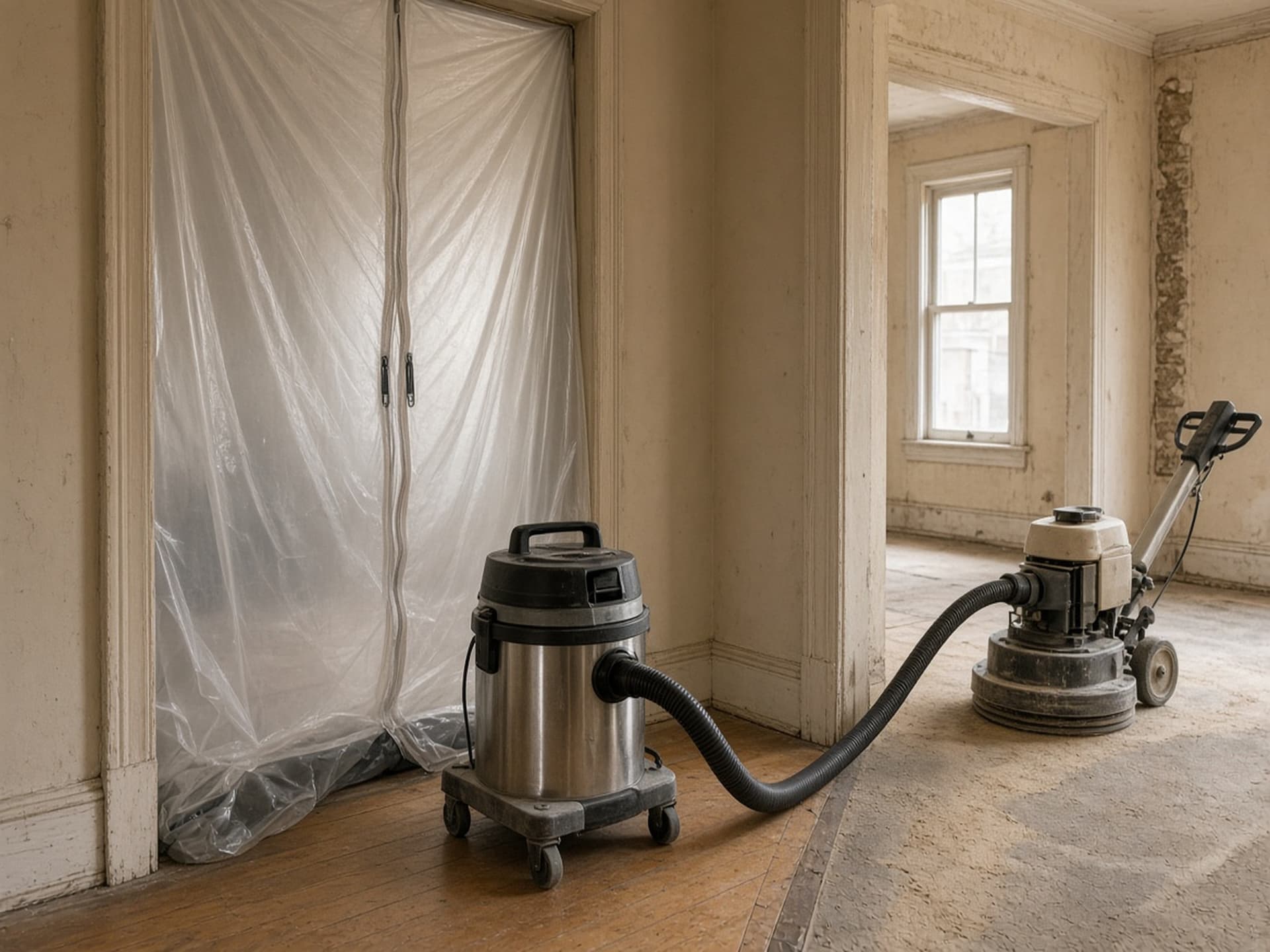
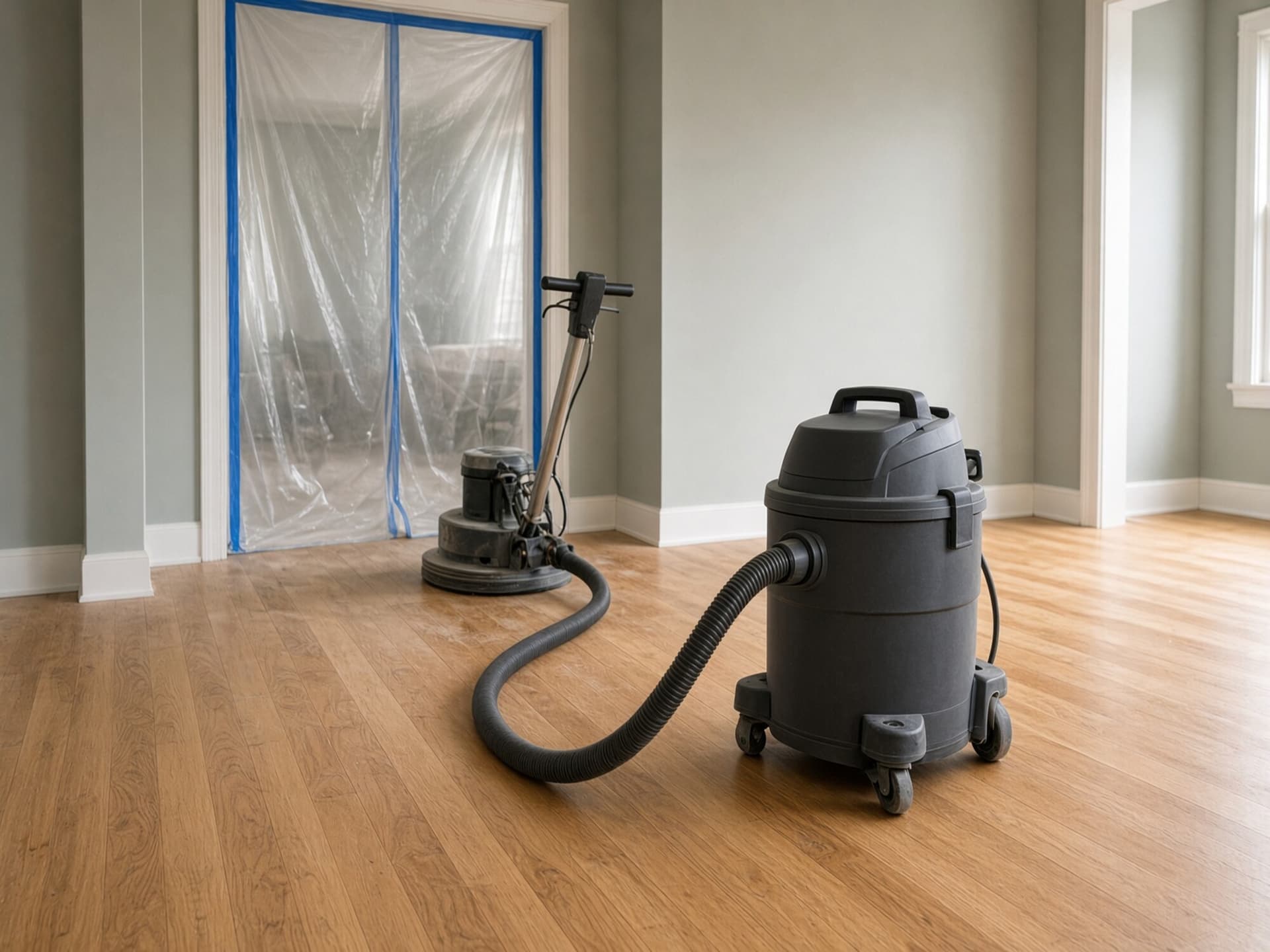
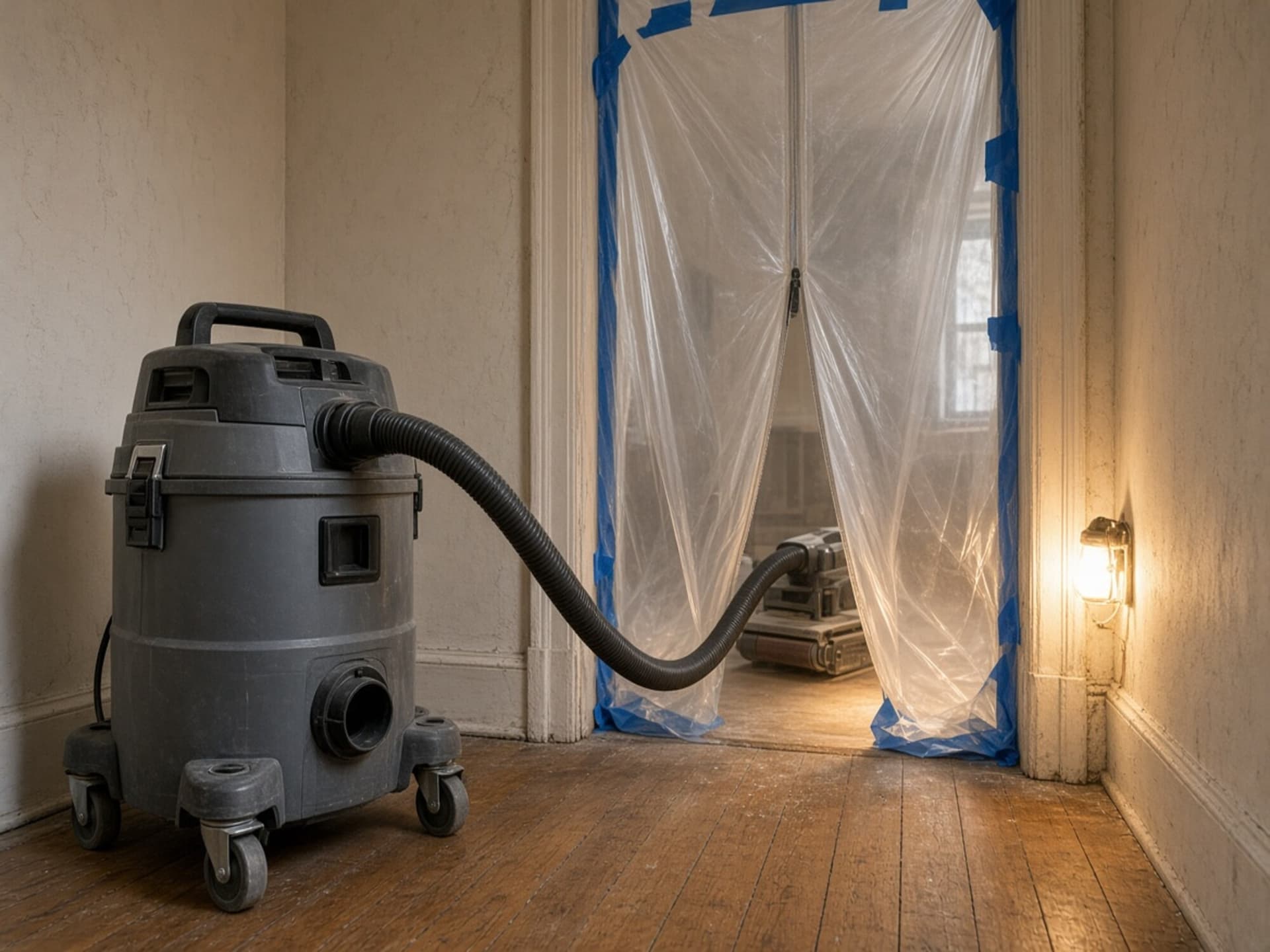
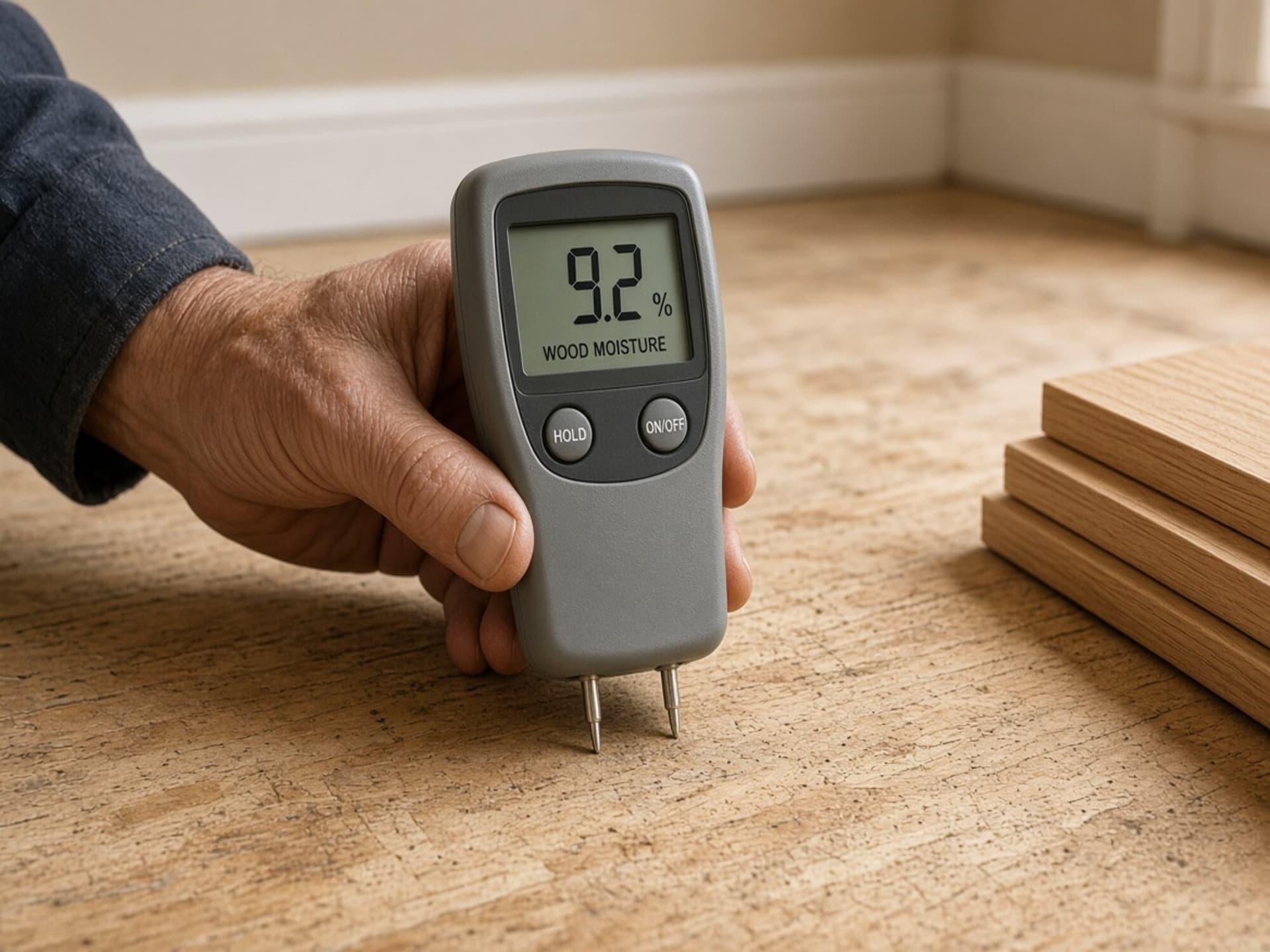
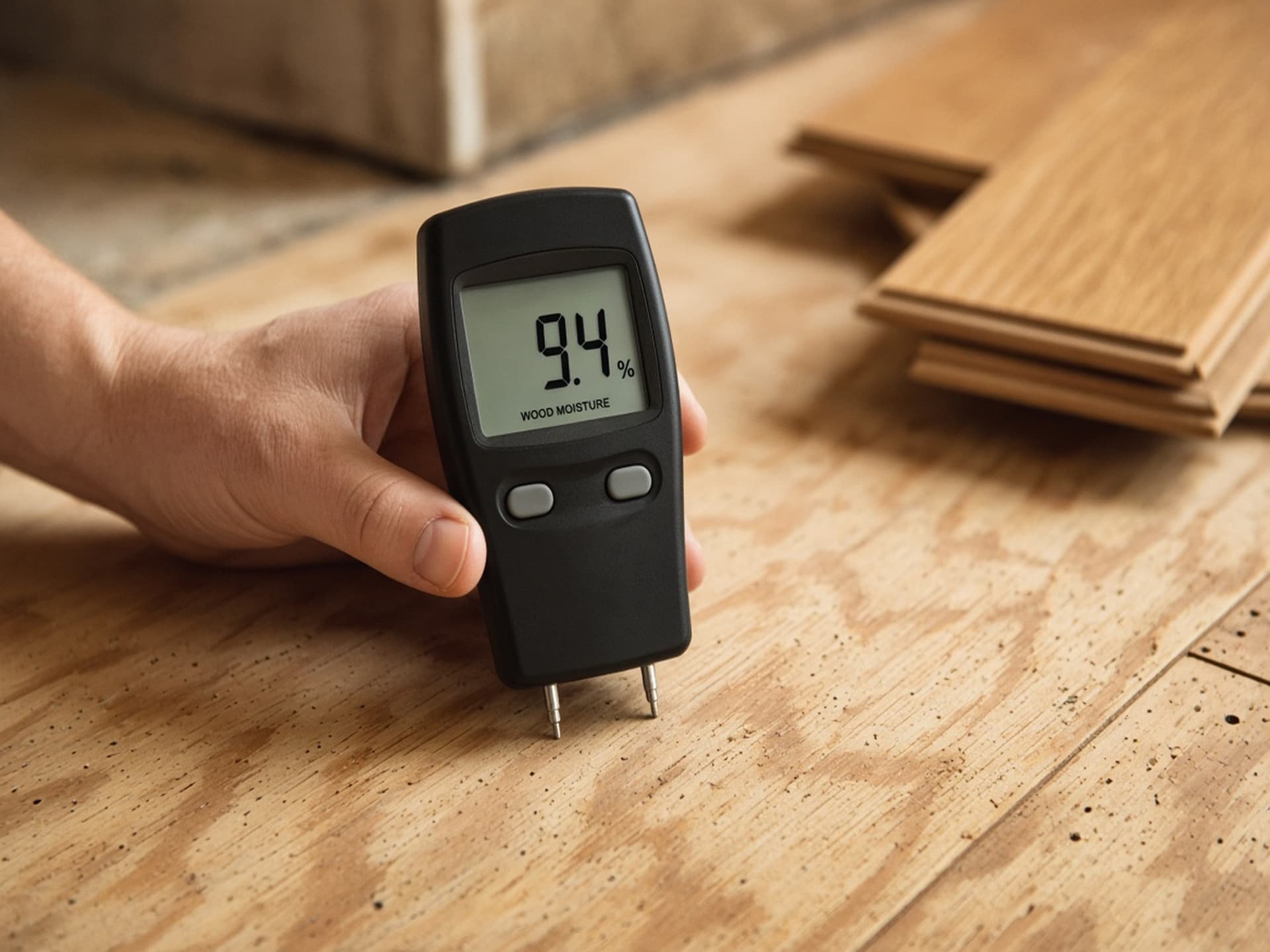
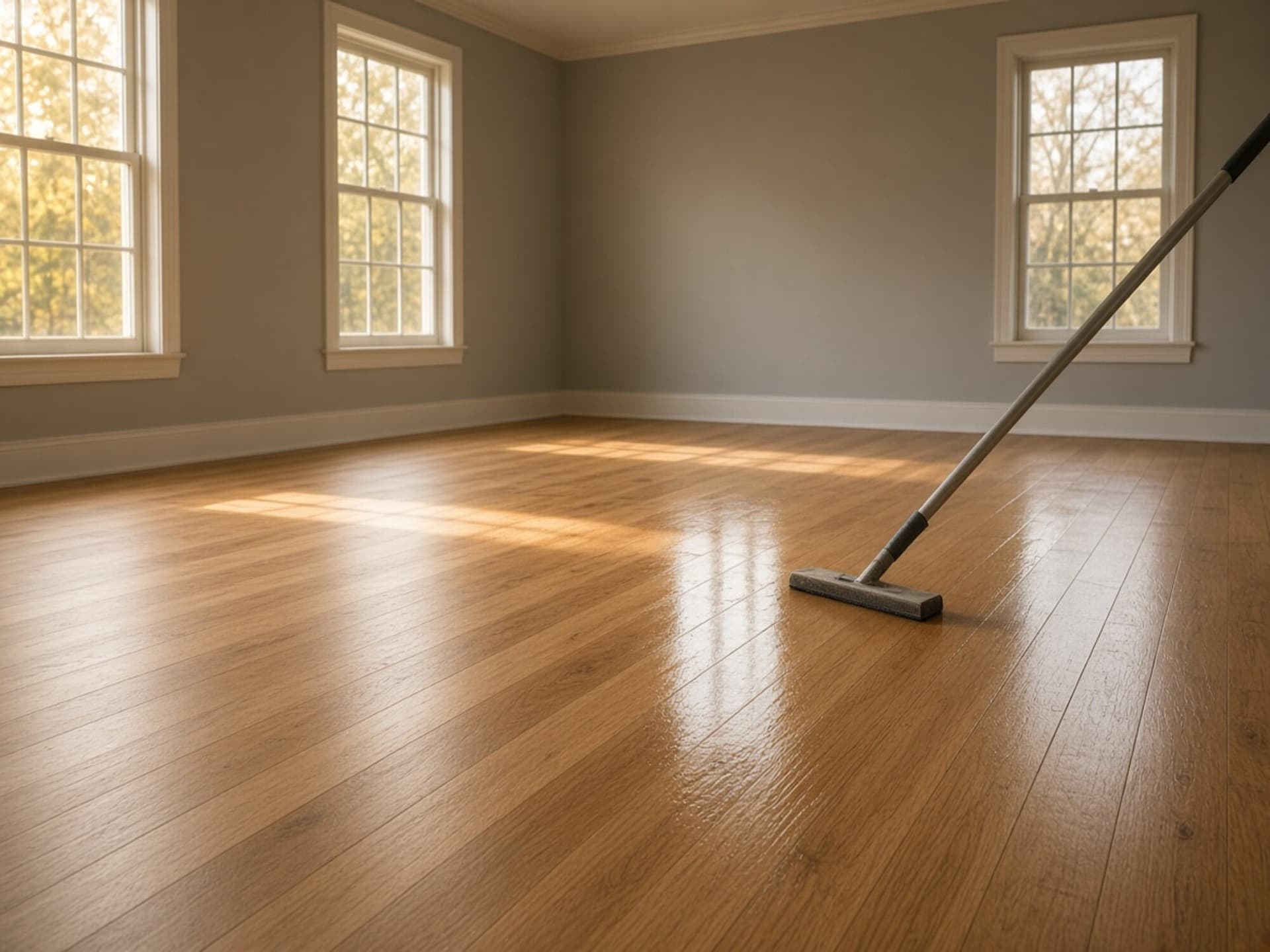
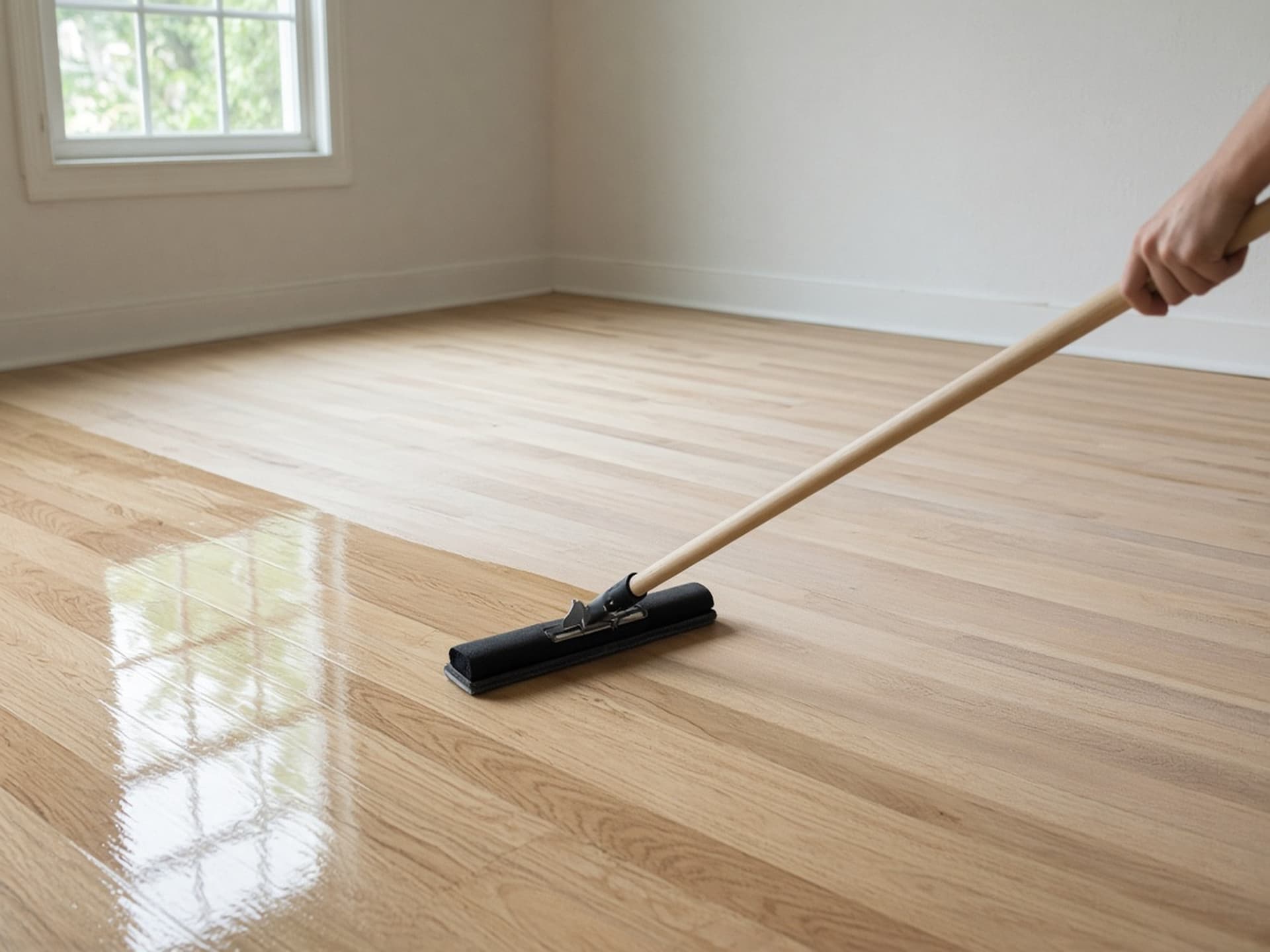
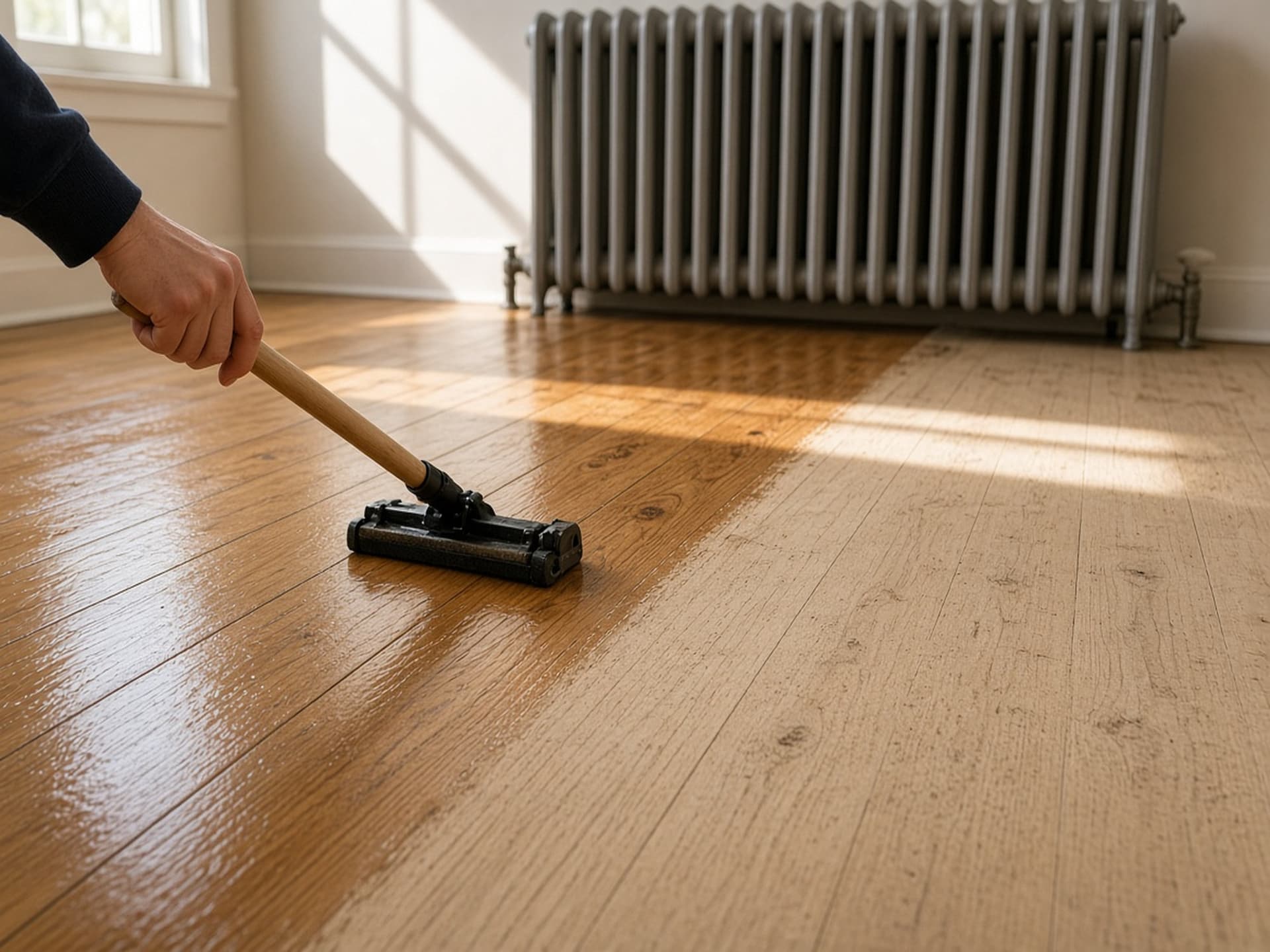
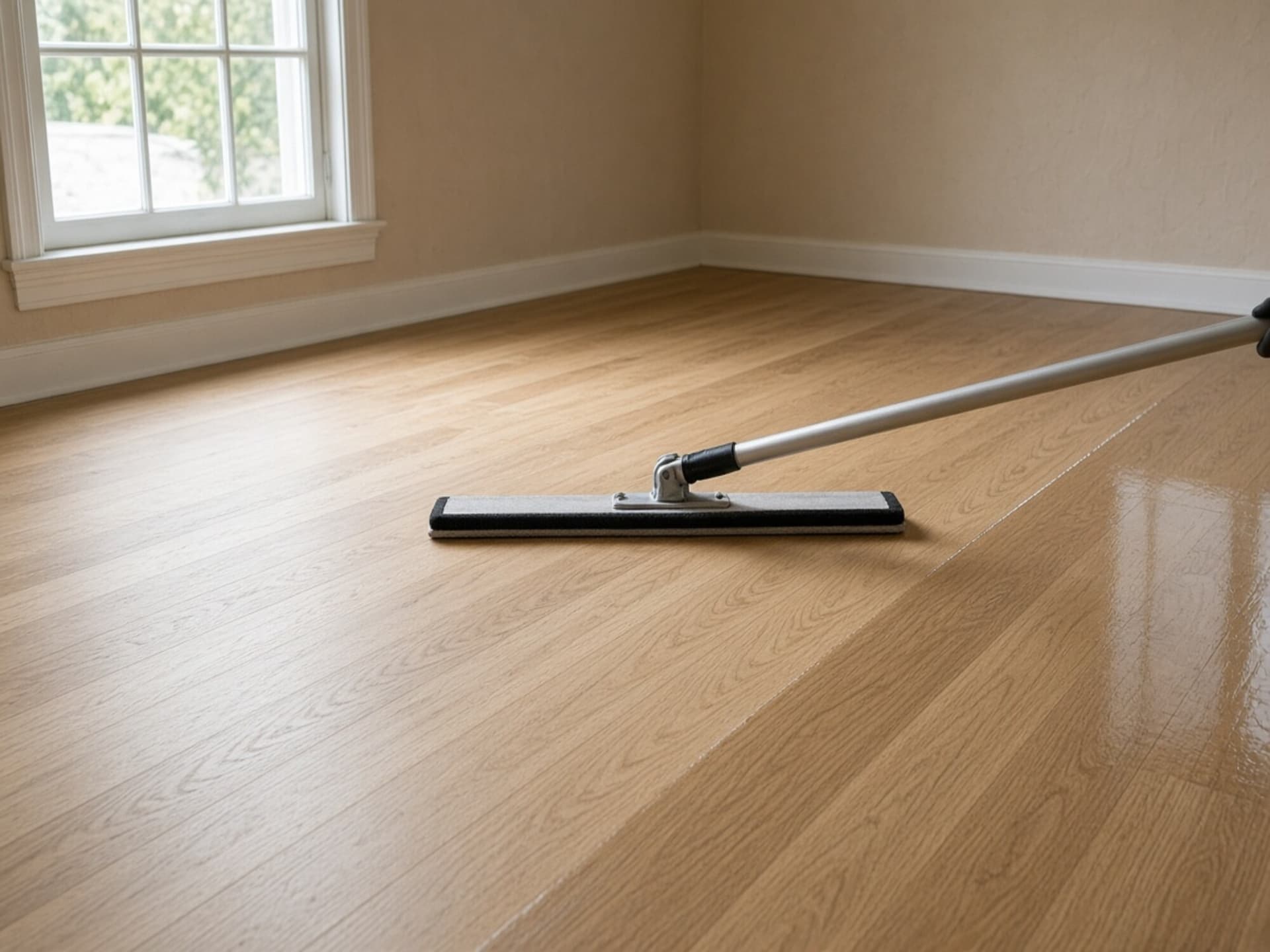
Commissioned illustration of the machine class, not a photograph of our own equipment.
What bad work looks like
Six defects, each one caused by a machine that was missing, worn, or used wrongly. Every one of them is visible to someone standing in the room, in the right light, if they know what they are looking at. Follow any of them to the equipment that prevents it.
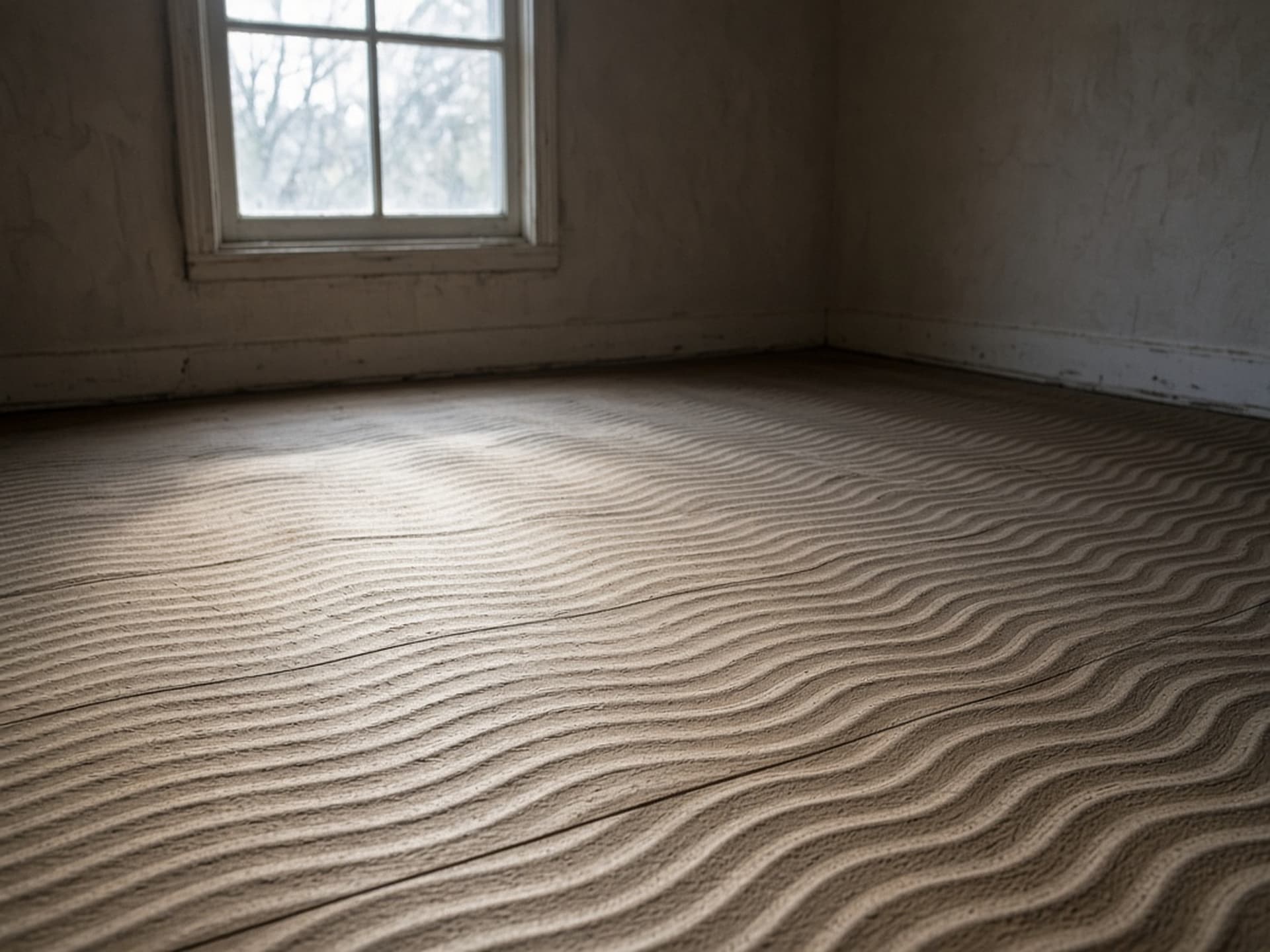
Chatter marks
Regular parallel ripple across a sanded floor, thrown into relief by low light from a window. Exaggerated here so it reads at this size; on a real floor it is subtle until you get your eye down to it.
Prevented by: Belt sander (the big machine)
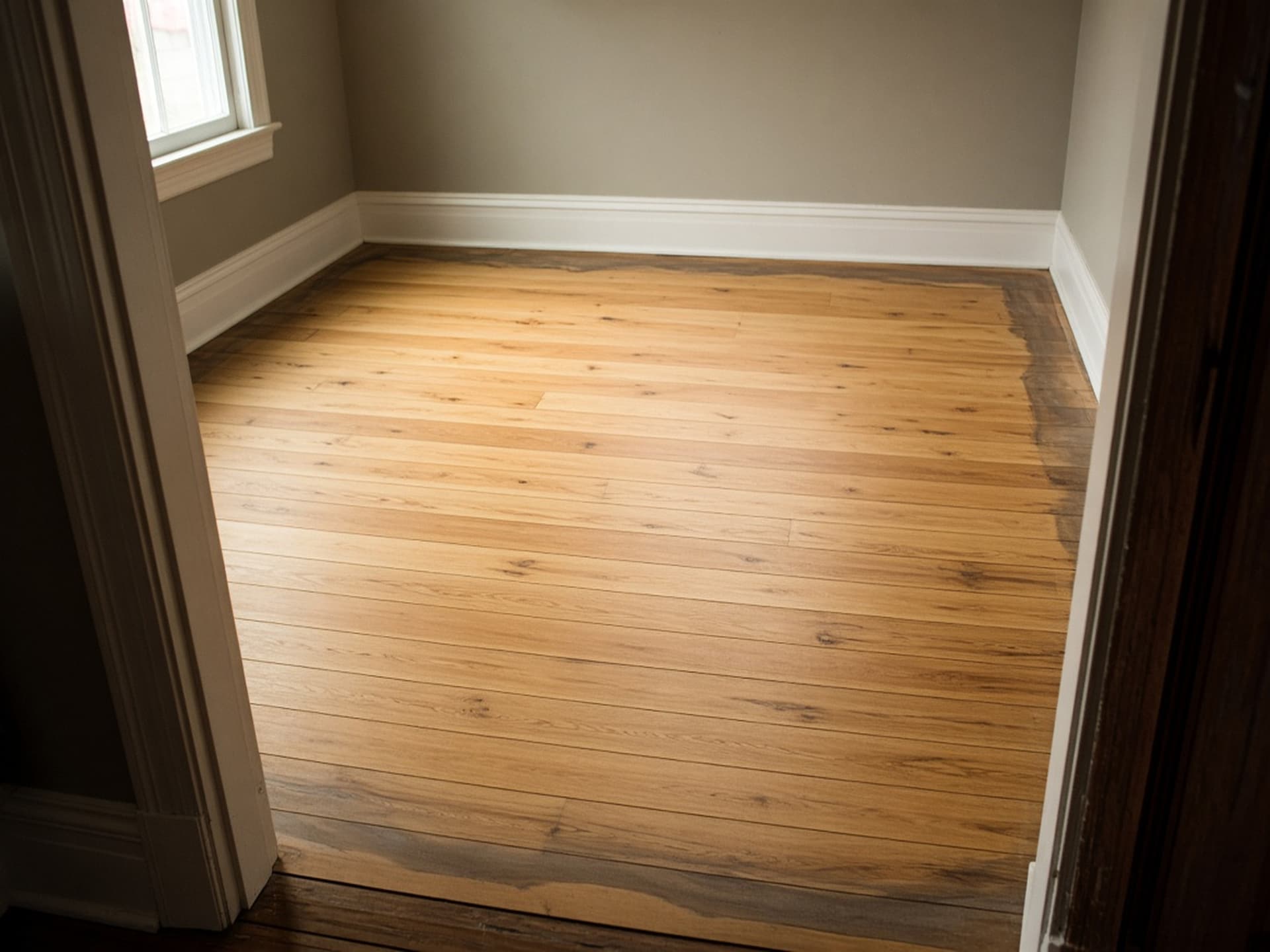
The perimeter halo
A refinished room seen from the doorway with a visibly darker, cloudier band running around the perimeter against the baseboard — the edging failure, and the first thing visible from a hall.
Prevented by: Edger
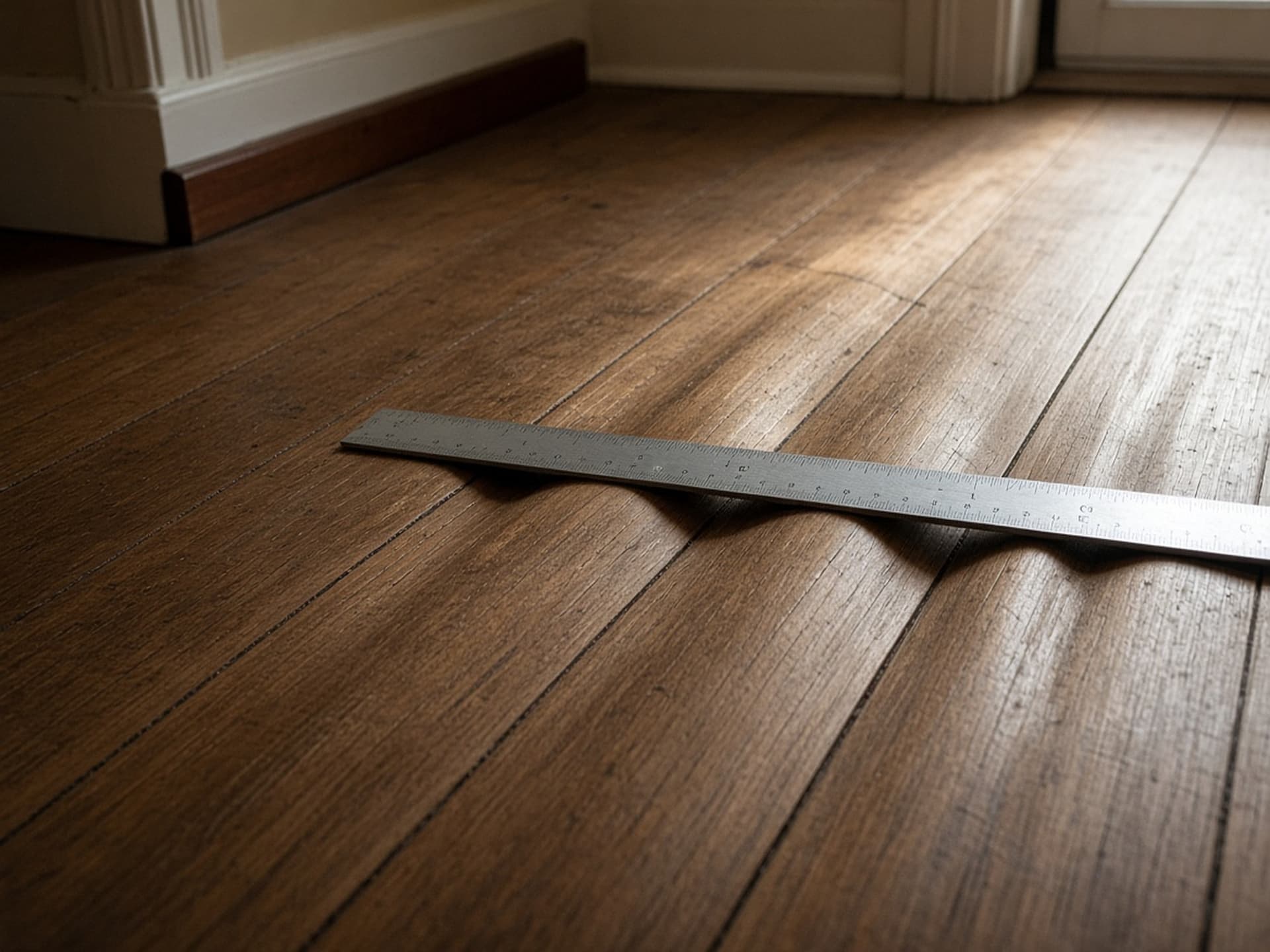
Cupping
Solid boards visibly cupped — edges standing higher than centres — with a straightedge laid across them showing the gap. This is what a floor laid over a subfloor that was never measured does in month four.
Prevented by: Moisture meters and hygrometers
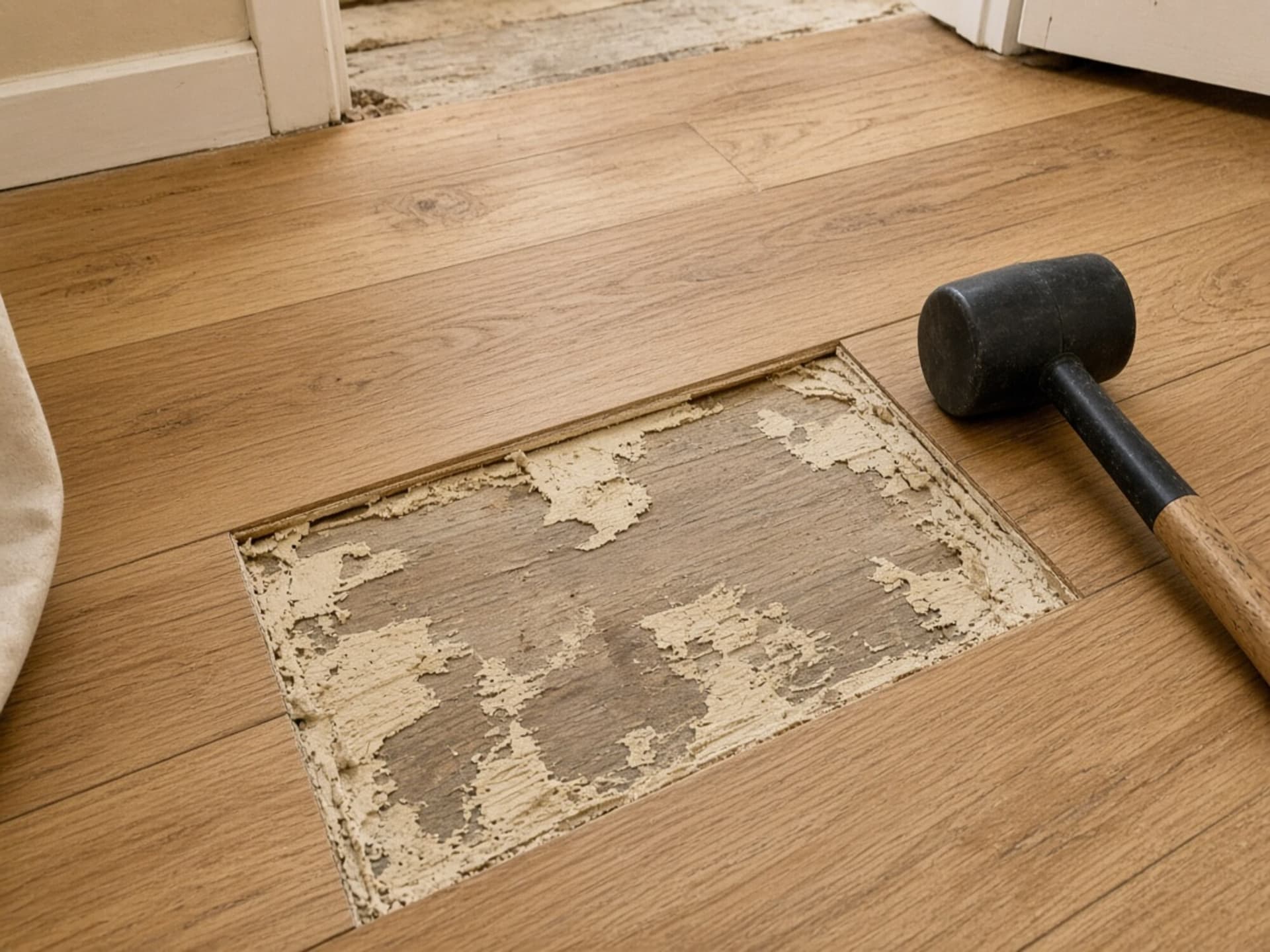
Hollow spots
A lifted board over a patchy adhesive bed, bare subfloor showing through the gaps. The floor above this sounds hollow underfoot and eventually releases.
Prevented by: Adhesive system and notched trowel
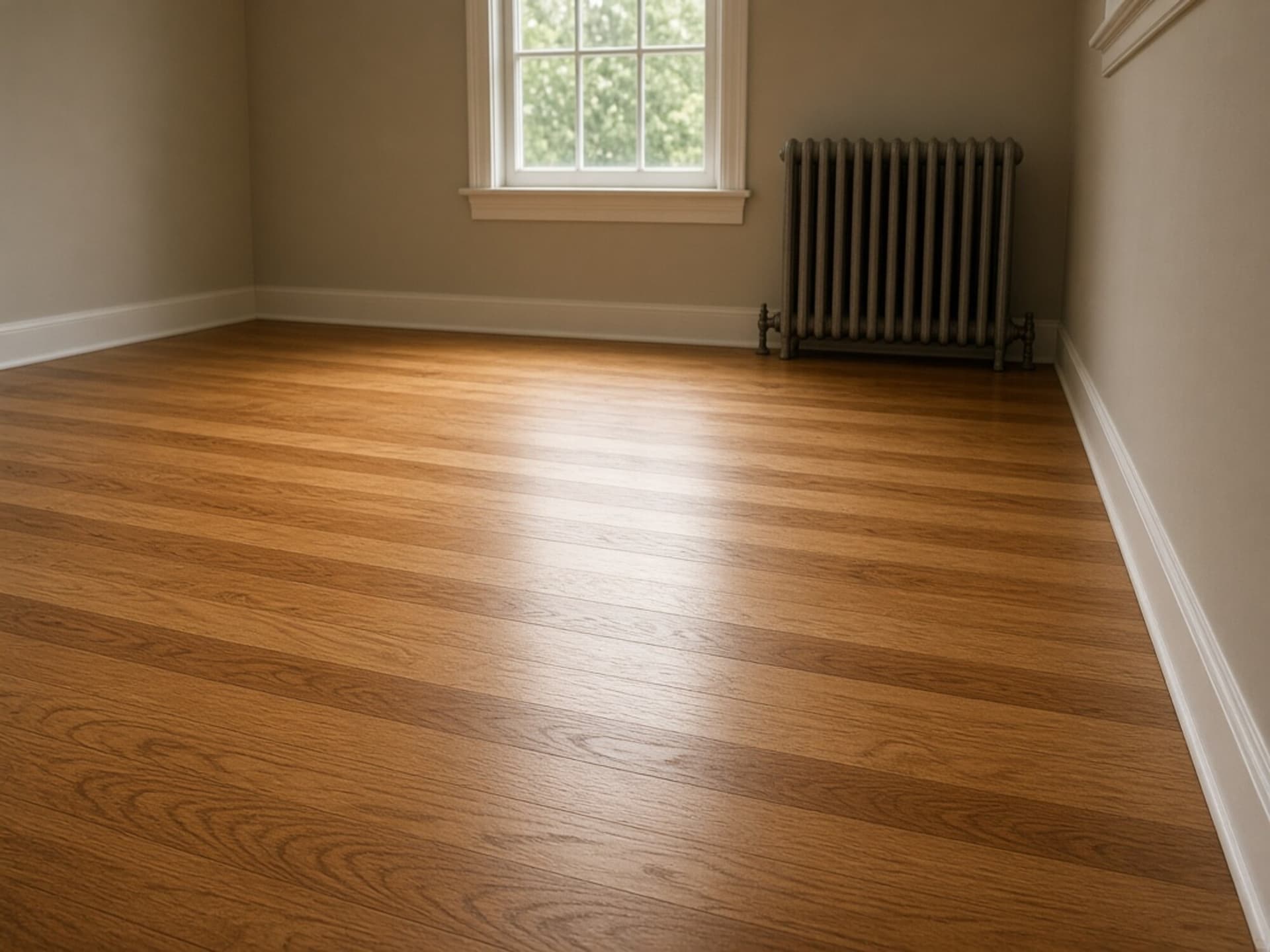
Lap lines
Streaks and stripe boundaries in the sheen of a finished floor, where one pass dried before the next was joined to it.
Prevented by: Finish application: T-bar, roller and cut-in
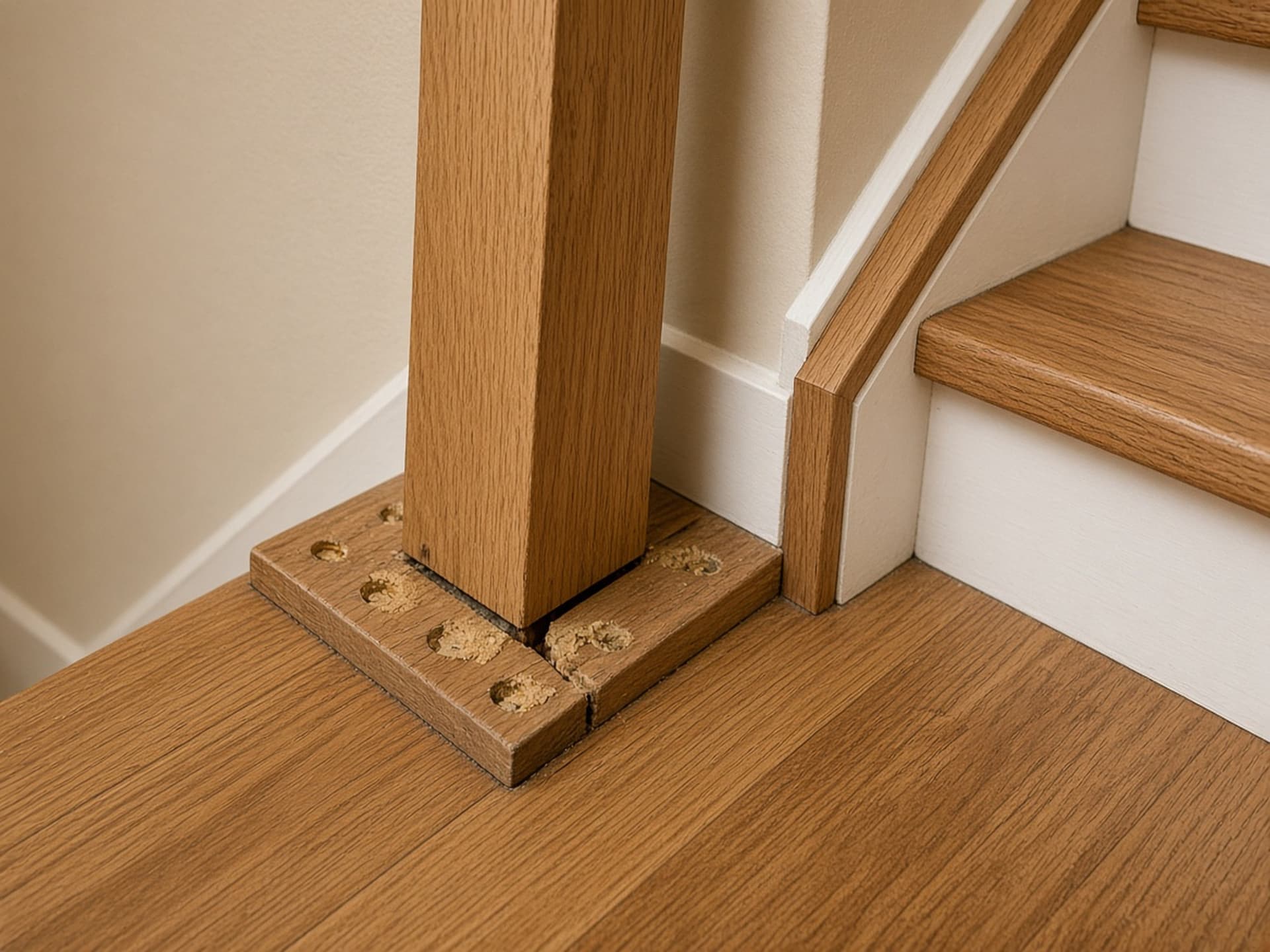
A newel that moves
A newel post surface-fixed through a finished floor rather than anchored into structure, with the joint already opening at the base.
Prevented by: Railing anchorage: through-bolts and structural fixing
Commissioned illustration of the defect, not a photograph of a job we were called to.
Sanding
The machines that take a floor back to bare wood.
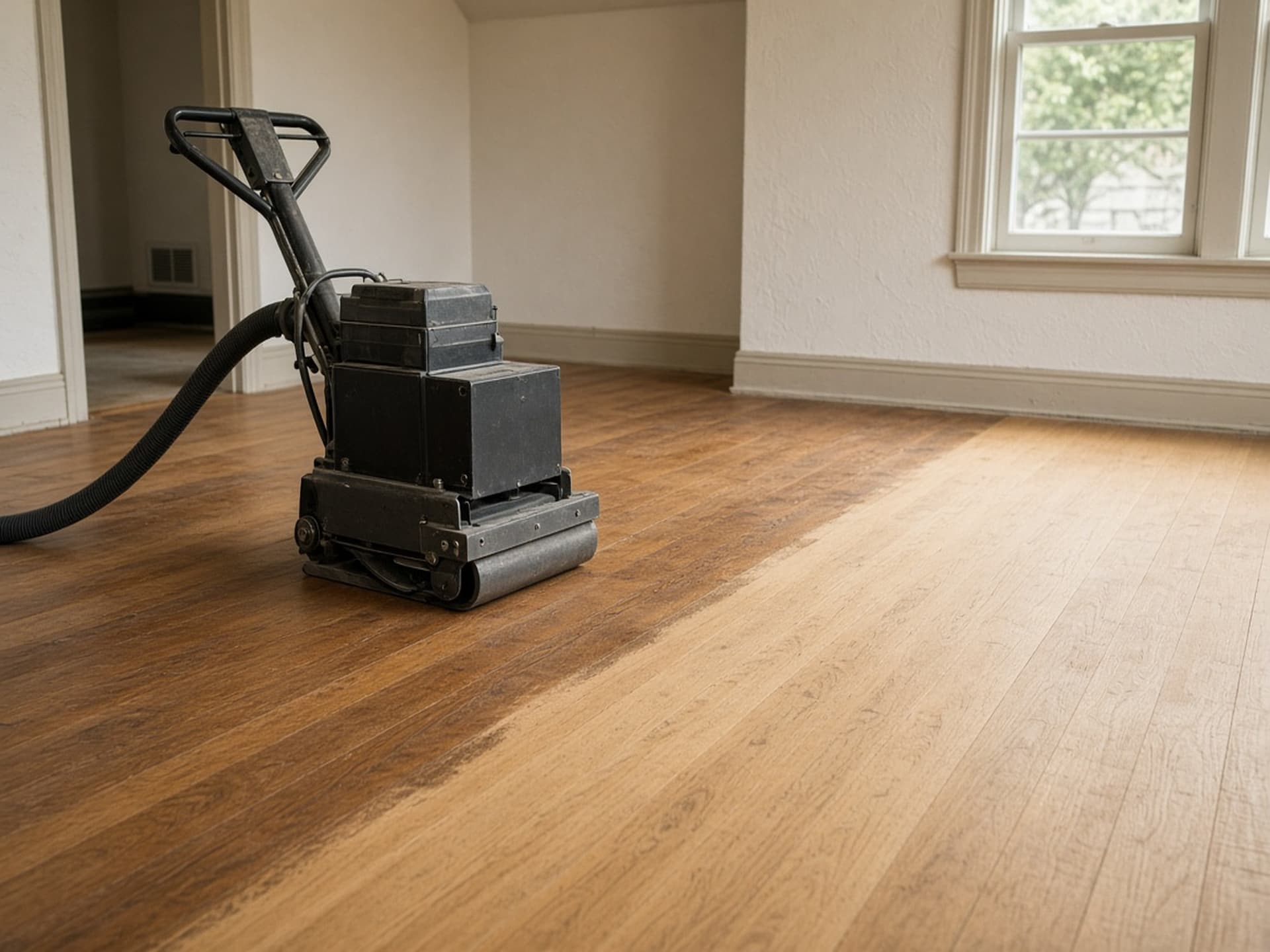
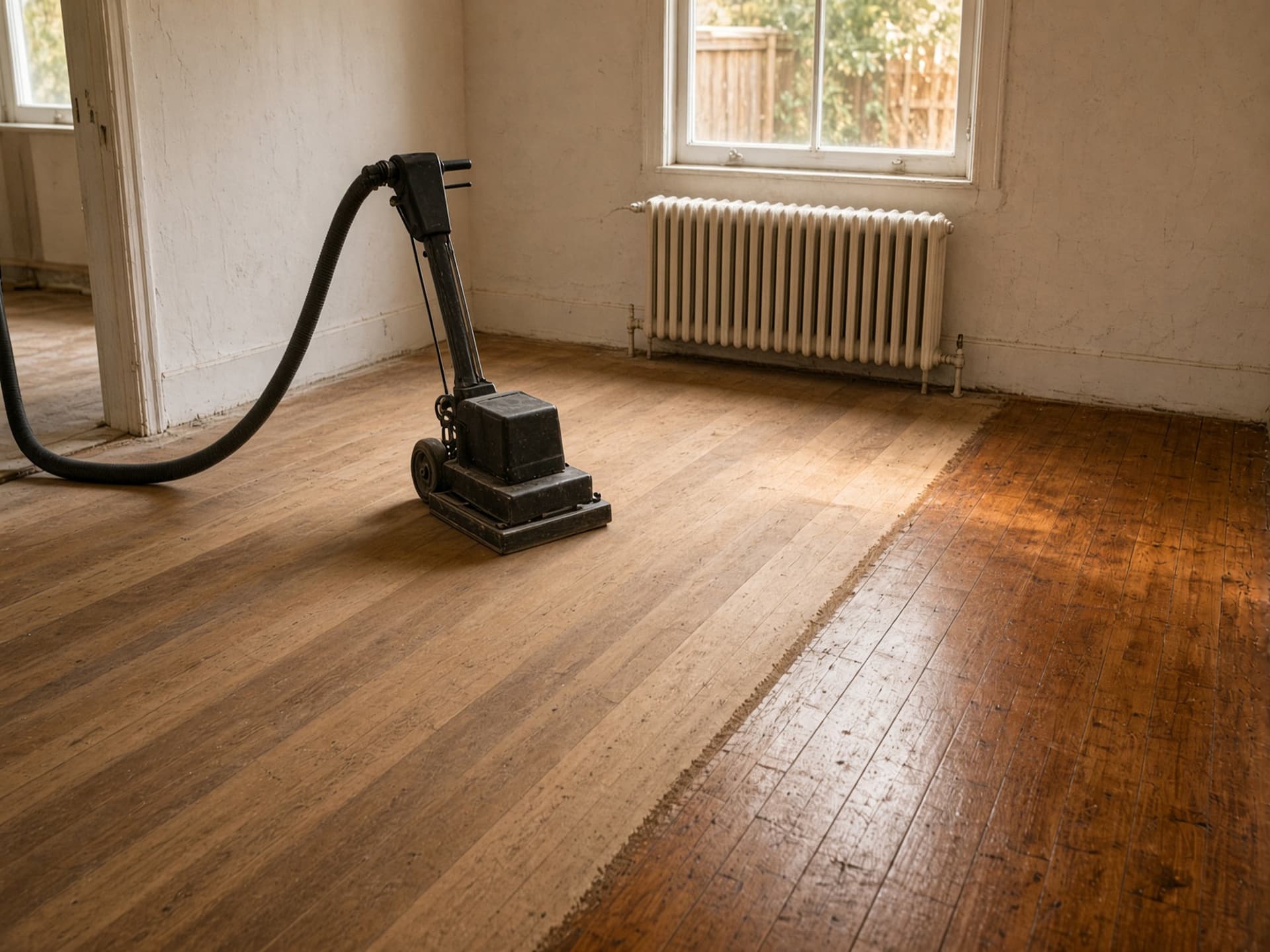
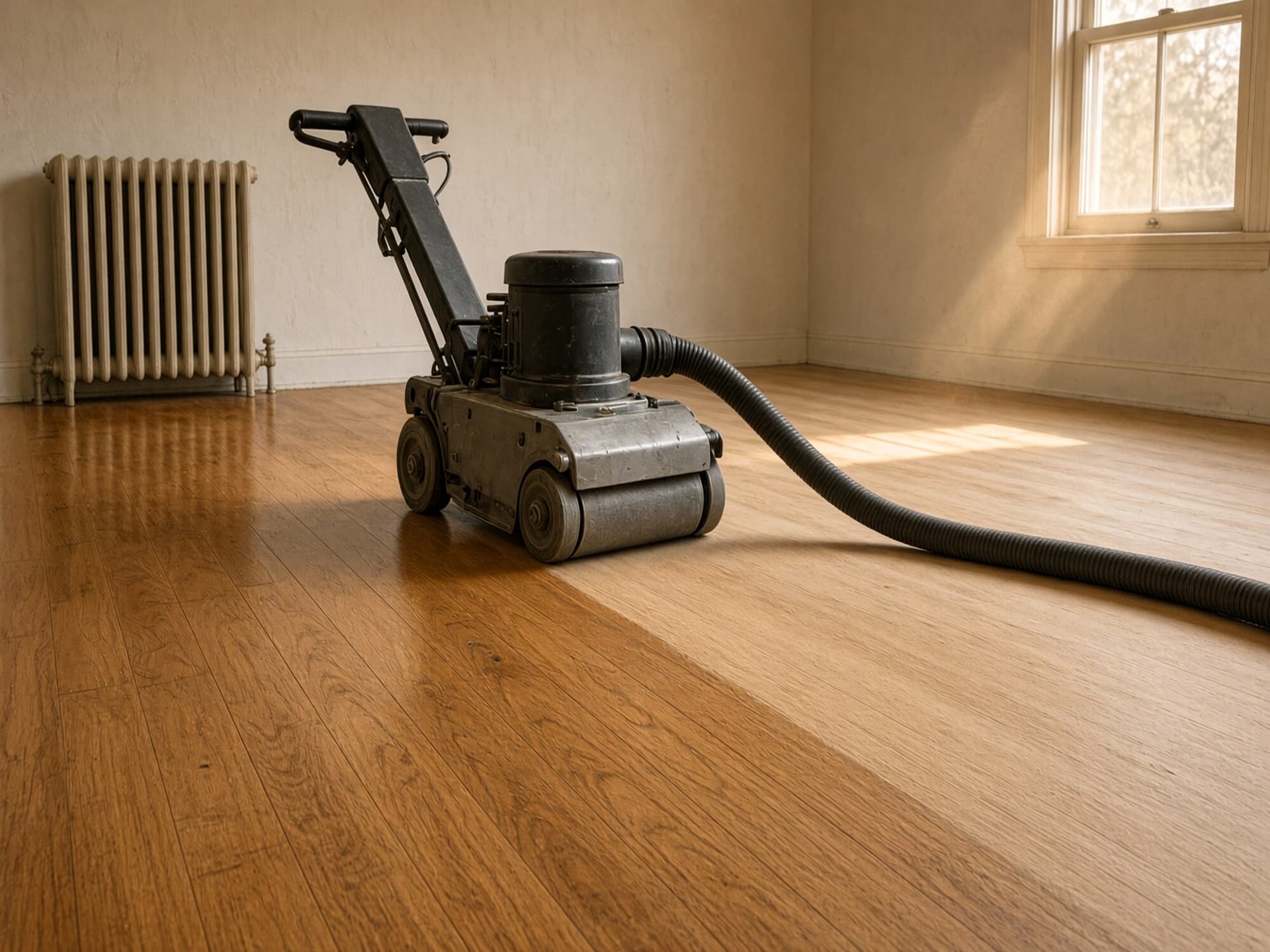
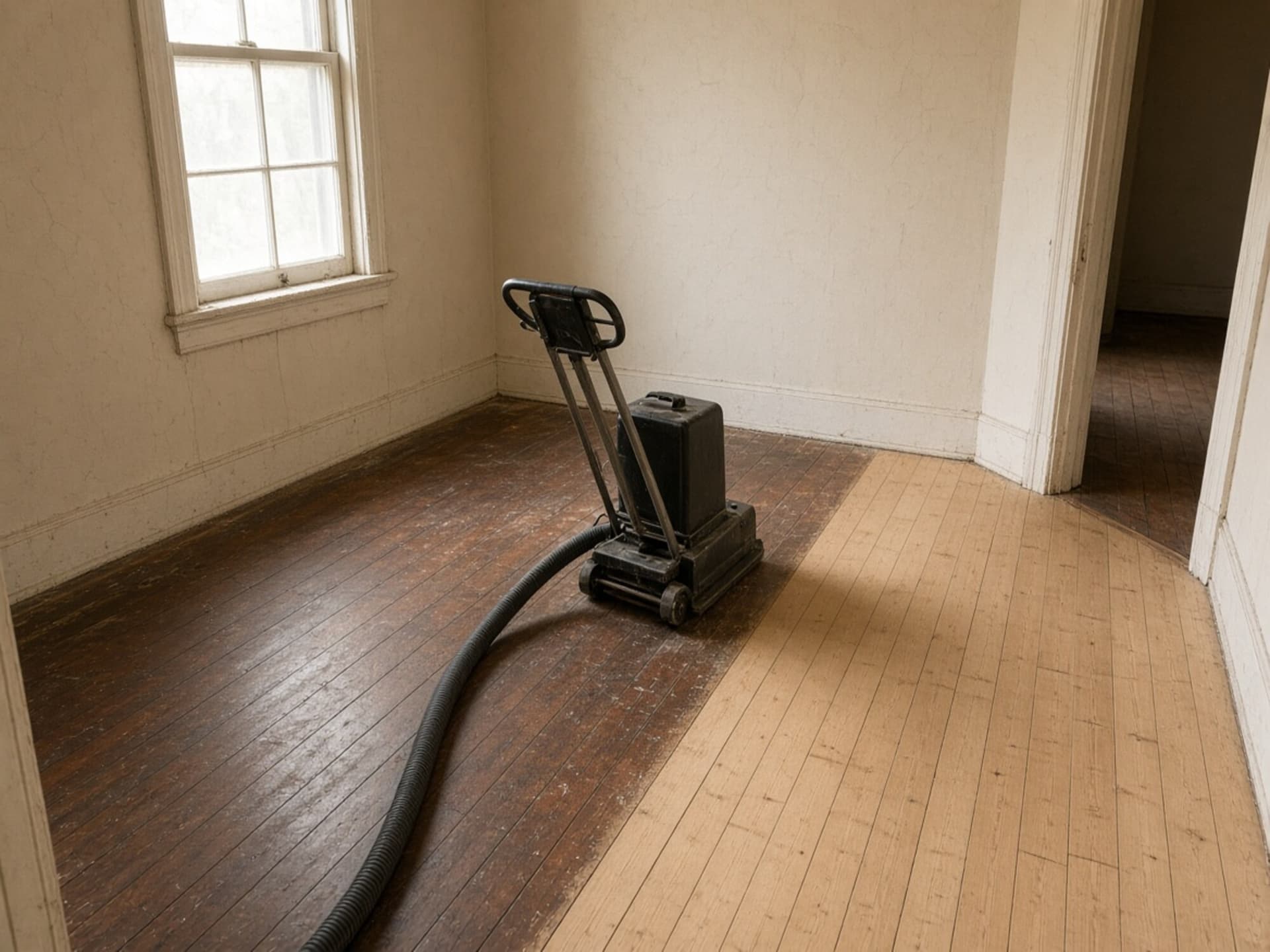
Belt sander (the big machine)
The primary cutting machine that takes a hardwood floor back to bare wood across the open field of a room.
Without itA rented consumer drum sander, or a shop that skips grits to save a pass on the big machine.
Also called: drum sander, floor sander, big sander
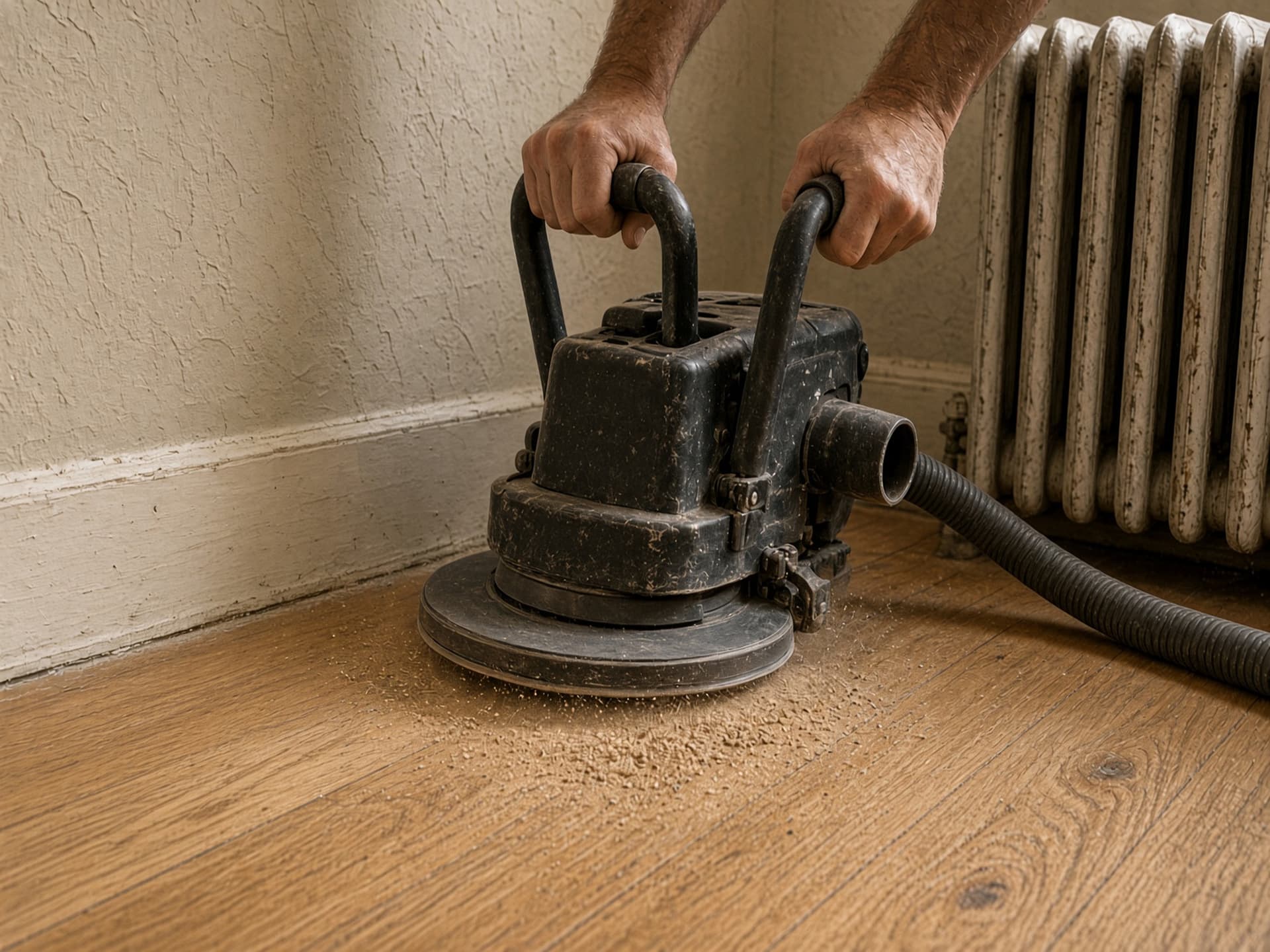
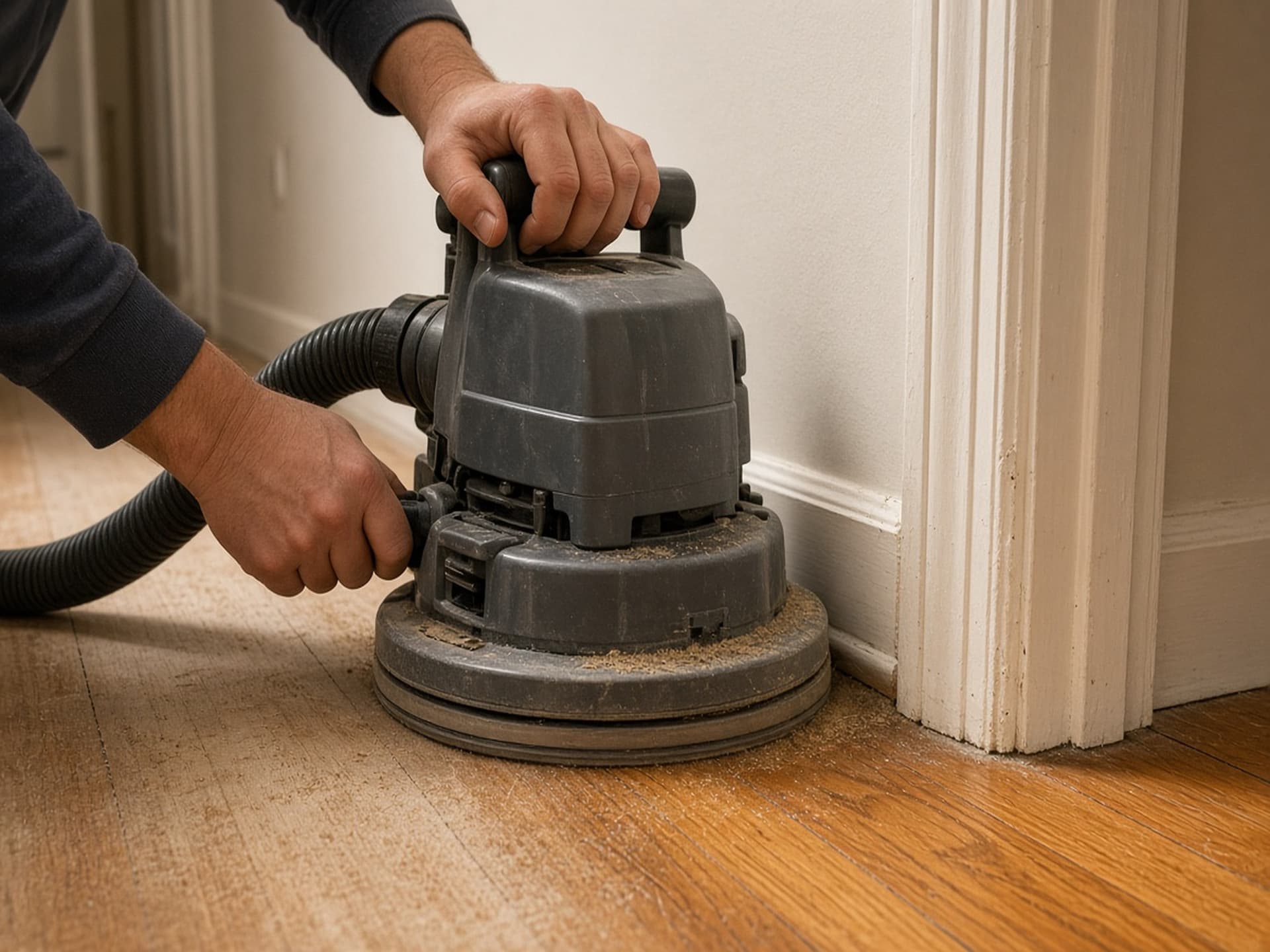
Edger
A hand-held disc machine that sands the six inches around the perimeter of a room that the big machine physically cannot reach.
Without itEdging at one grit and going straight to finish, or skipping the blend entirely.
Also called: edge sander, perimeter sander, corner sander
Multi-disc sander (buffer)
A machine with several counter-rotating heads that blends scratch patterns and abrades an existing finish without cutting into the wood.
Without itSelling a full sand to a floor whose finish is merely dull.
Also called: planetary sander, floor buffer, screening machine
Dust control
What makes an occupied refinish possible.
Measurement
The instruments behind every band on this site being a band.


Installation
How the floor is fixed to the building.
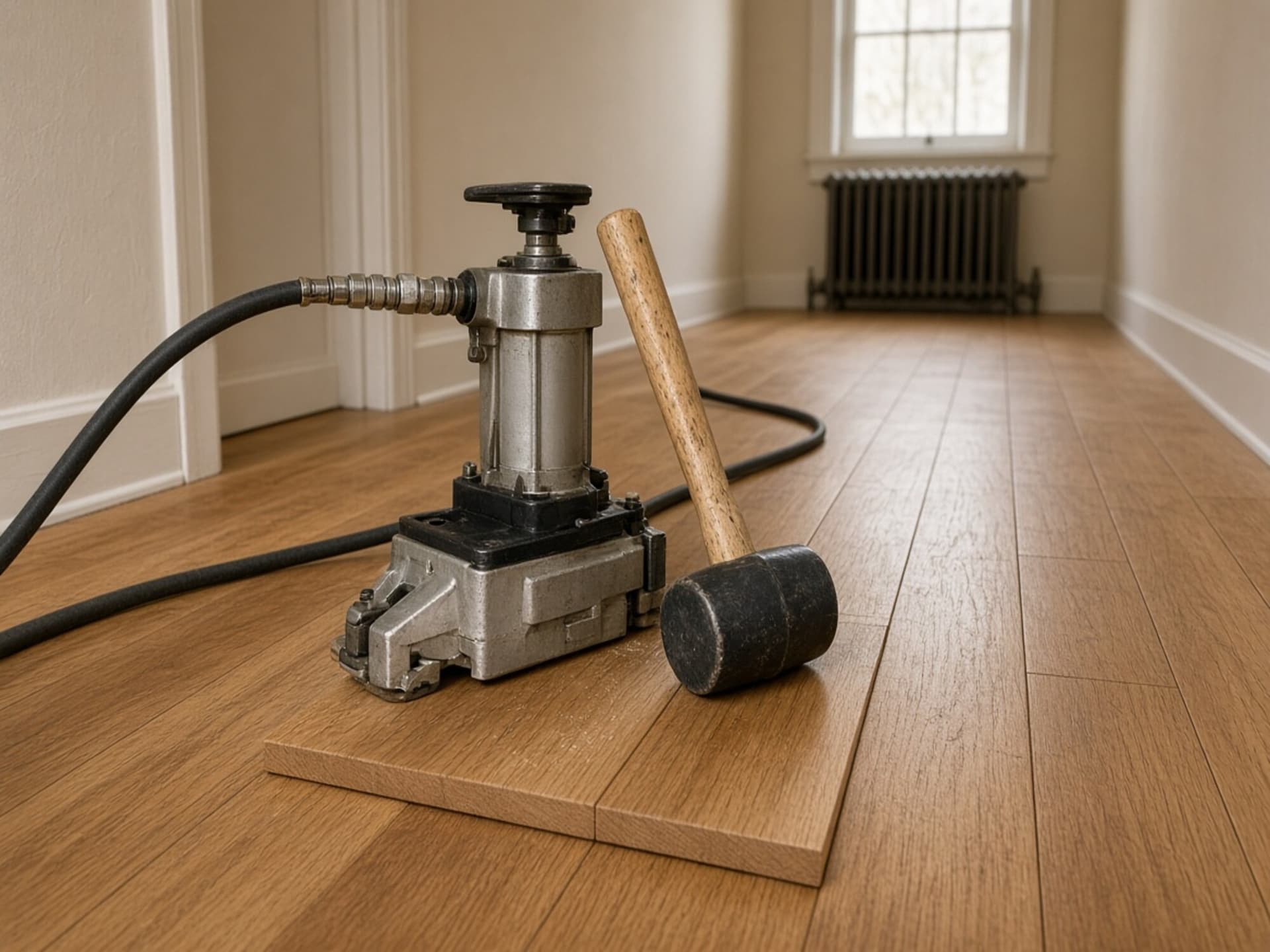
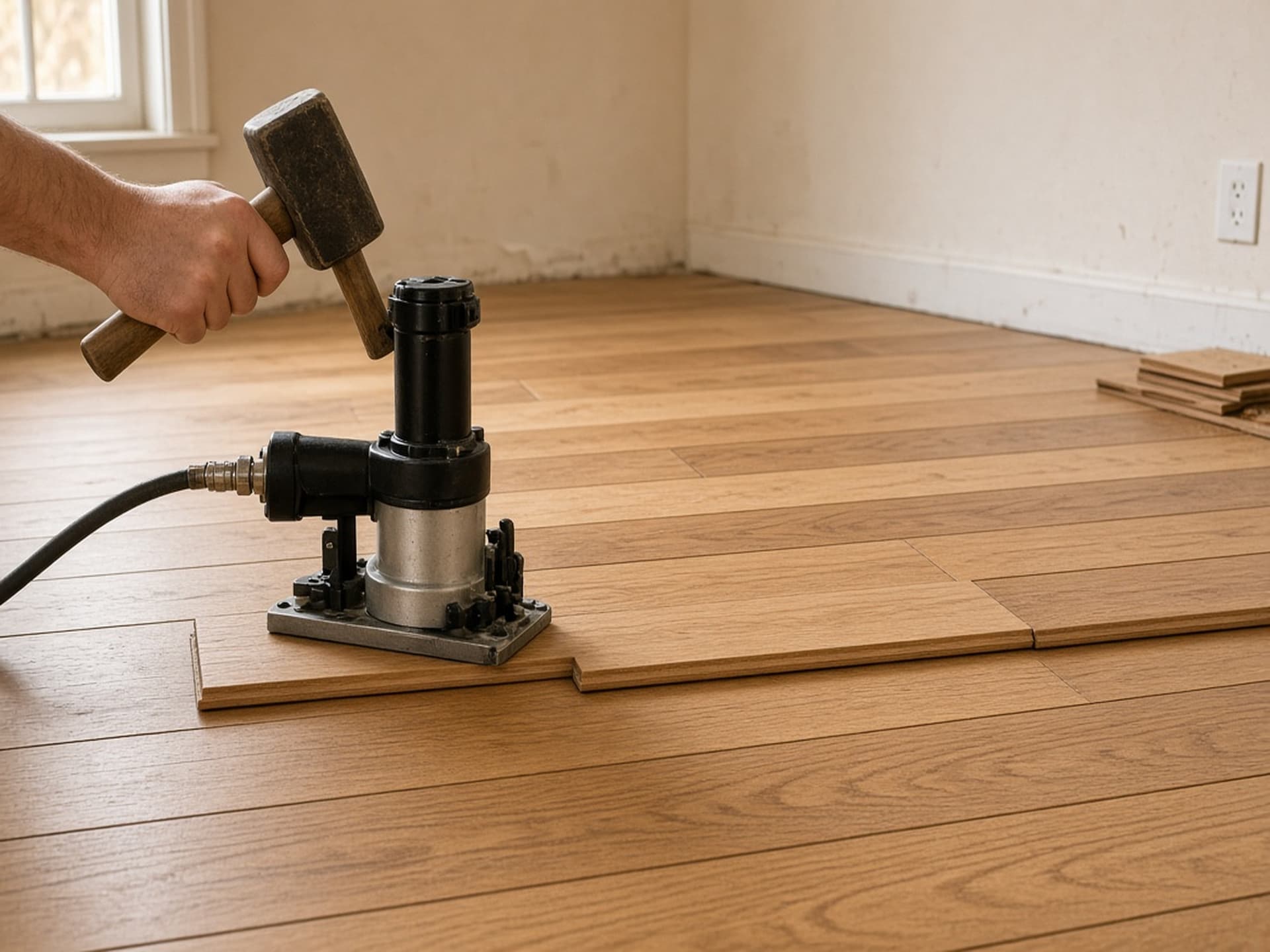
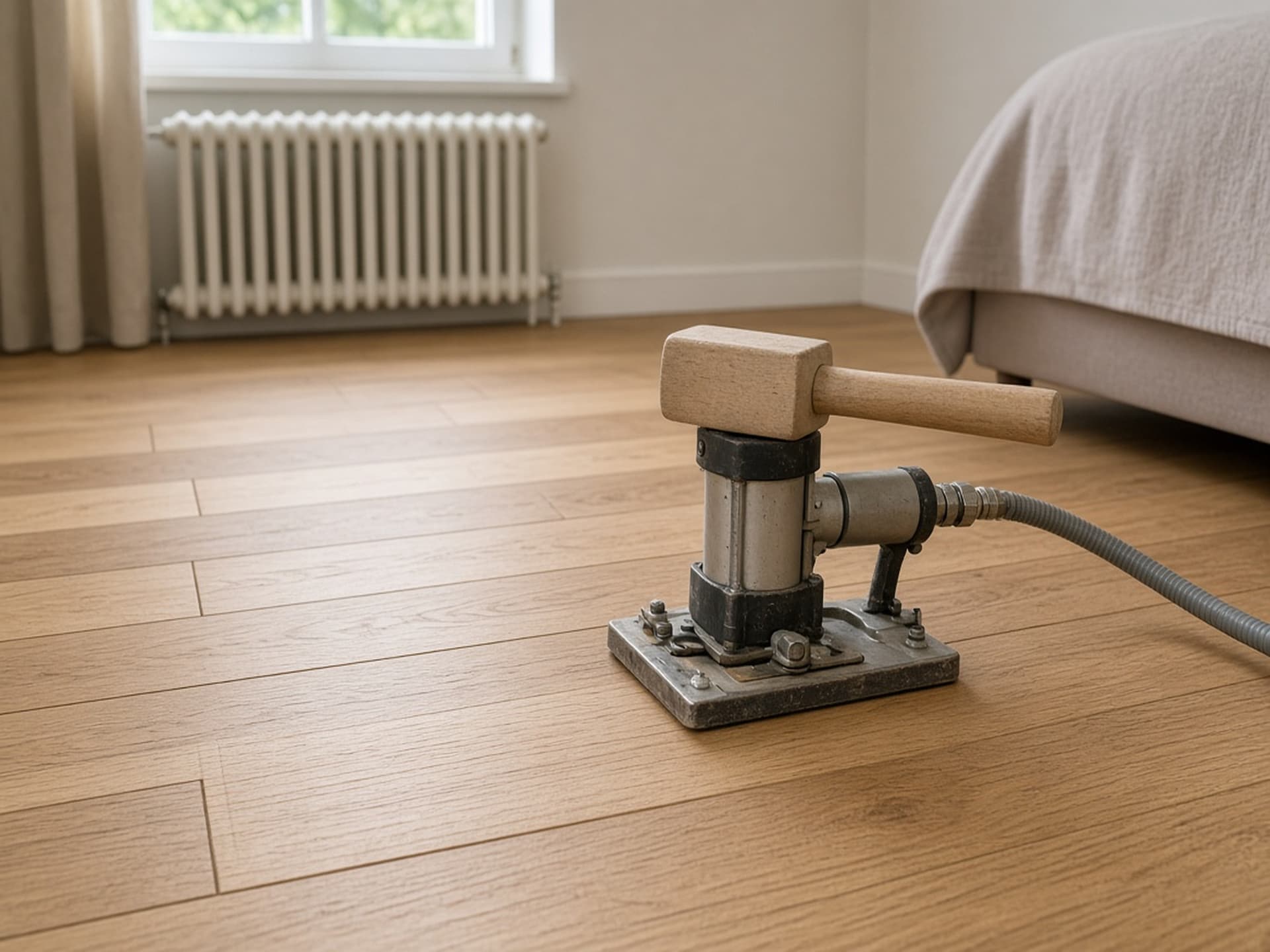
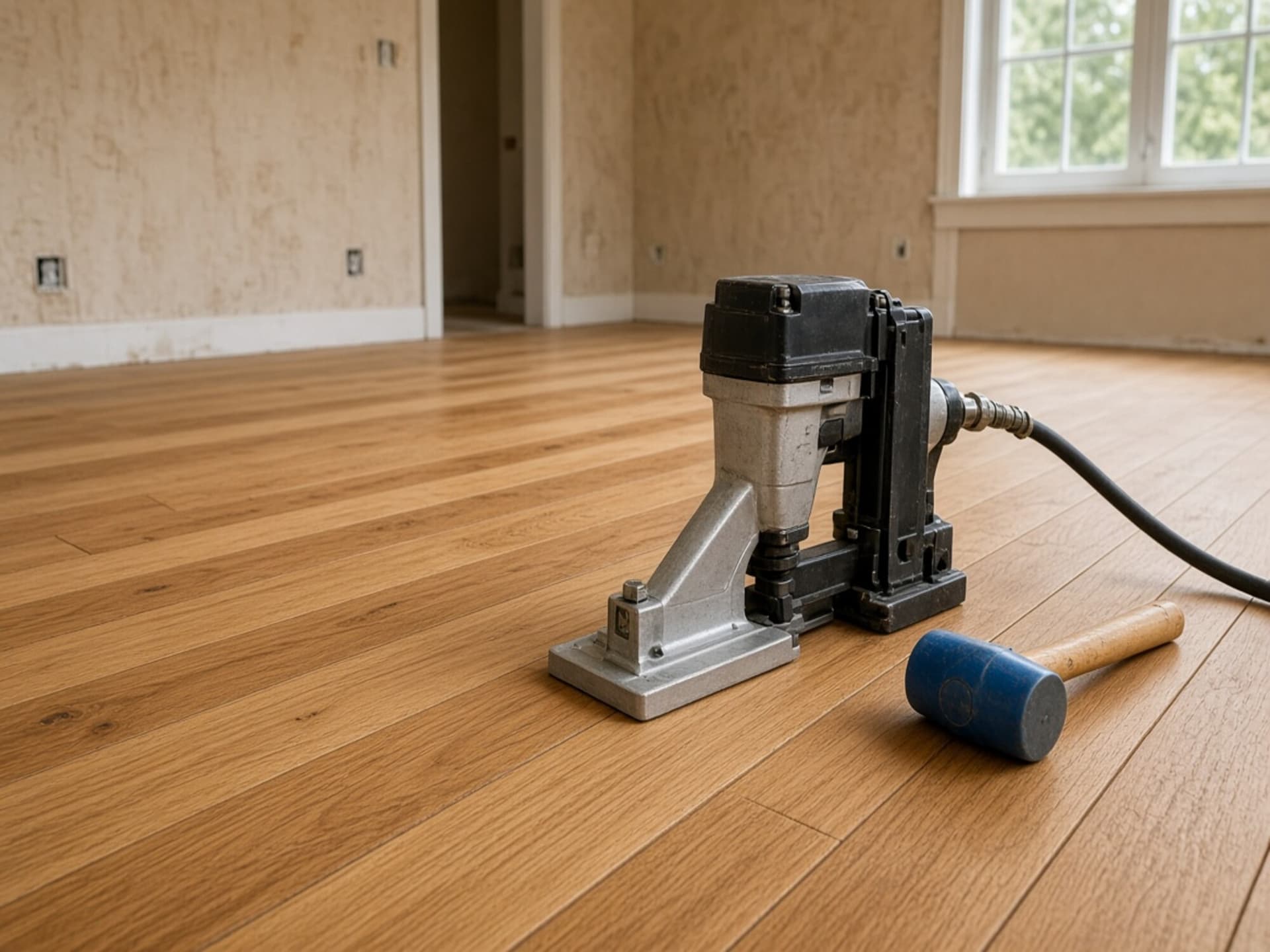
Flooring nailer and cleat gun
The pneumatic tool that drives fasteners through the tongue of each board at the angle the assembly needs.
Without itWider fastener spacing to save time, or the wrong fastener for the board width.
Also called: floor nailer, cleat nailer, flooring stapler
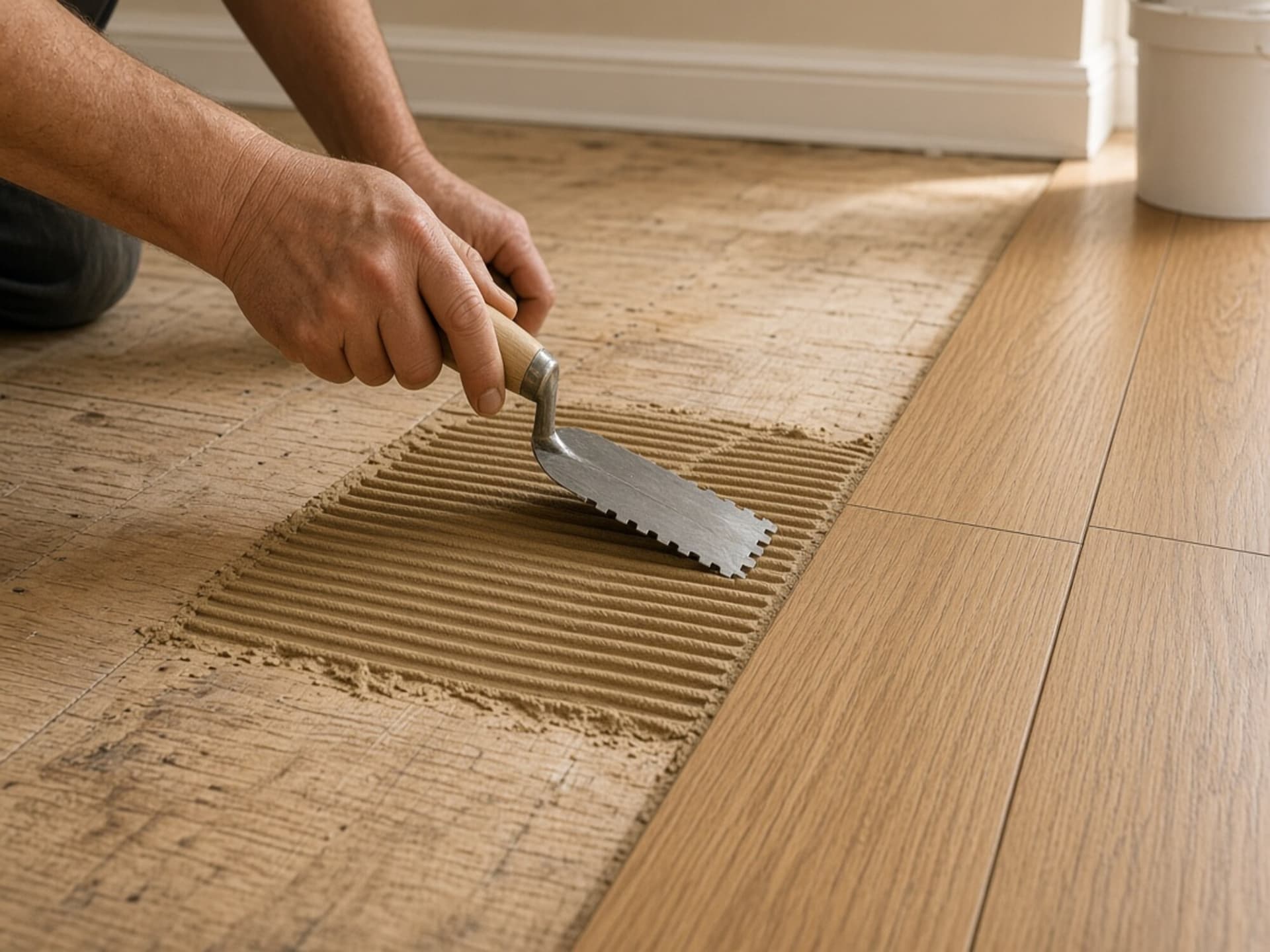
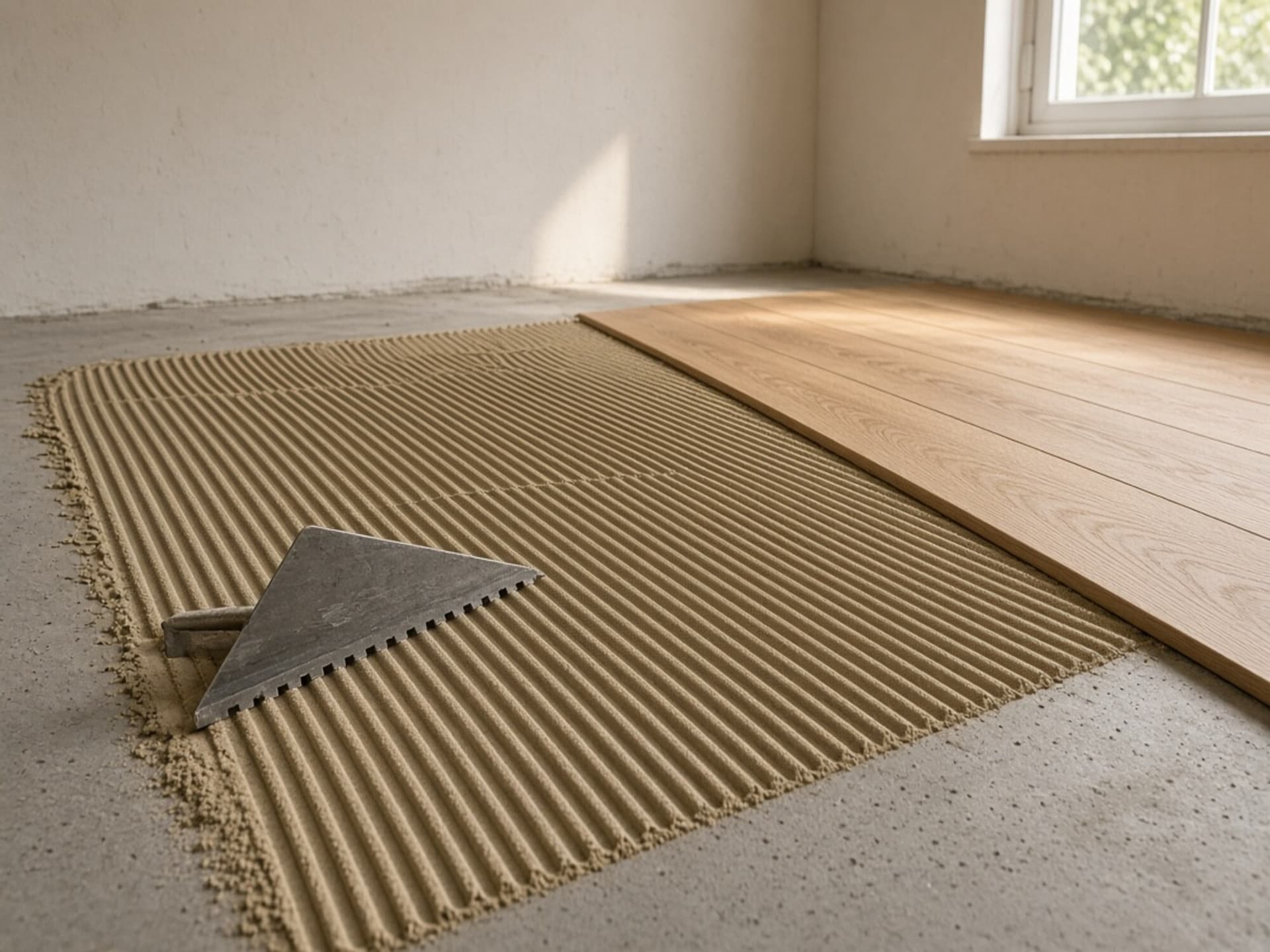
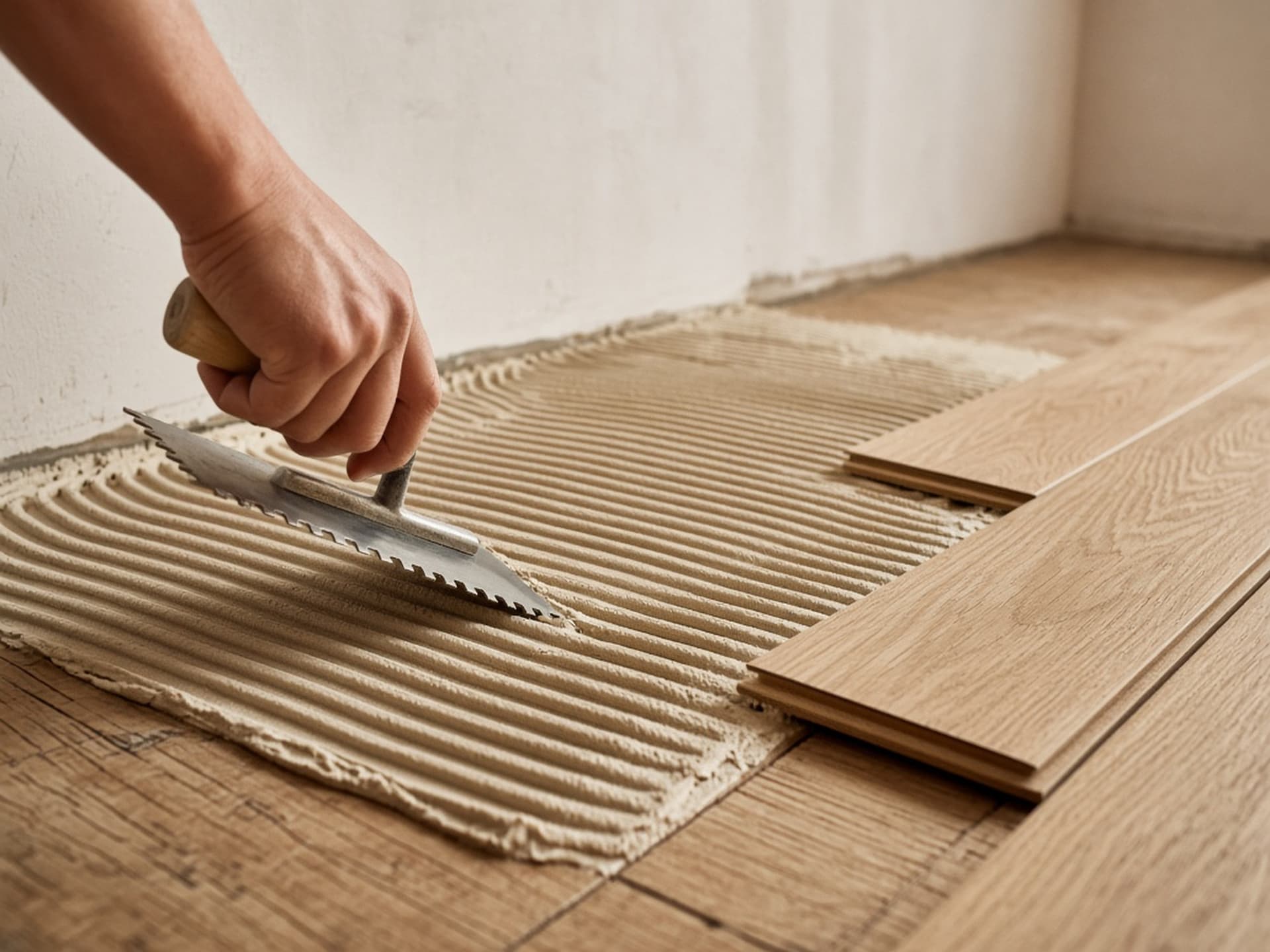
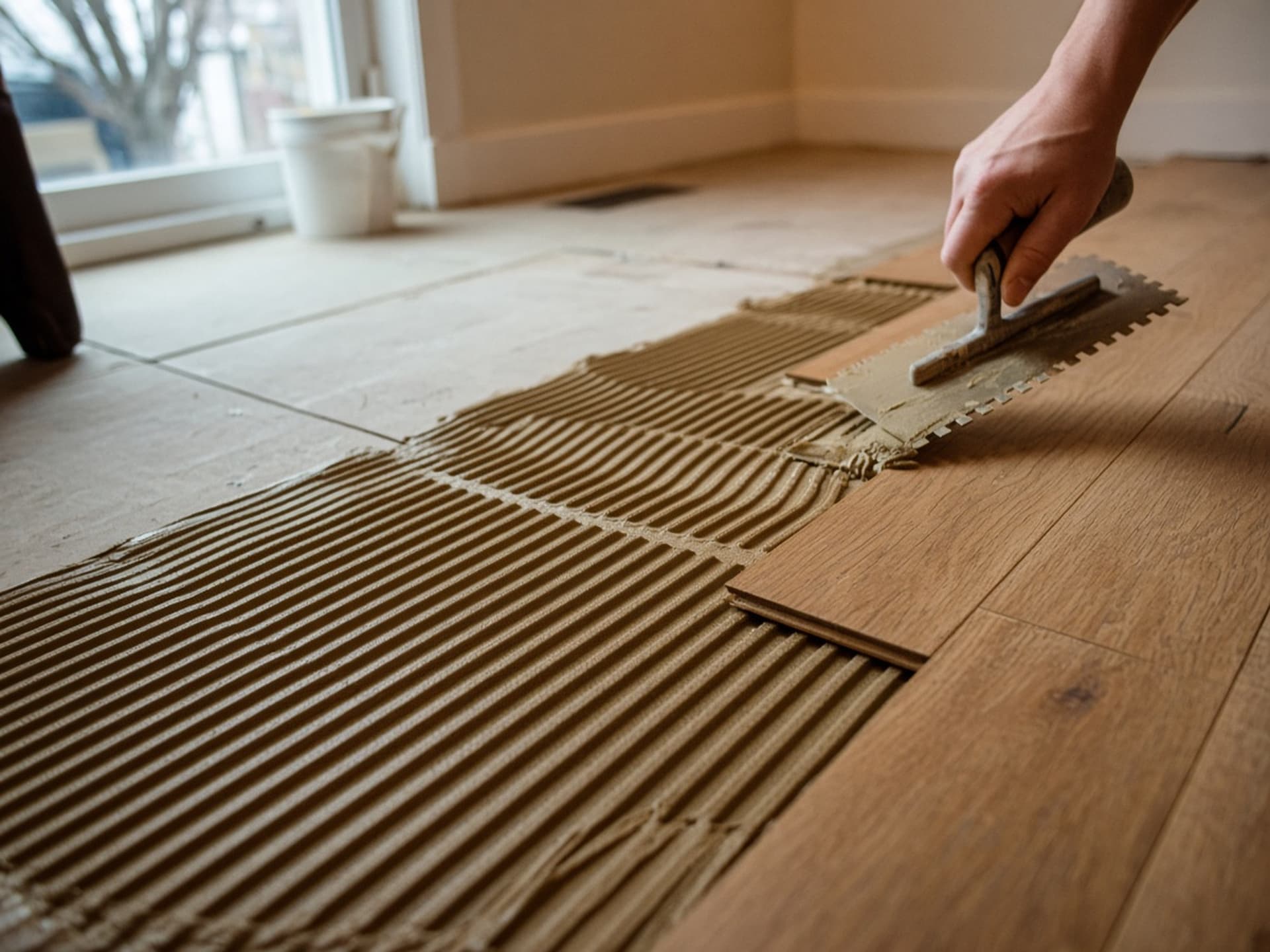
Adhesive system and notched trowel
The urethane adhesive and the specific notch profile that together decide whether a glue-down floor stays down.
Without itA general-purpose adhesive chosen on price, the wrong notch, or spreading half a room ahead of the crew.
Also called: glue down hardwood, flooring adhesive, moisture barrier adhesive
Finishing
What goes on top, and how long you are out.
Stairs & railings
The bench work, and the anchorage.
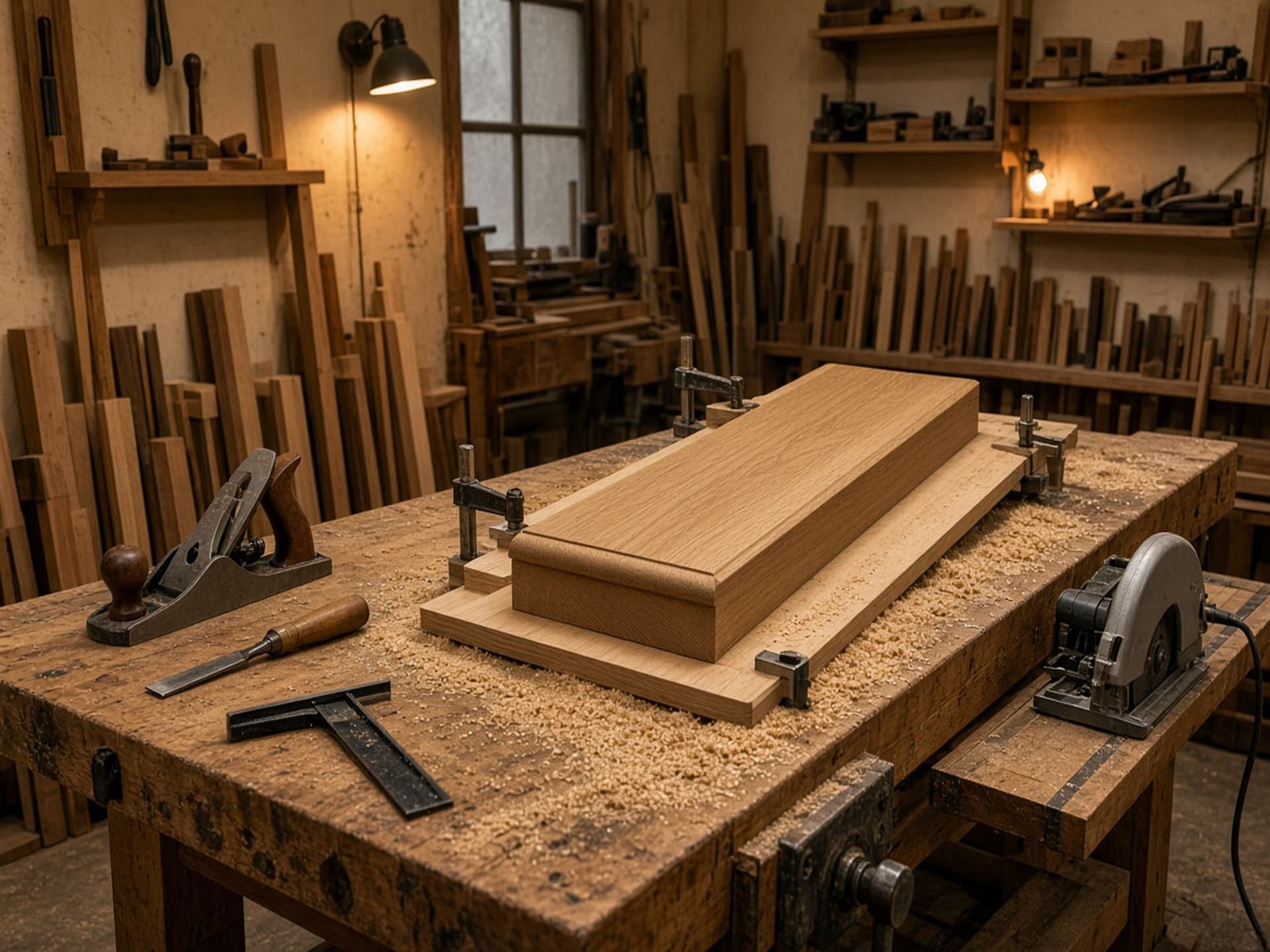
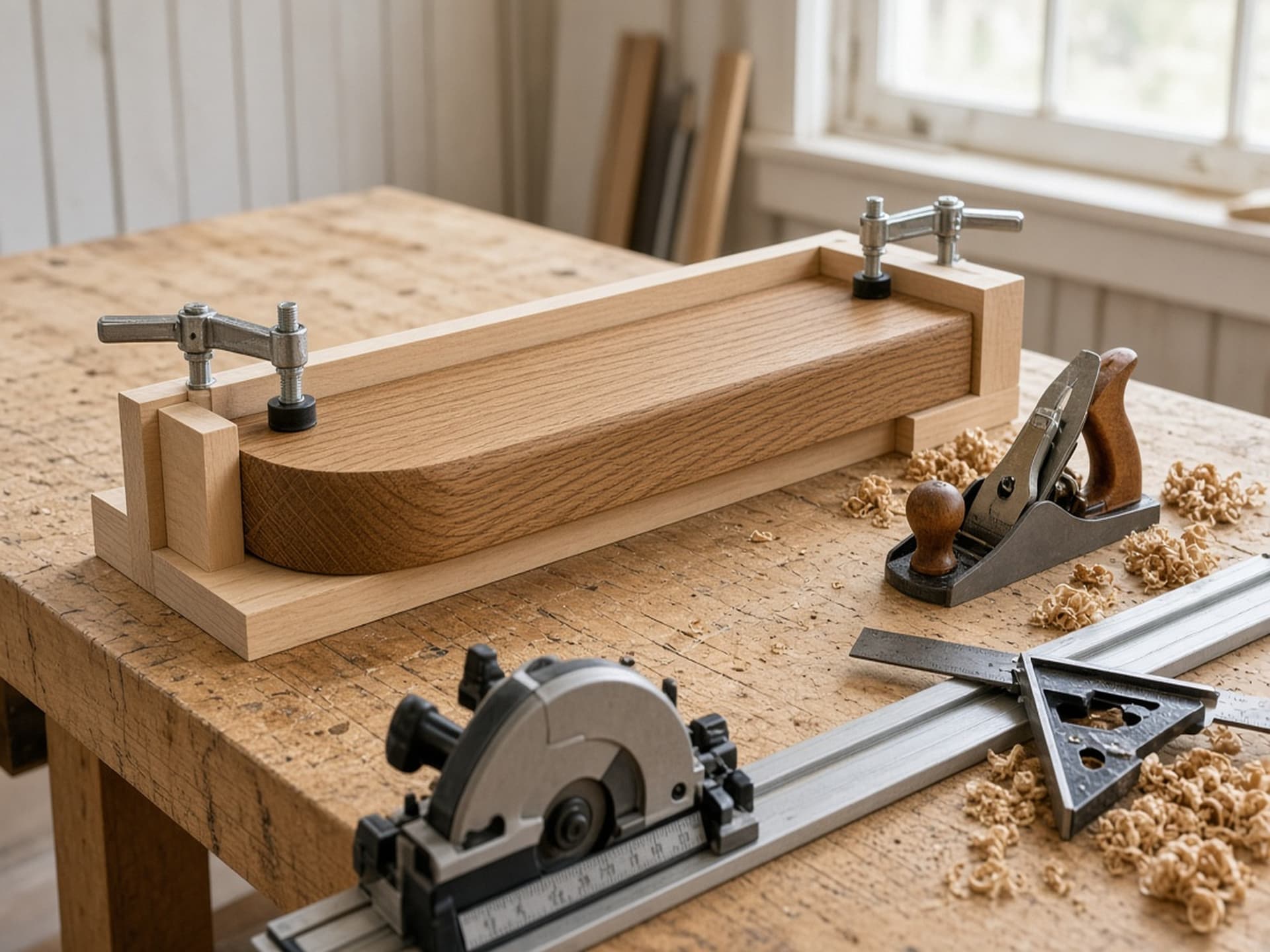
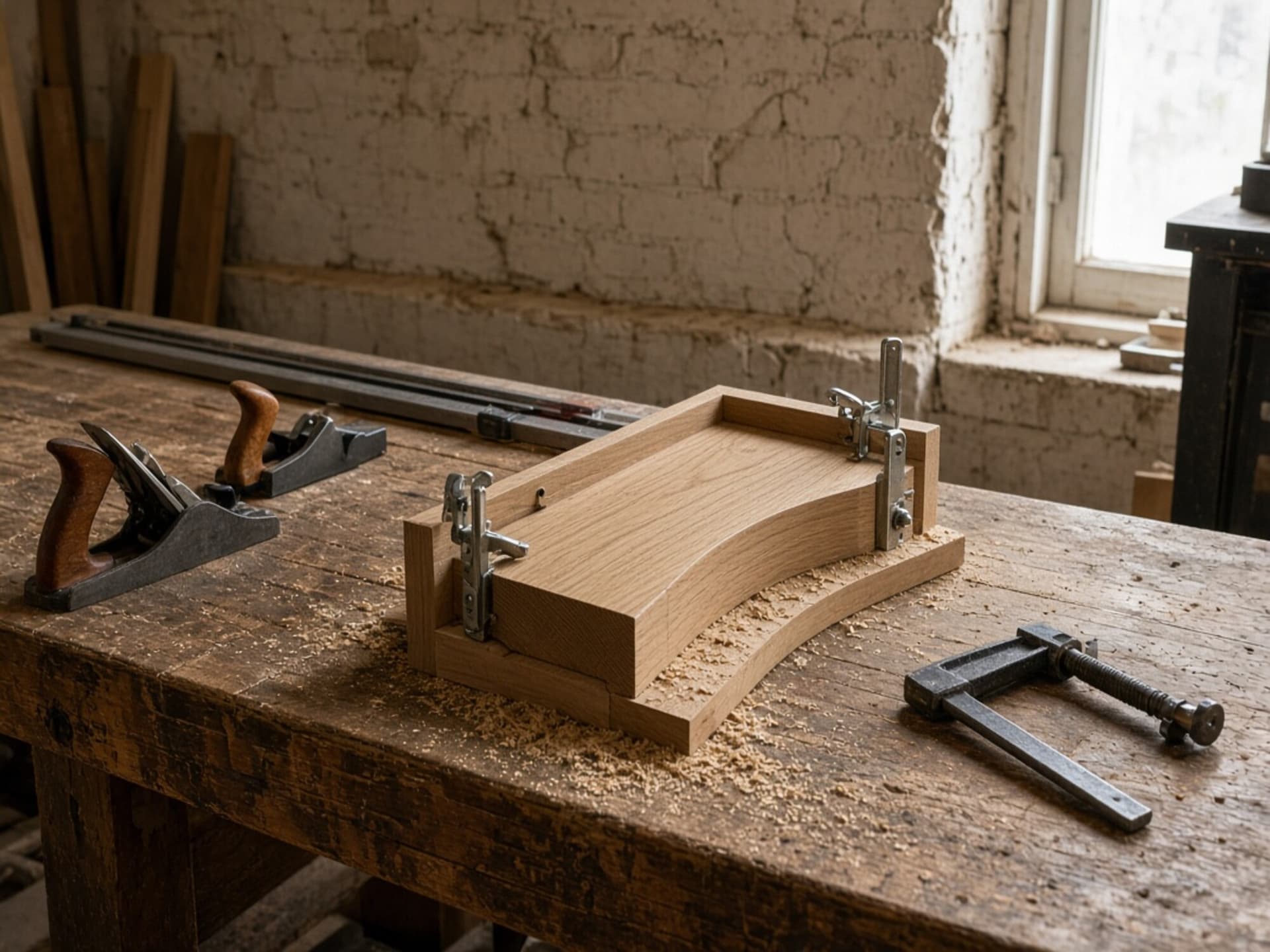
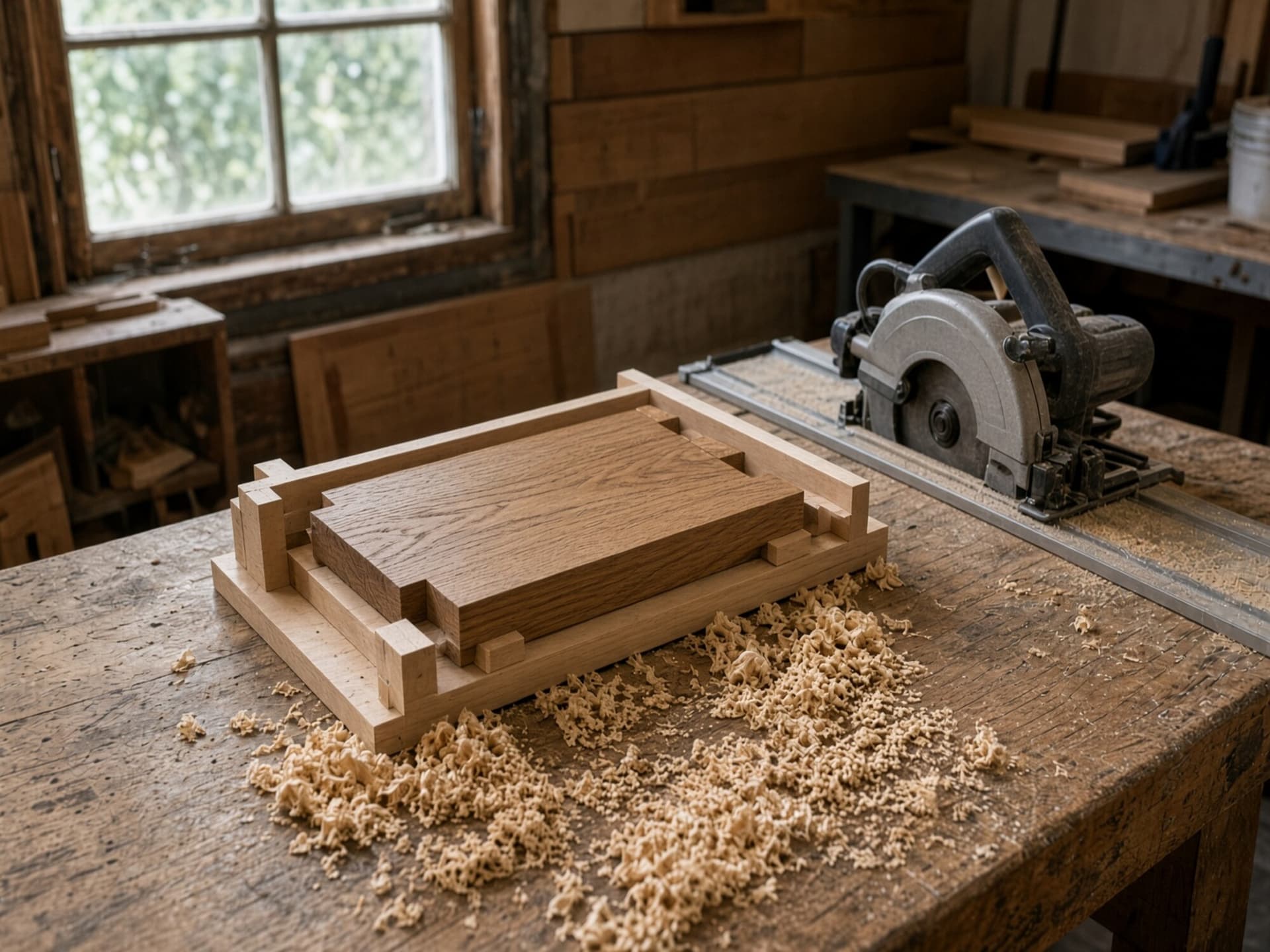
Stair fabrication: saws, jigs and templates
The bench work that makes a staircase millwork rather than flooring laid on steps — templates, a mitre saw, a table saw and a tread jig.
Without itA leftover plank cut to length on site and glued down, with a strip of quarter round at the open side.
Also called: stair tread jig, custom stair fabrication, returned tread ends
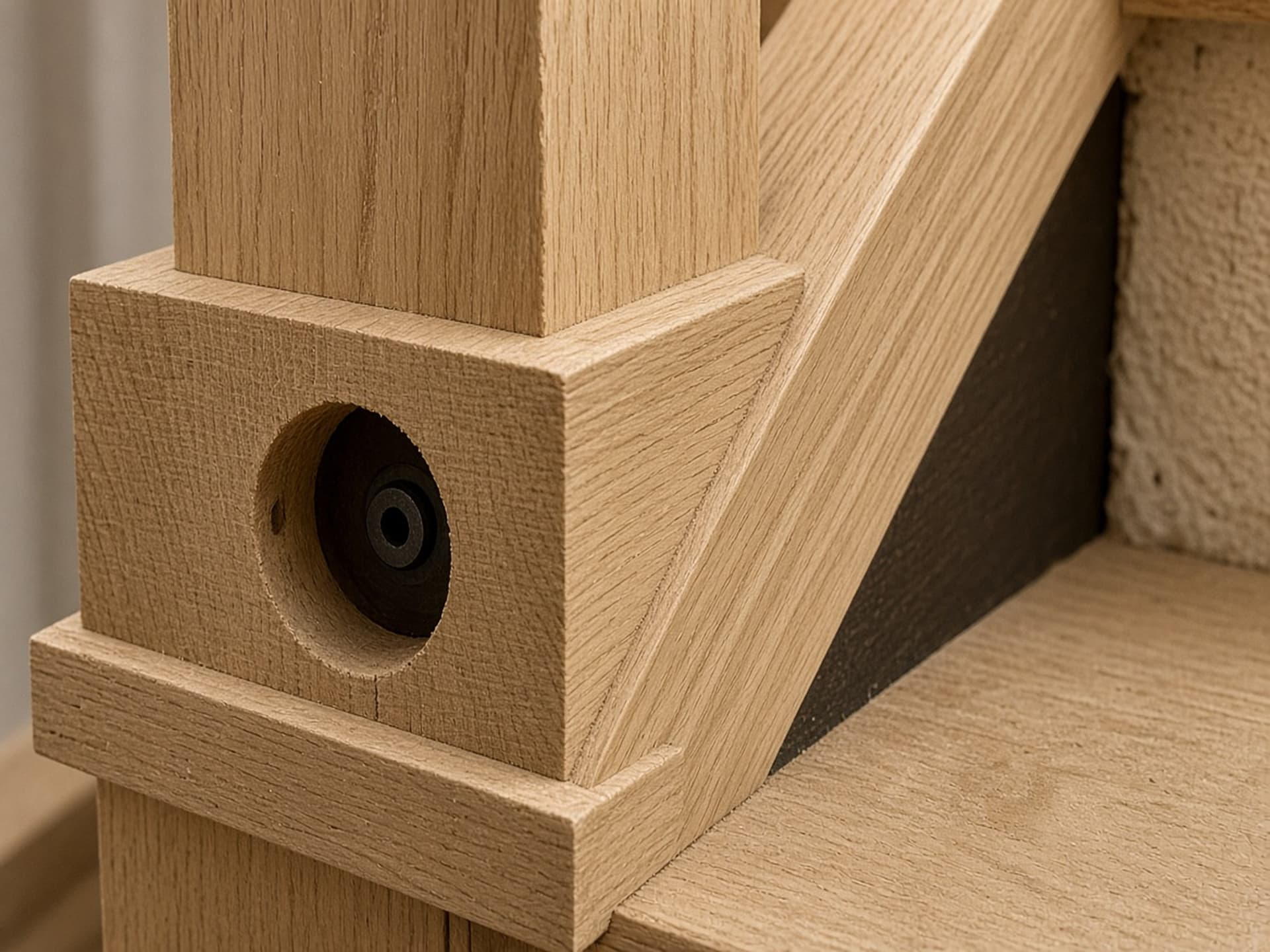
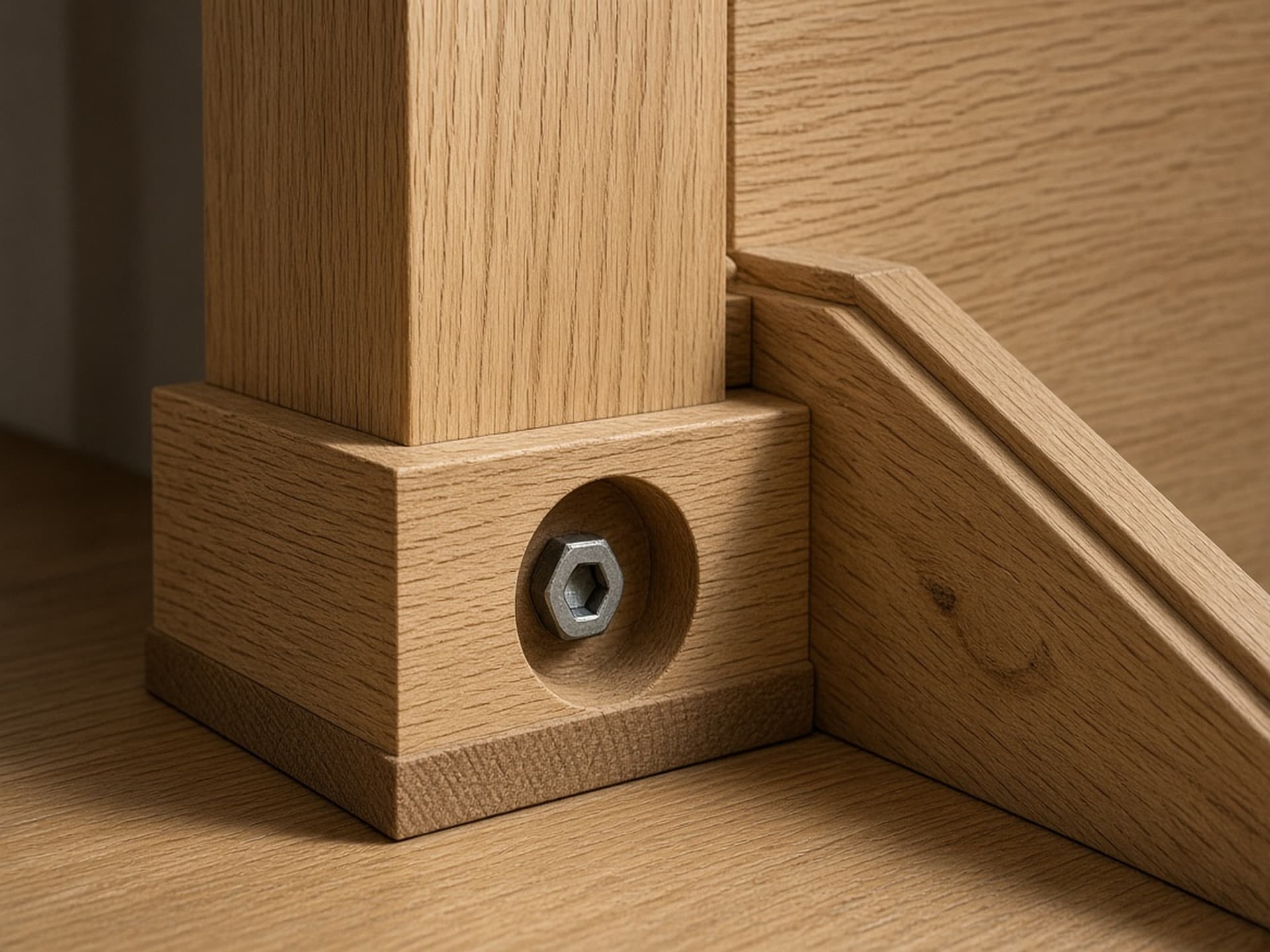
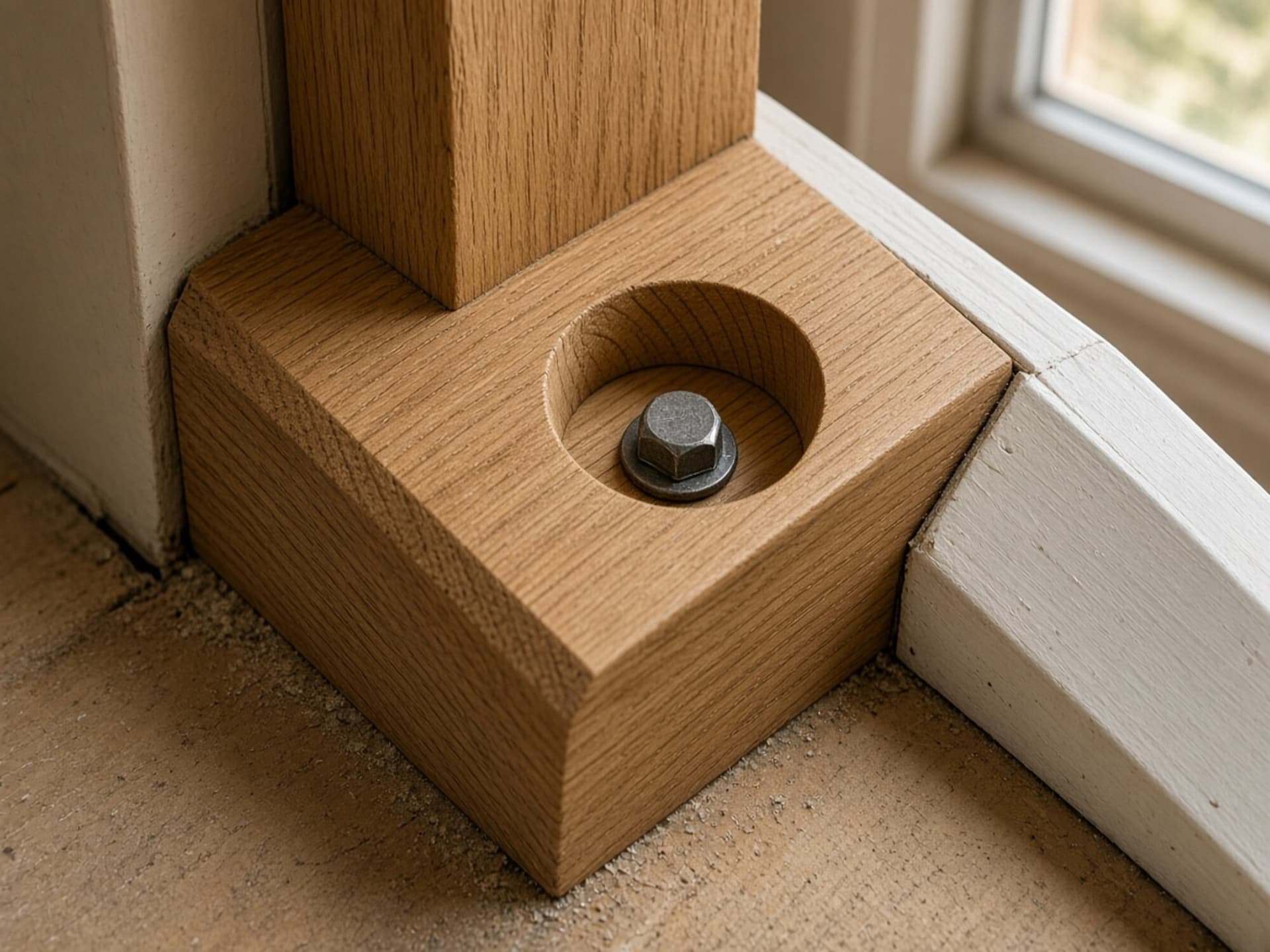
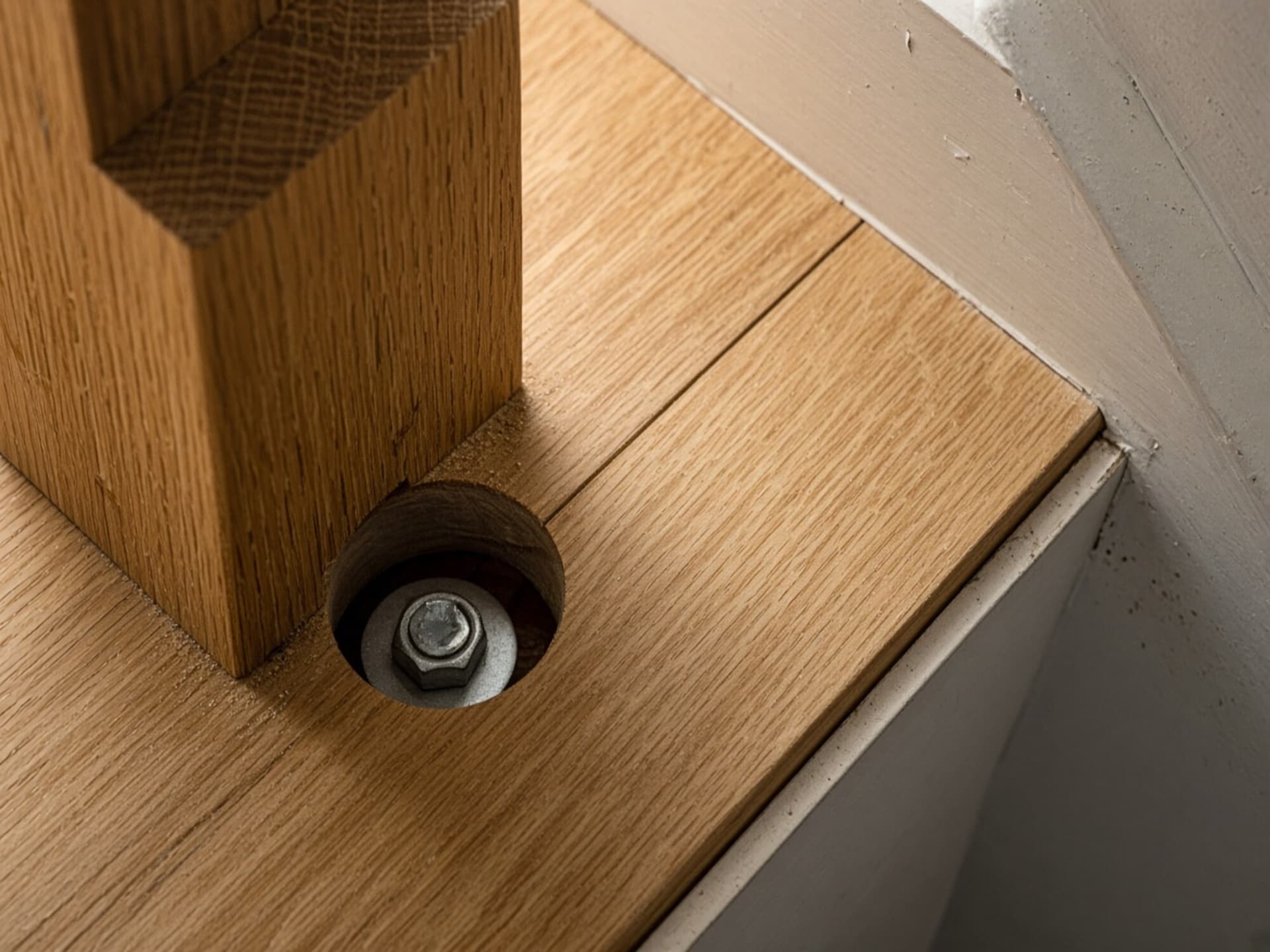
Railing anchorage: through-bolts and structural fixing
The hardware and the method that make a guard resist a real lateral load instead of merely standing there.
Without itScrewing the newel through the finished floor, or gluing it to a tread.
Also called: newel post anchoring, wobbly railing fix, handrail bracket
Which machines your job depends on
Each service page lists the equipment classes its work runs on, so you can start from the job rather than from the machine.