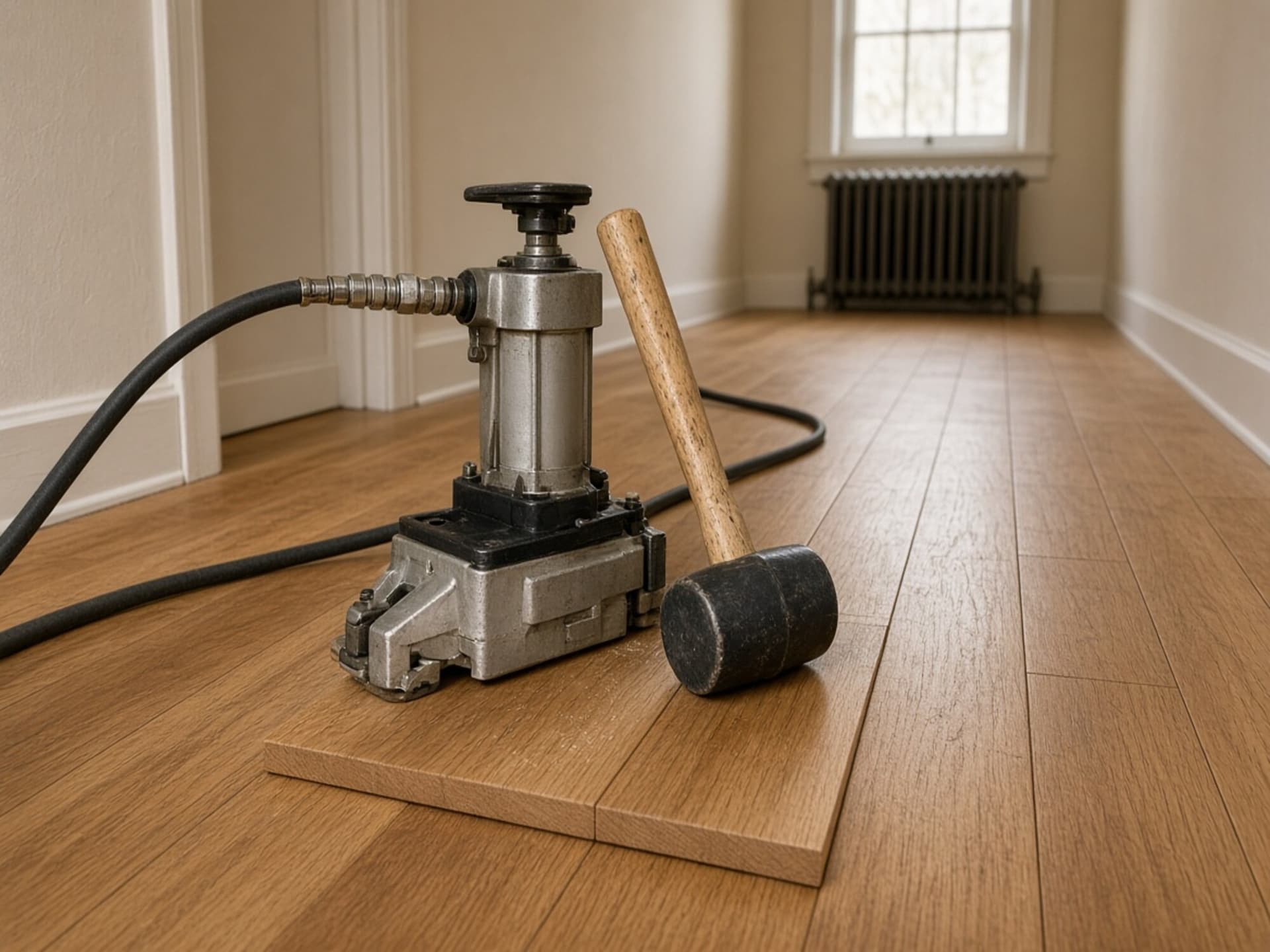
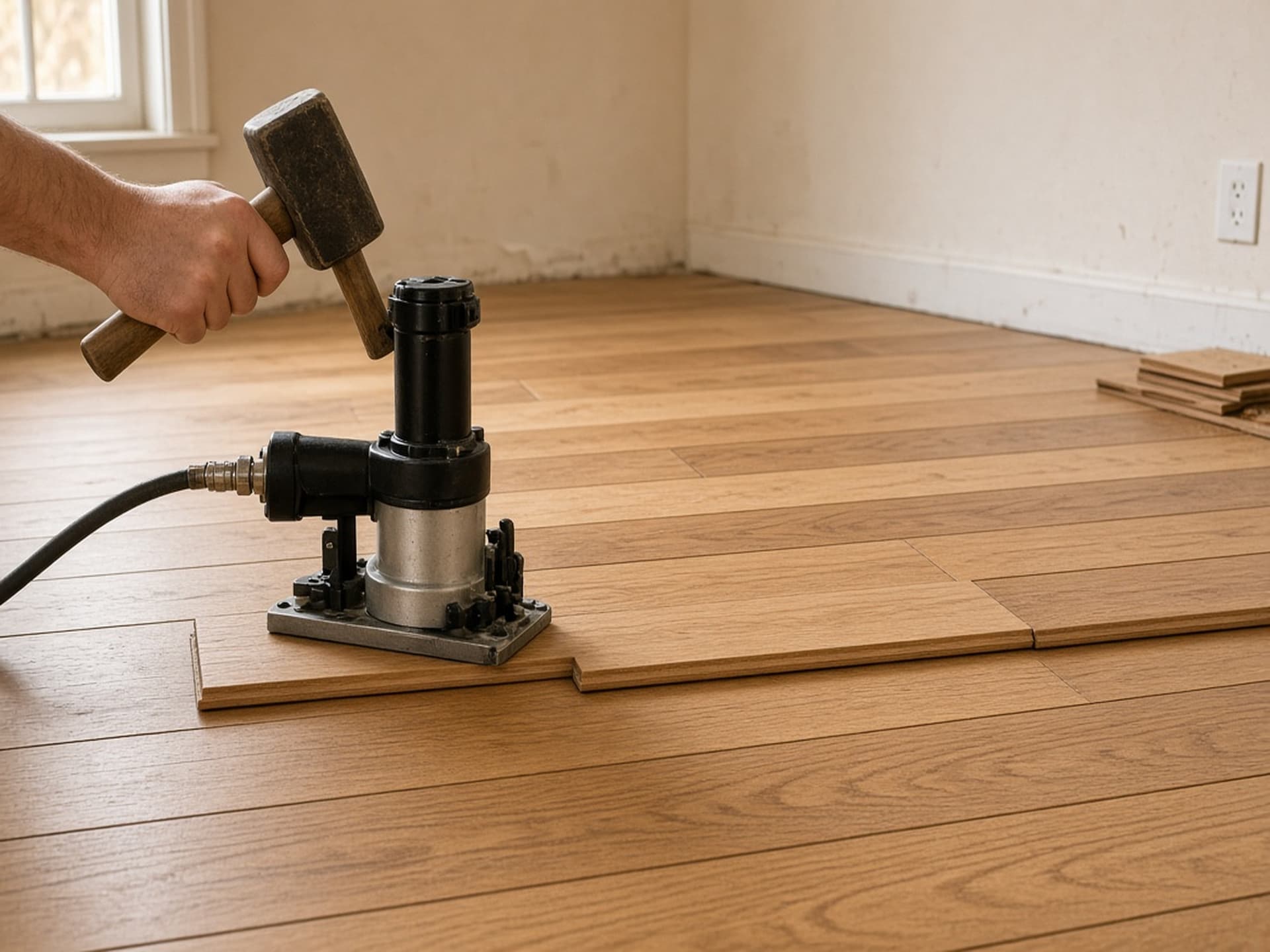
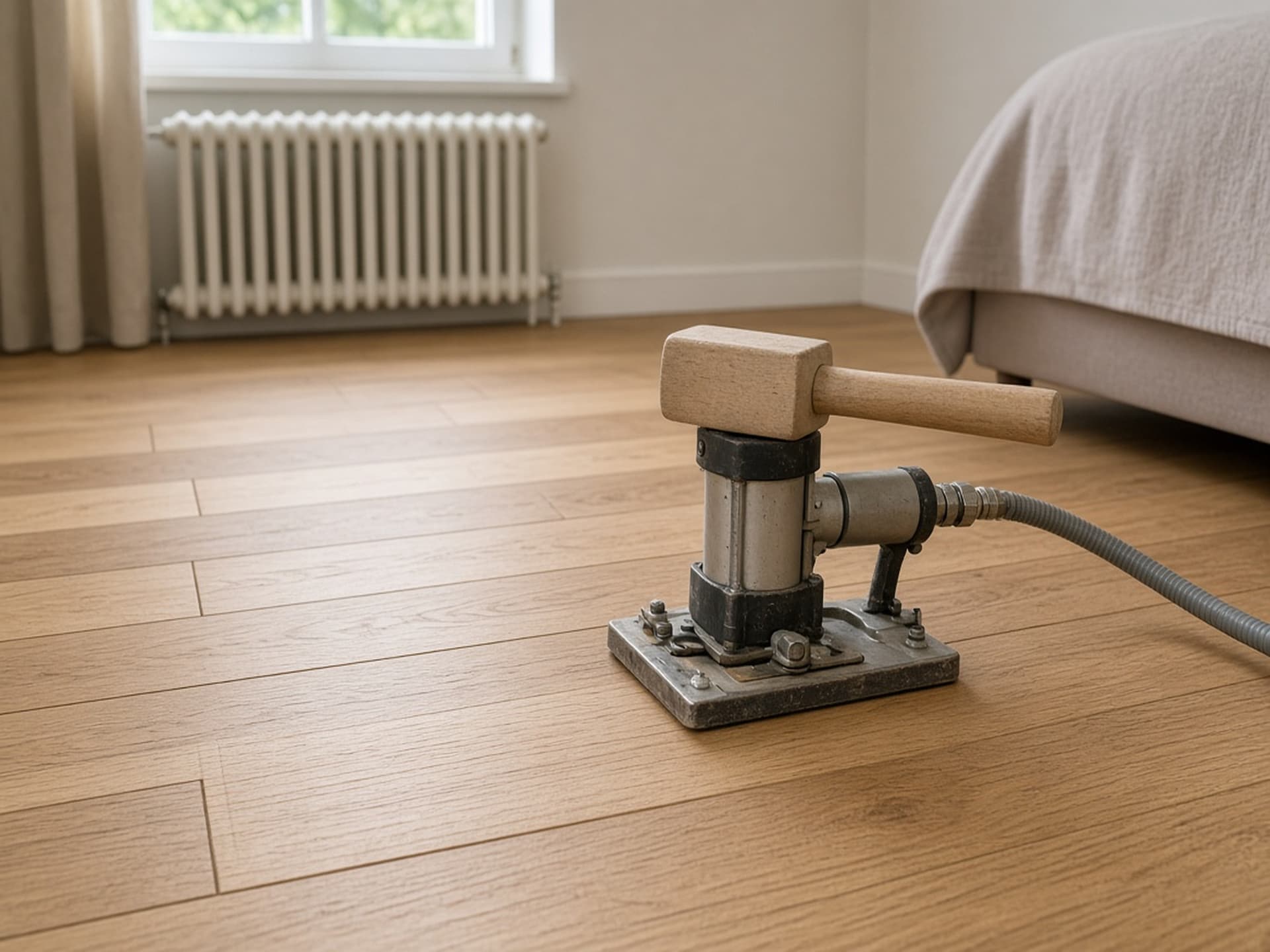
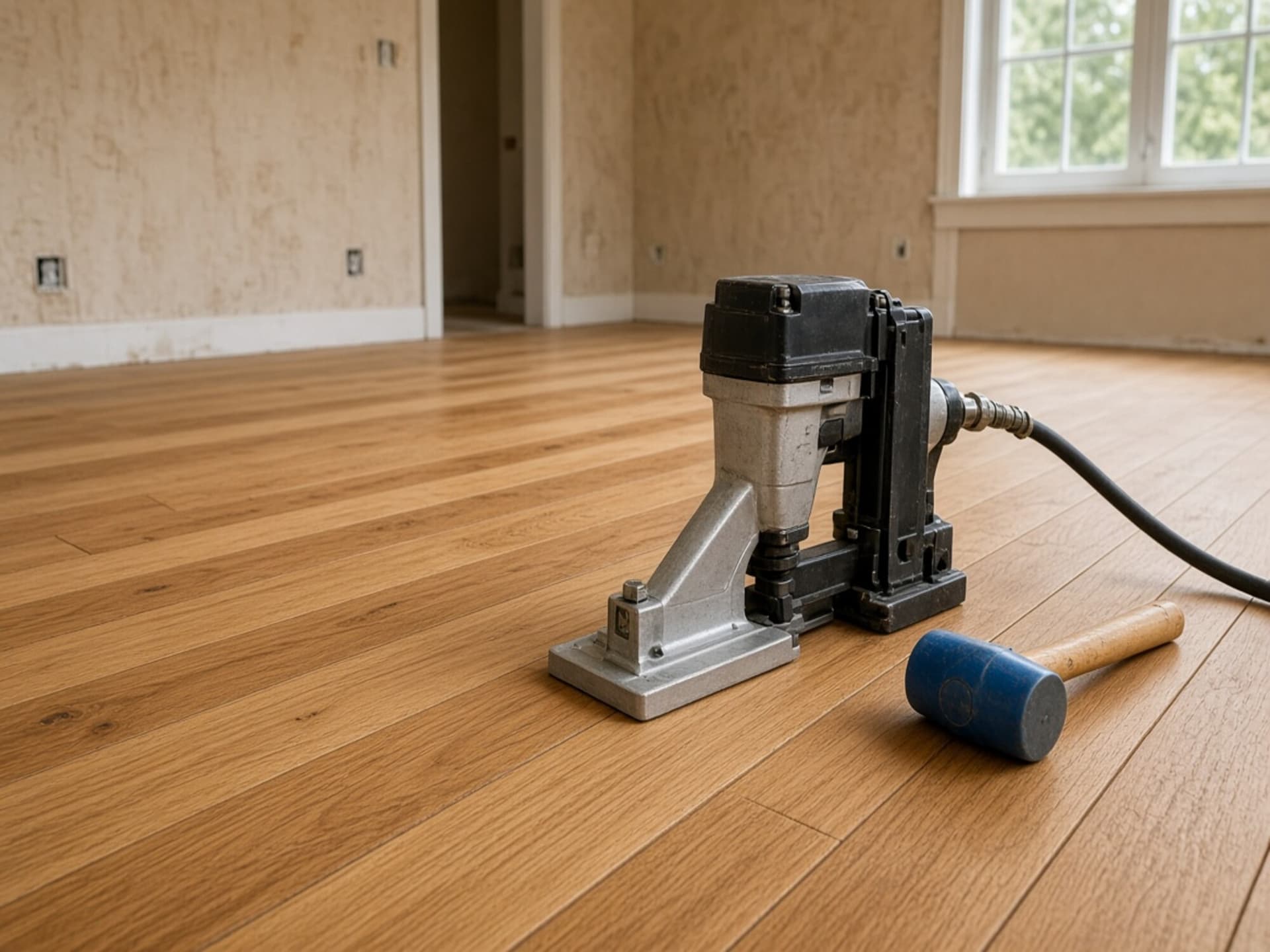
What it does
A flooring nailer sits on the edge of the board and drives a cleat or staple through the tongue at roughly 45 degrees, so the fastener is hidden by the next board. Spacing is typically every six to eight inches along the board with two fasteners near each end.
Cleats and staples behave differently. A cleat is an L-shaped fastener that holds while allowing the board a little seasonal movement. A staple grips harder and allows less, which is an advantage in some assemblies and the cause of split tongues in others. The choice follows the species, the width and the season.
Why it matters to your floor
- Squeaks that appear a year after a new floor are usually underfastening, a subfloor that was never screwed down, or boards fastened over a subfloor that was not flat. All three are decided at this stage and none is repairable without lifting the floor.
- Fastener spacing is also the difference between a floor that moves as a unit through a Toronto winter and one that opens a gap wherever the fastening was thin.
What happens without it
Wider fastener spacing to save time, or the wrong fastener for the board width.
Squeaks, movement, and in the worst case split tongues that only reveal themselves as loose boards a season later.
How to tell, before you sign
- Walk a floor the company installed at least a year ago. A year is long enough for one full humidity cycle, which is what exposes underfastening.
- Ask what fastener and what spacing they use for the board width you are buying. There is a right answer and it is specific.
These questions are meant to be asked of everyone quoting you, not only of us. A trade that cannot answer them is telling you something useful.
The method it belongs to
Read further
Solid vs engineered hardwood in Ontario
Which hardwood assembly survives Ontario humidity, condos, radiant heat, and a 20-year refinishing plan.
Hardwood flooring cost in the GTA, 2026
Real 2026 price ranges for hardwood installation, refinishing, stairs, and railings in Toronto and the Greater Toronto Area — and what actually moves the number.