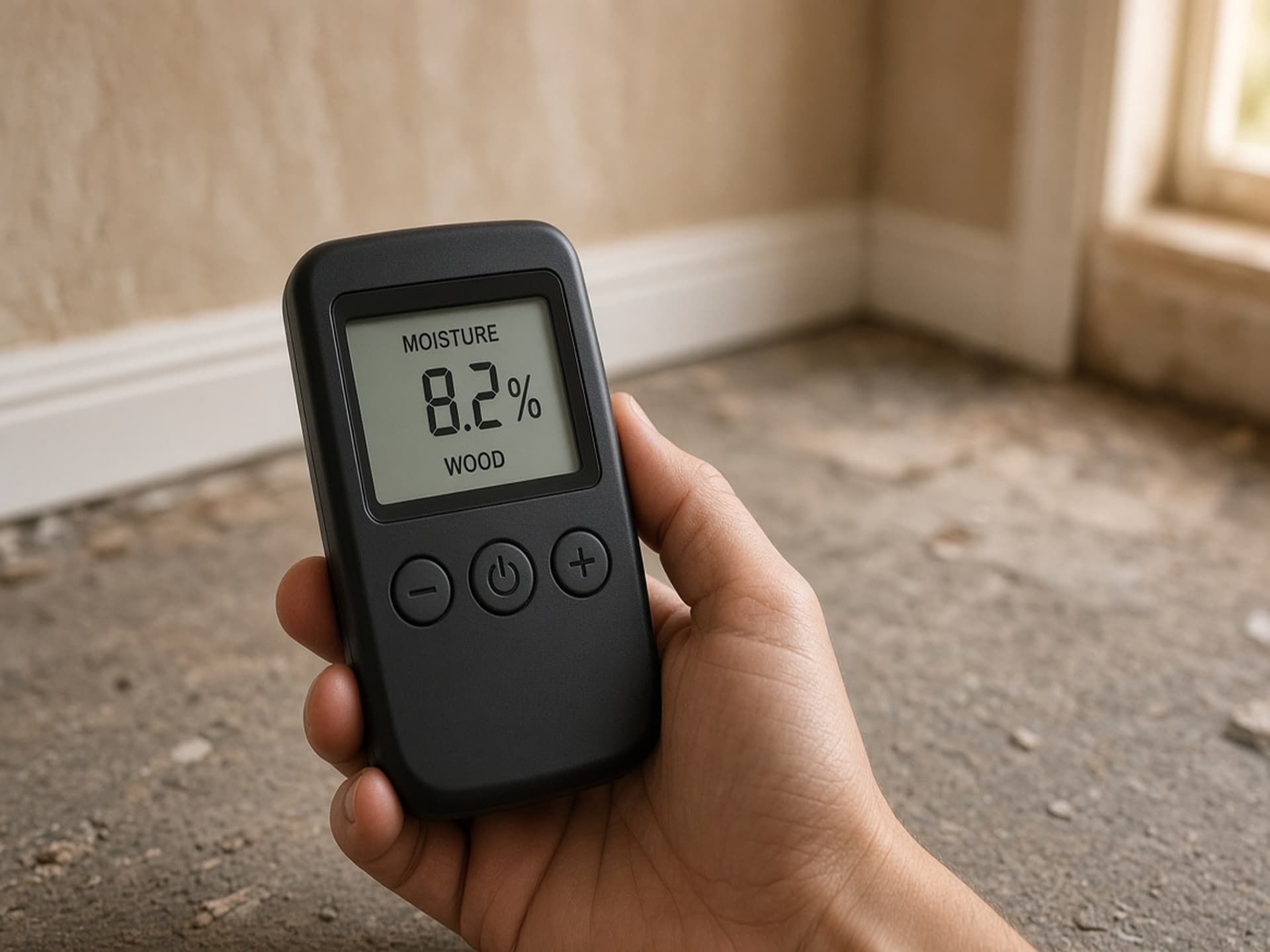
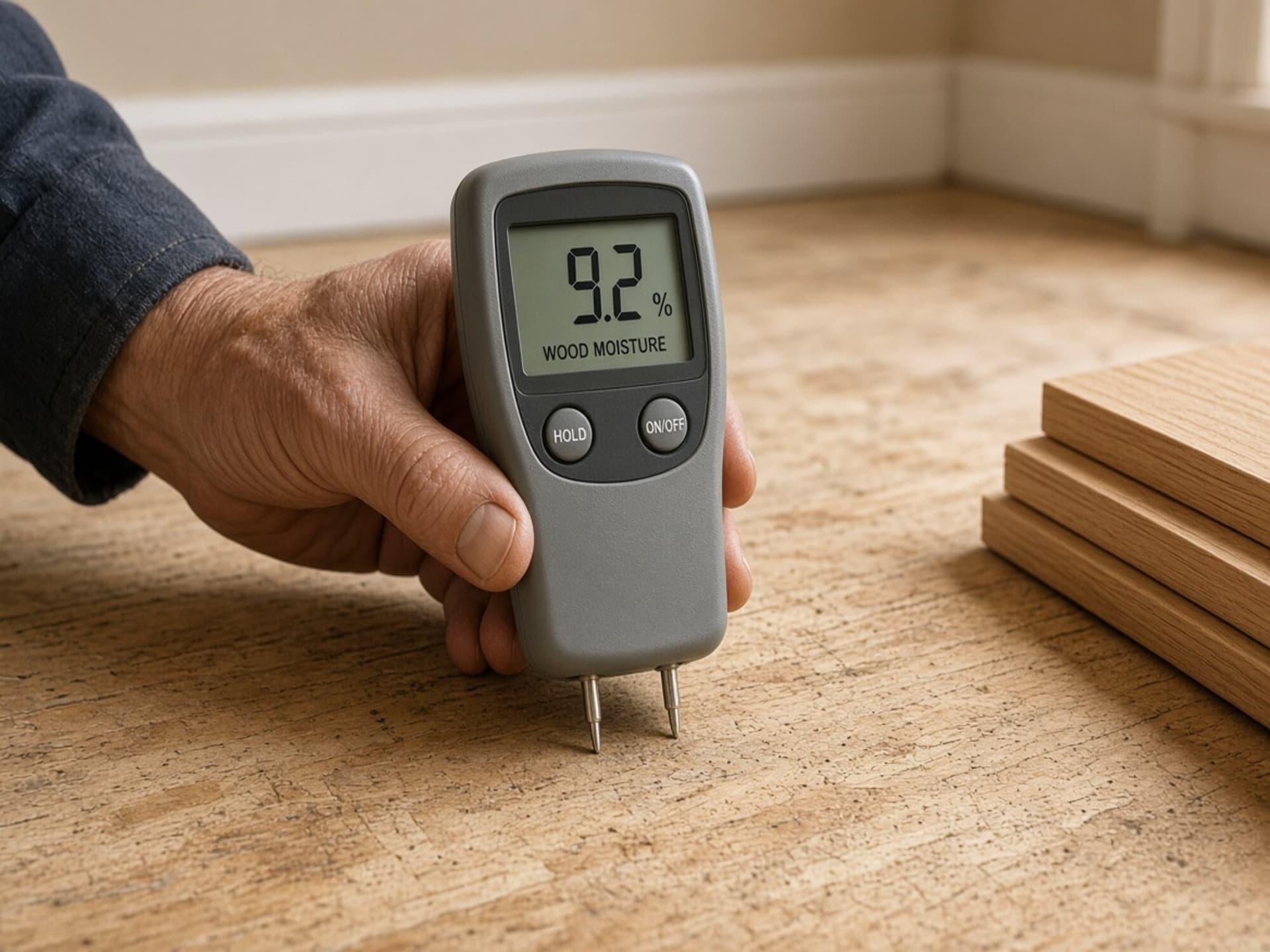
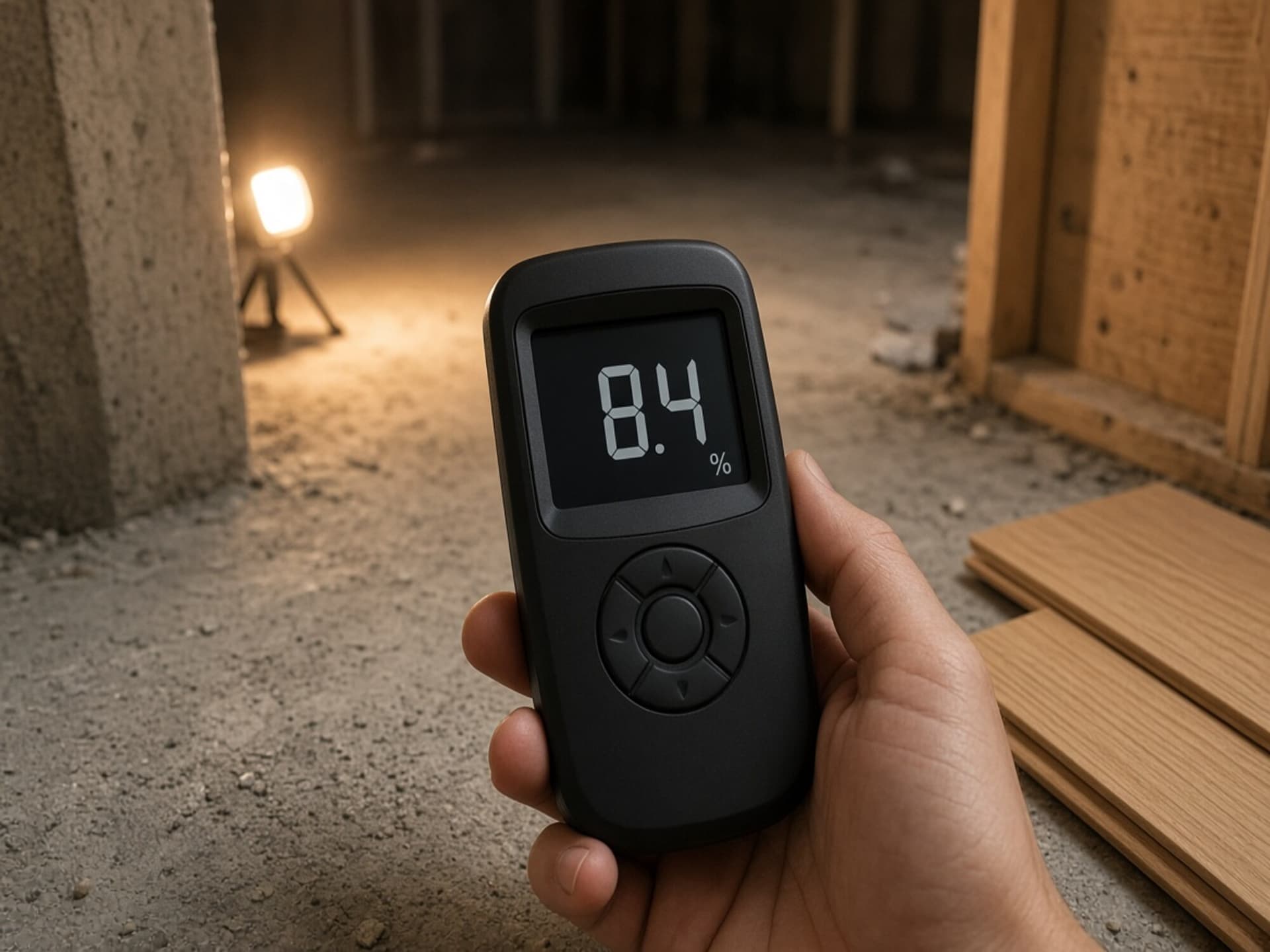
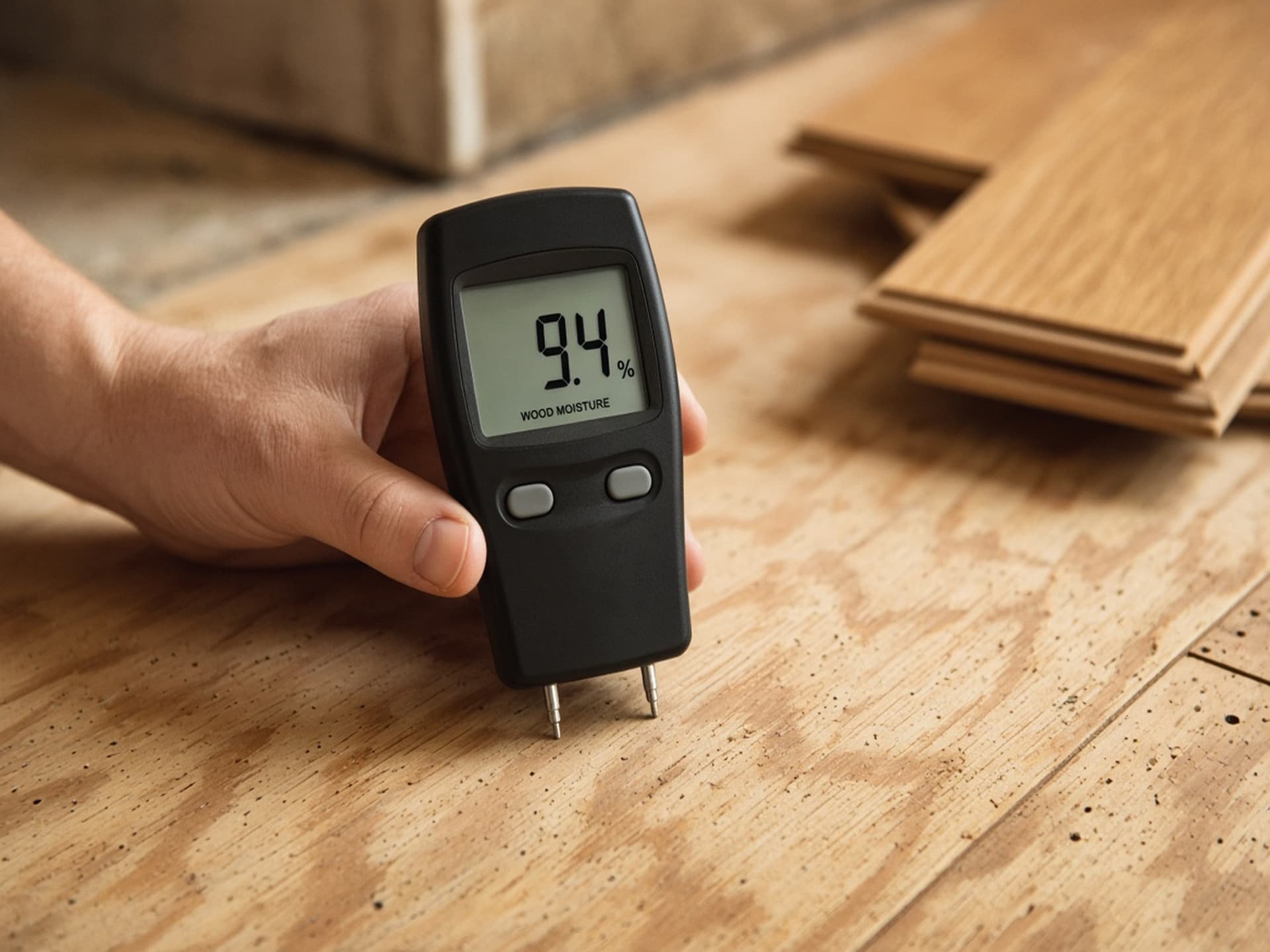
What it does
A pin meter drives two probes into the wood and measures electrical resistance between them; a pinless meter reads a field through the surface without marking it. Both give a moisture content percentage, and both are used — pinless to survey a floor quickly, pin to confirm a reading where it matters.
Concrete is a different problem and needs a different instrument. In-situ relative humidity probes are drilled into the slab and left to equilibrate, because what matters is the moisture that will eventually reach the surface, not what is at the top today. A slab that reads dry in August can read very differently in March.
A room hygrometer measures the air the floor will live in, which is the other half of the equation. The wood, the subfloor and the air are three readings and the job depends on all three.
Why it matters to your floor
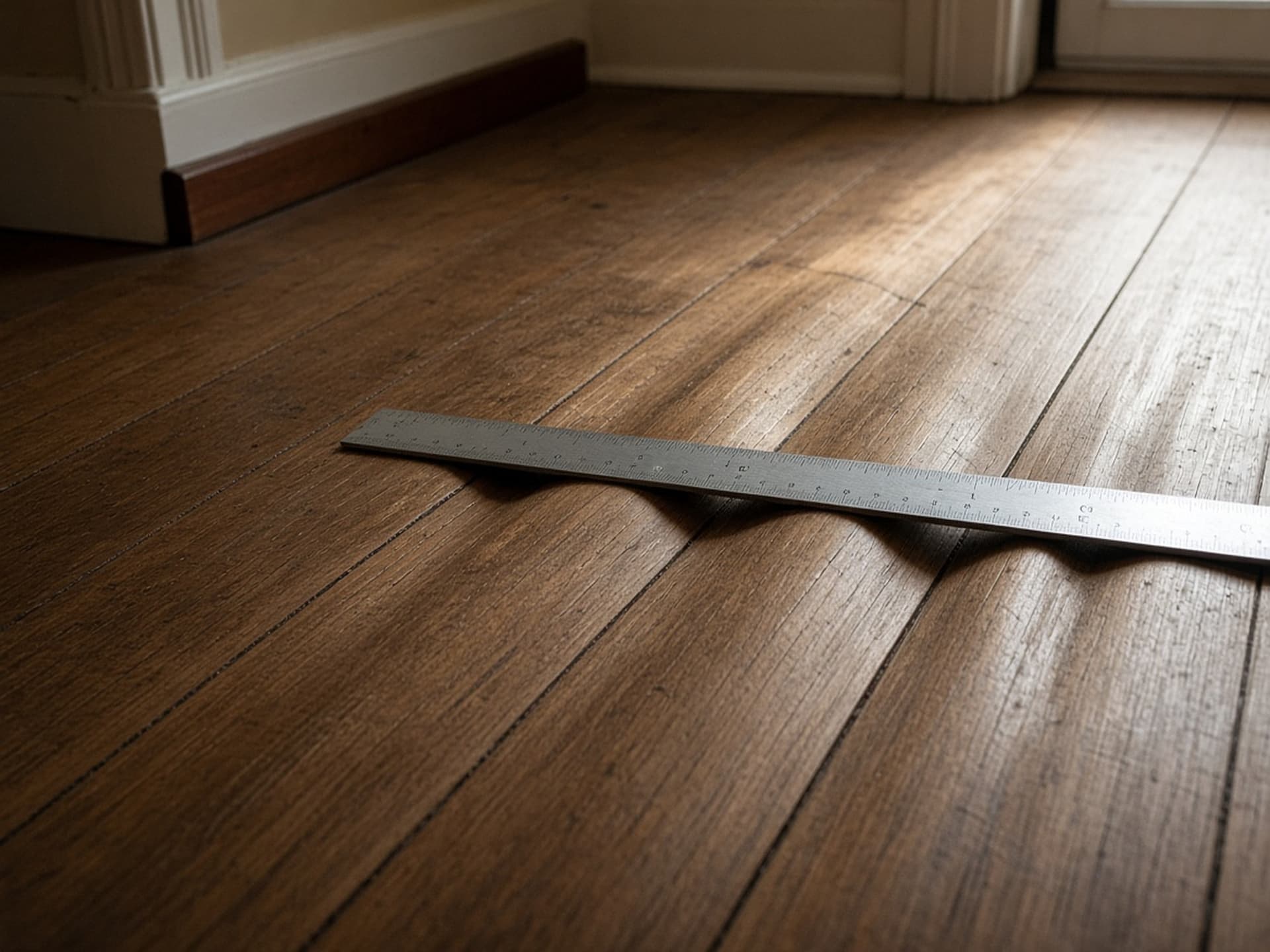
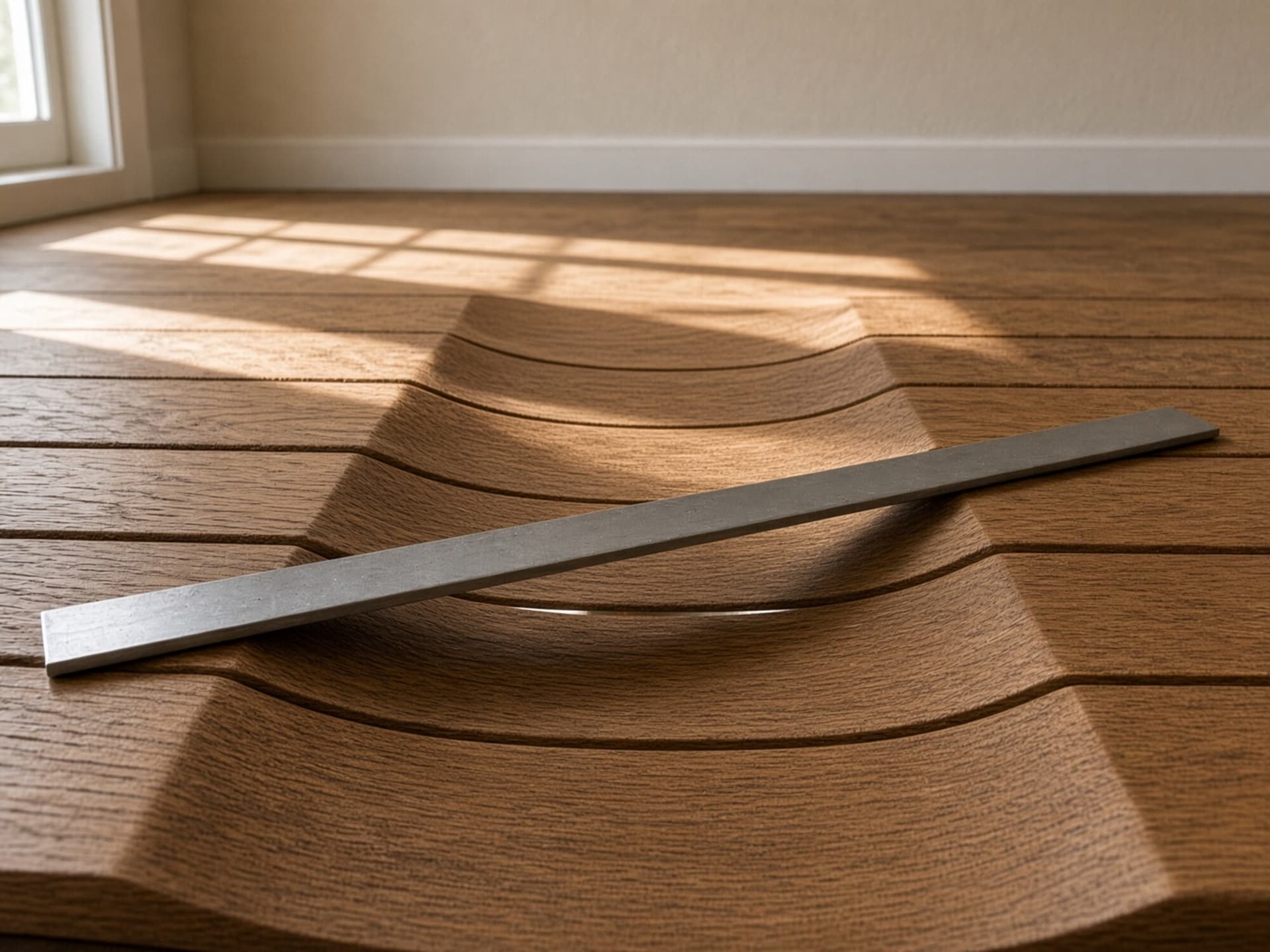
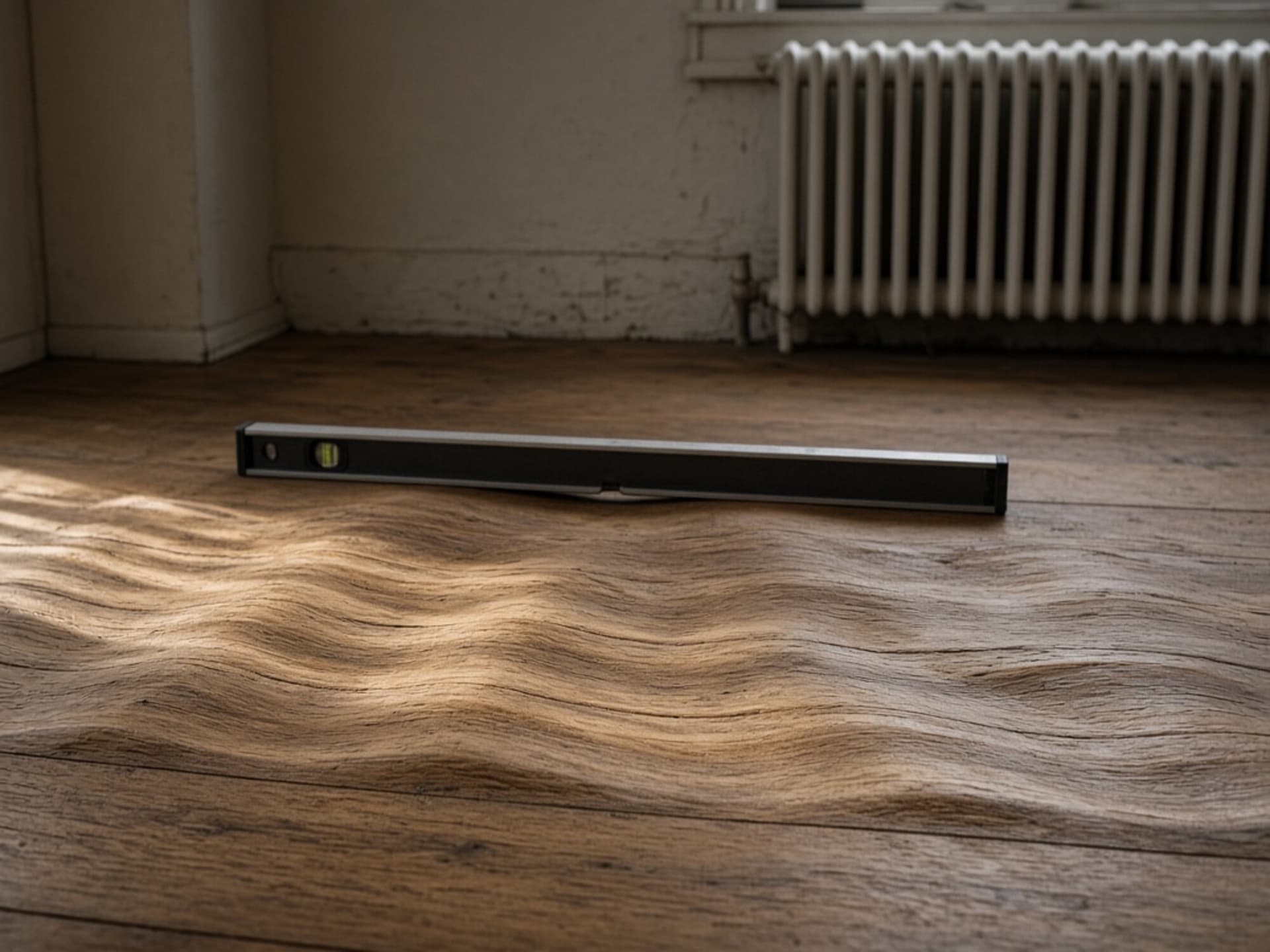
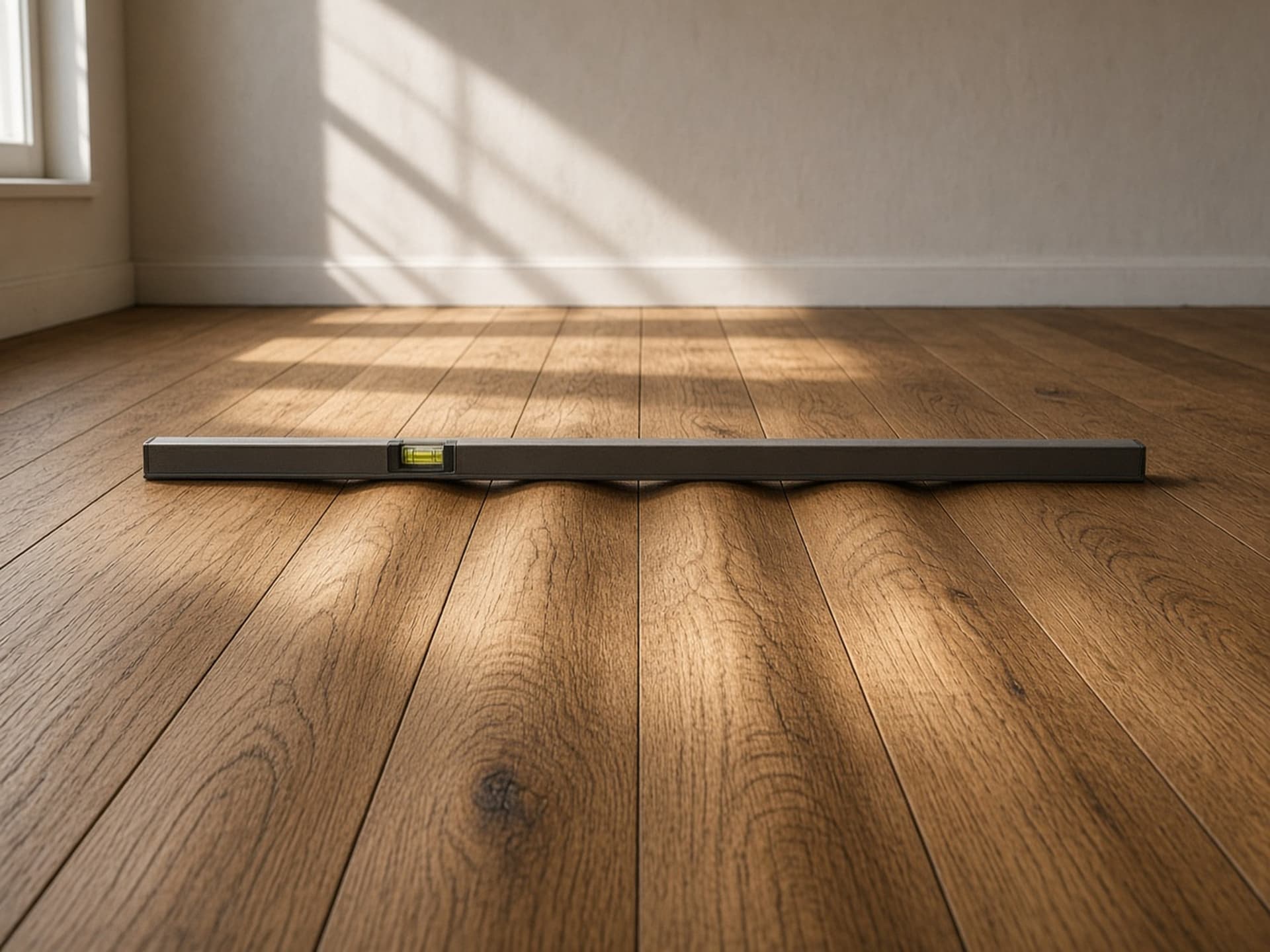
- Moisture is the cause of nearly every catastrophic hardwood failure — cupping, crowning, buckling, adhesive release, and the slow gapping that shows up in the second winter. None of it is visible at quote stage, and all of it is measurable.
- The specific number that matters is not the flooring alone but the difference between the flooring and the subfloor: more than about two percent for narrow strip, or one percent for wide plank, and one will move relative to the other after installation.
- This is why every price on this website is a band and not a quote. A firm number follows a moisture reading, and a company that gives you a firm price without one has either priced in the risk or is about to discover it at your expense.
What happens without it
Quoting from a photograph or a phone call and starting on the scheduled day.
A floor installed to a condition that was assumed rather than measured. The failure arrives in year one or two, and the argument about whose fault it is has no evidence on either side because nobody wrote a number down.
How to tell, before you sign
- Did anyone put an instrument on your floor during the site visit? If the visit was a walk-through and a tape measure, no moisture reading was taken.
- Ask for the readings in writing. A shop that measures is happy to write the numbers on the quote; it protects them as much as you.
- On a slab, ask which test. 'In-situ RH probes' is the current standard. A plastic sheet taped down overnight is not a test.
These questions are meant to be asked of everyone quoting you, not only of us. A trade that cannot answer them is telling you something useful.
The method it belongs to
Read further
Solid vs engineered hardwood in Ontario
Which hardwood assembly survives Ontario humidity, condos, radiant heat, and a 20-year refinishing plan.
Water-damaged hardwood in Toronto
What to do after a leak, dishwasher failure, or ice-maker line on a hardwood floor — moisture readings, board replacement, and when the floor is actually finished.