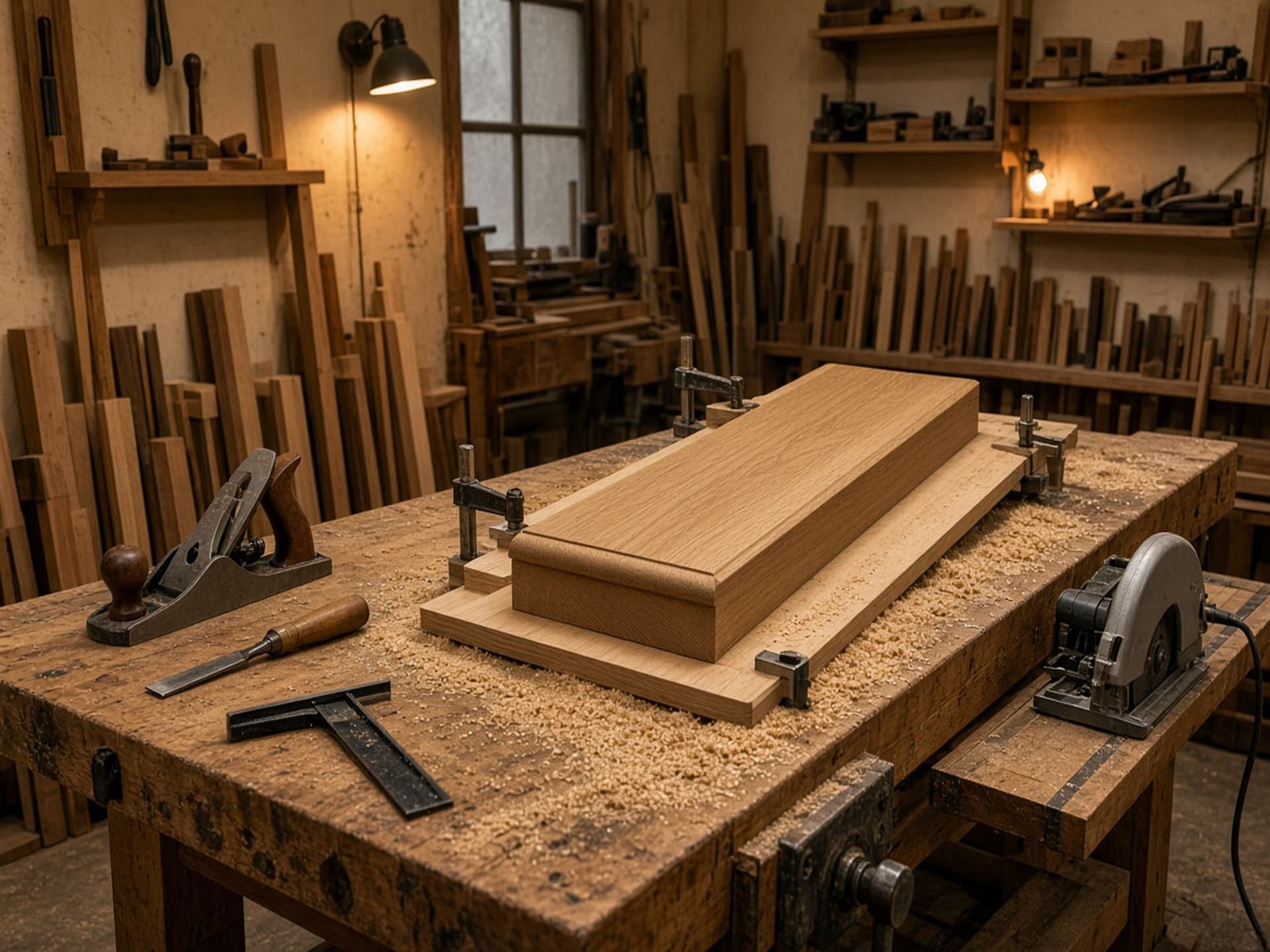
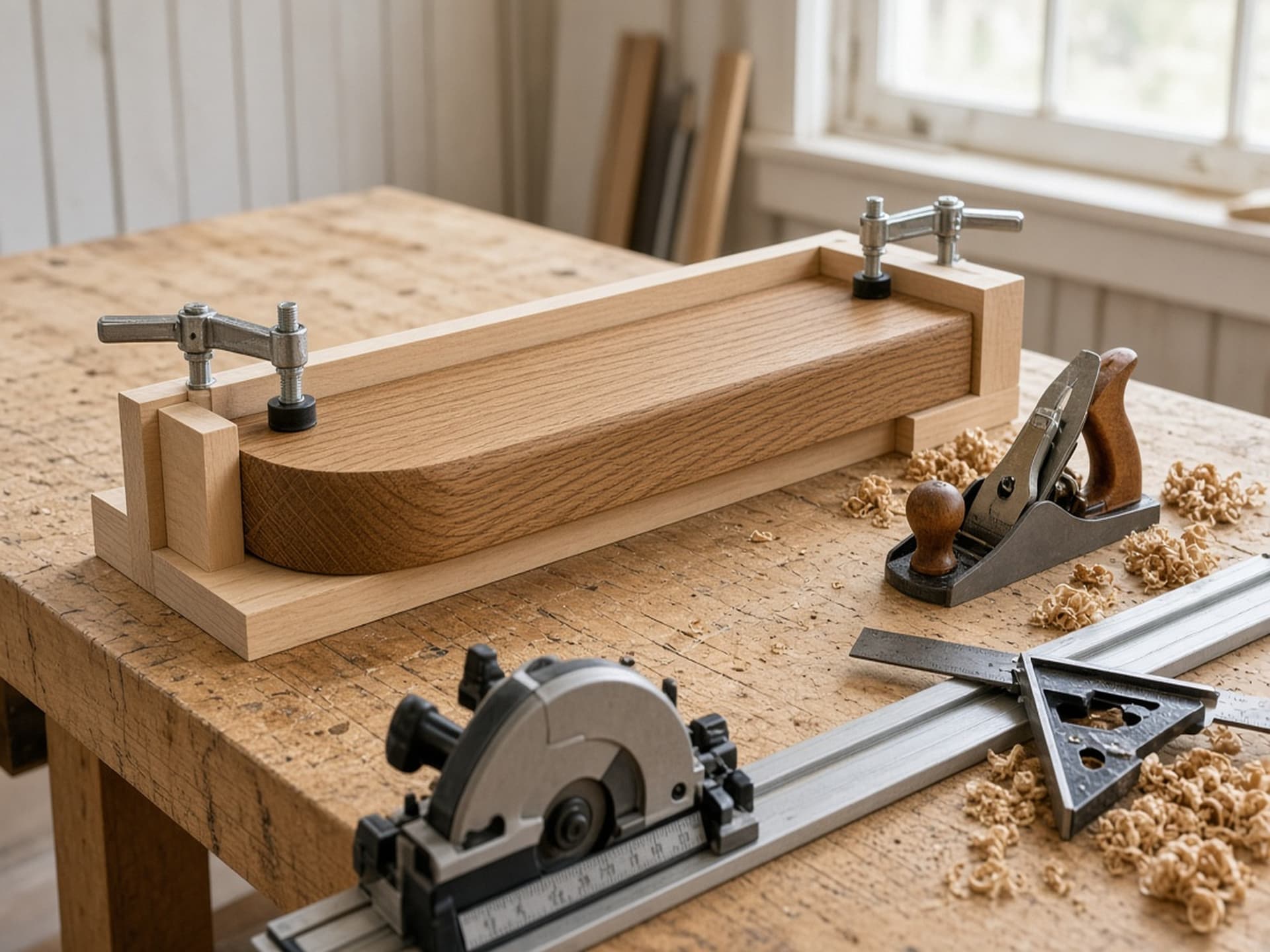
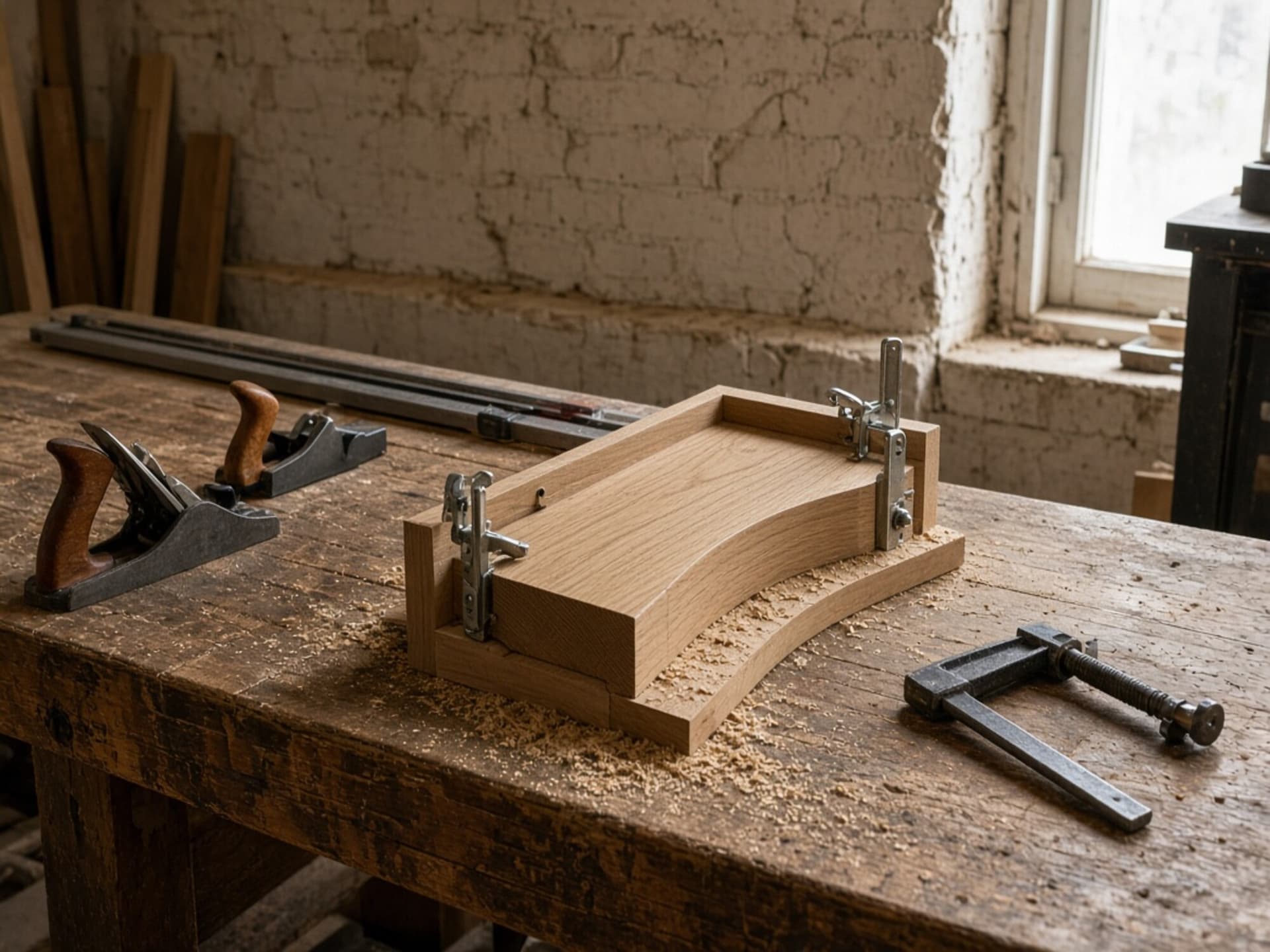
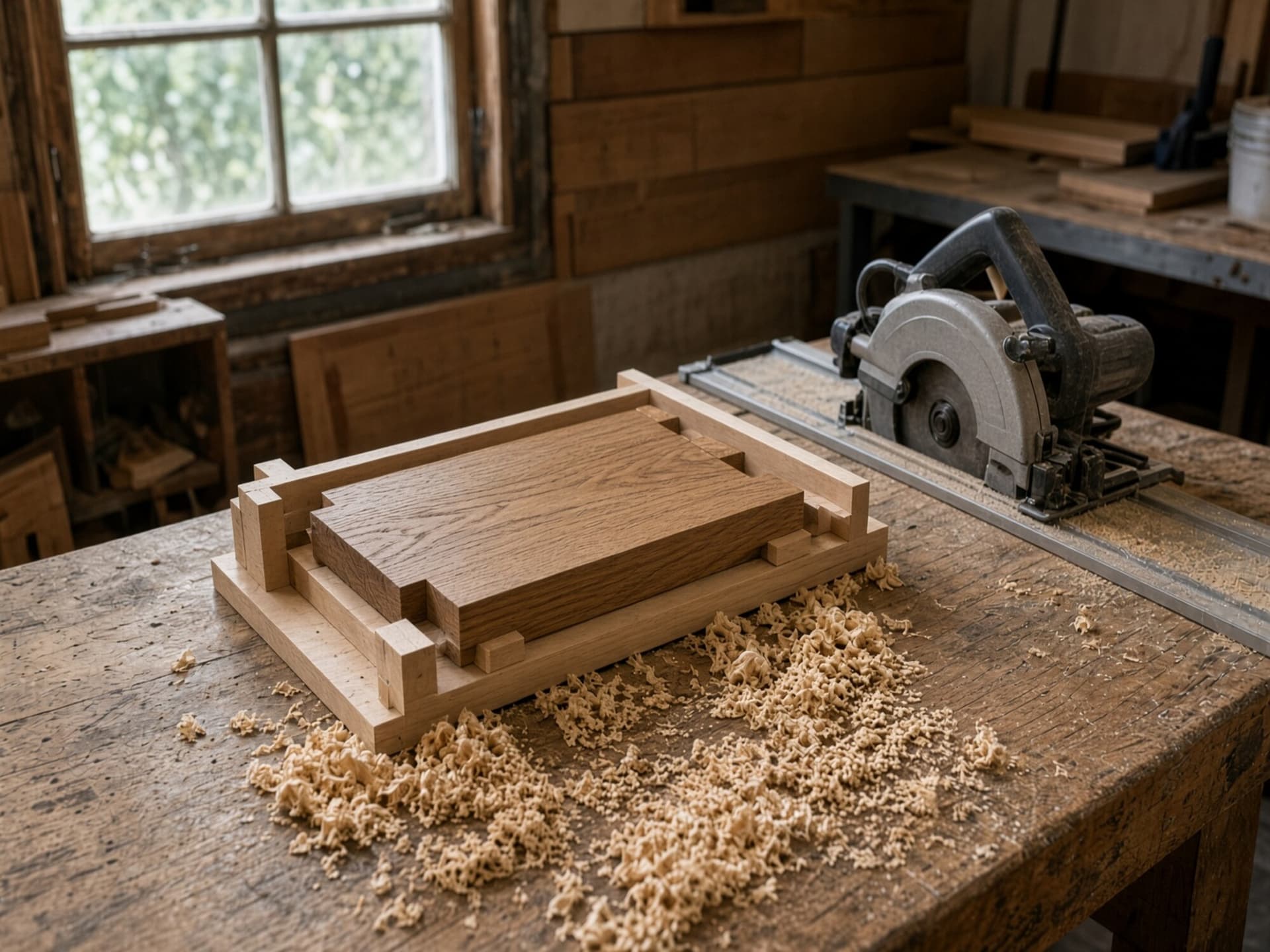
What it does
Every tread in an old flight is a different width and rarely square to anything. Each is templated, cut to that template, and dry-fitted before it is fixed. A flight of thirteen treads is thirteen separate pieces of joinery, not thirteen cuts from one measurement.
A returned tread end — where the tread wraps its own profile around the open side of a stair — is a mitred, glued assembly made at a bench. It is the single detail that separates a stair that reads as millwork from one that reads as a plank glued to drywall.
The nosing profile has to run consistently down the flight and continue onto the landing so the eye follows one line, which means the profile is cut, not bought in mismatched pieces.
Why it matters to your floor
- The stair sits at eye level in the middle of the sightline from the front door. A mismatch that nobody would notice between two rooms is obvious on one flight.
- It is also the code surface. Nosing projection, tread depth and the first and last riser all change when a flight is retreaded, and getting them right is bench accuracy rather than site improvisation.
- This is the specific reason this shop does not subcontract the stair: a flooring crew has flooring tools, and a stair needs a bench.
What happens without it
A leftover plank cut to length on site and glued down, with a strip of quarter round at the open side.
An over-projecting nosing that fails inspection, tread ends that show end grain to the room, and a stair that never quite matches the floor it lands on.
How to tell, before you sign
- Look at the open side of a stair they have built. Is the tread end returned and mitred, or is it a cut edge with trim over it?
- Ask whether the treads are templated individually. On any flight older than about twenty years the honest answer has to be yes.
- Ask who builds the stair — them, or a subcontractor. The answer decides whether the finish will match the floor.
These questions are meant to be asked of everyone quoting you, not only of us. A trade that cannot answer them is telling you something useful.
The method it belongs to
Read further
Hardwood stairs and Ontario Building Code
Rise, run, nosing, graspable handrails, and guards — the code details that get beautiful GTA stairs failed at inspection.
Carpet to hardwood stairs in the GTA
How to convert builder-grade carpeted stairs to solid oak or walnut treads in Vaughan, Markham, Milton, and the rest of the Greater Toronto Area.
Best hardwood species for Toronto homes
White oak, red oak, walnut, maple, and hickory — which one belongs in a High Park semi versus a Vaughan foyer versus a King West condo.