Deal with it now · This one does not wait.
Loose or wobbly stair railing
Also searched as: wobbly handrail, shaky banister, newel post moves
What it looks like
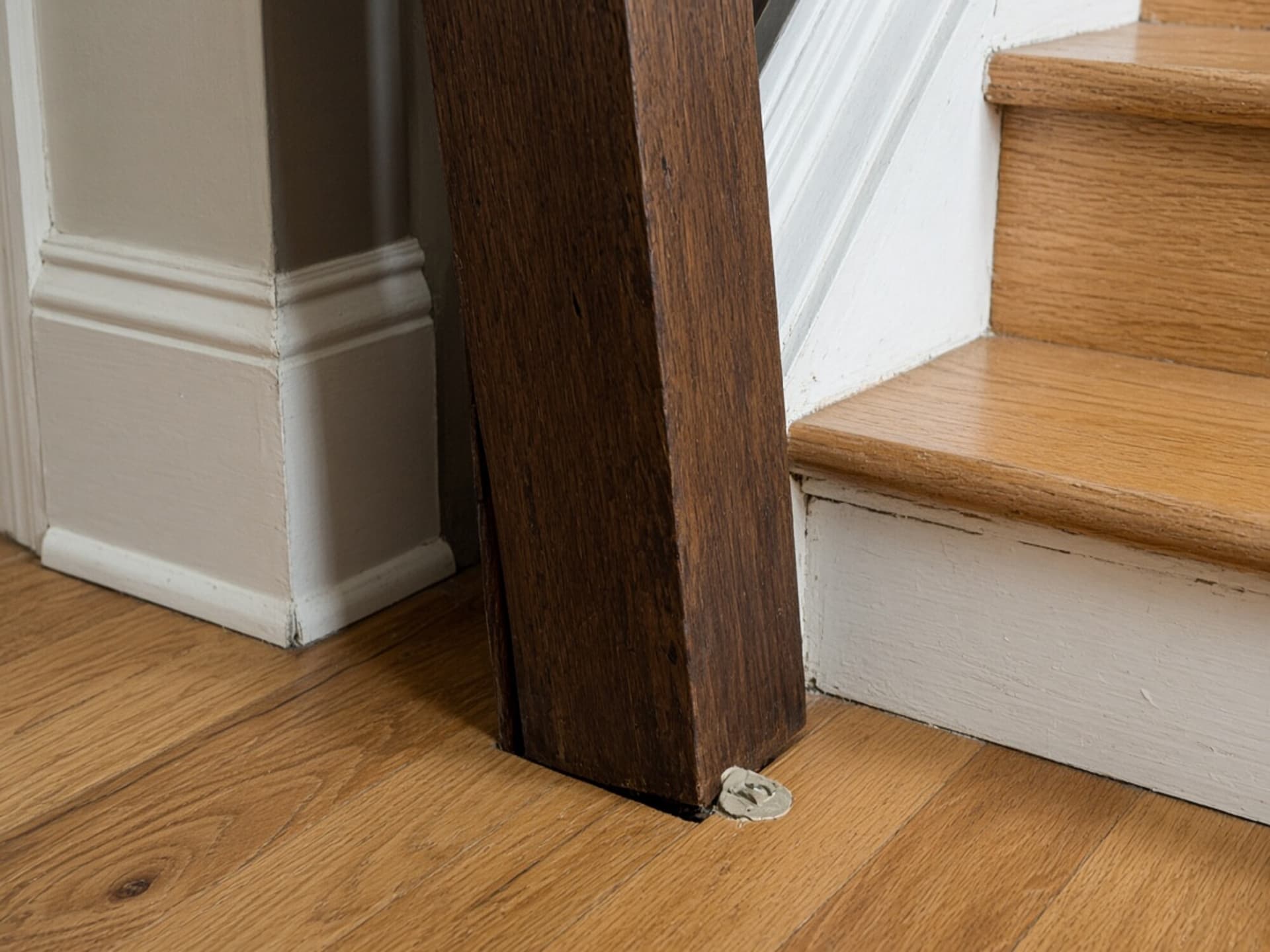
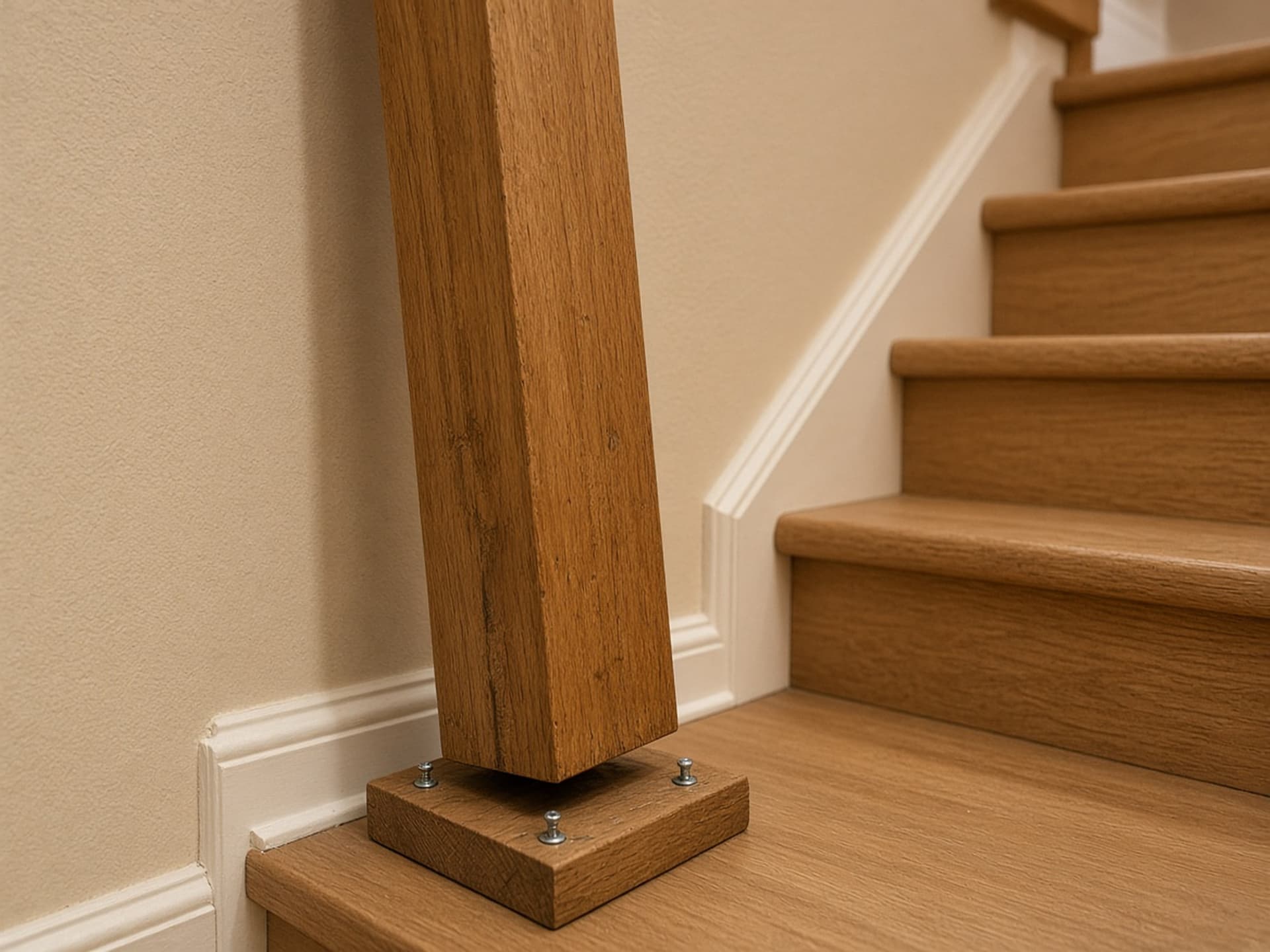
The handrail, a newel post, or the whole guard moves when you lean on it. Test it the way someone would use it in a fall — firm sideways pressure at the top, not a gentle push.
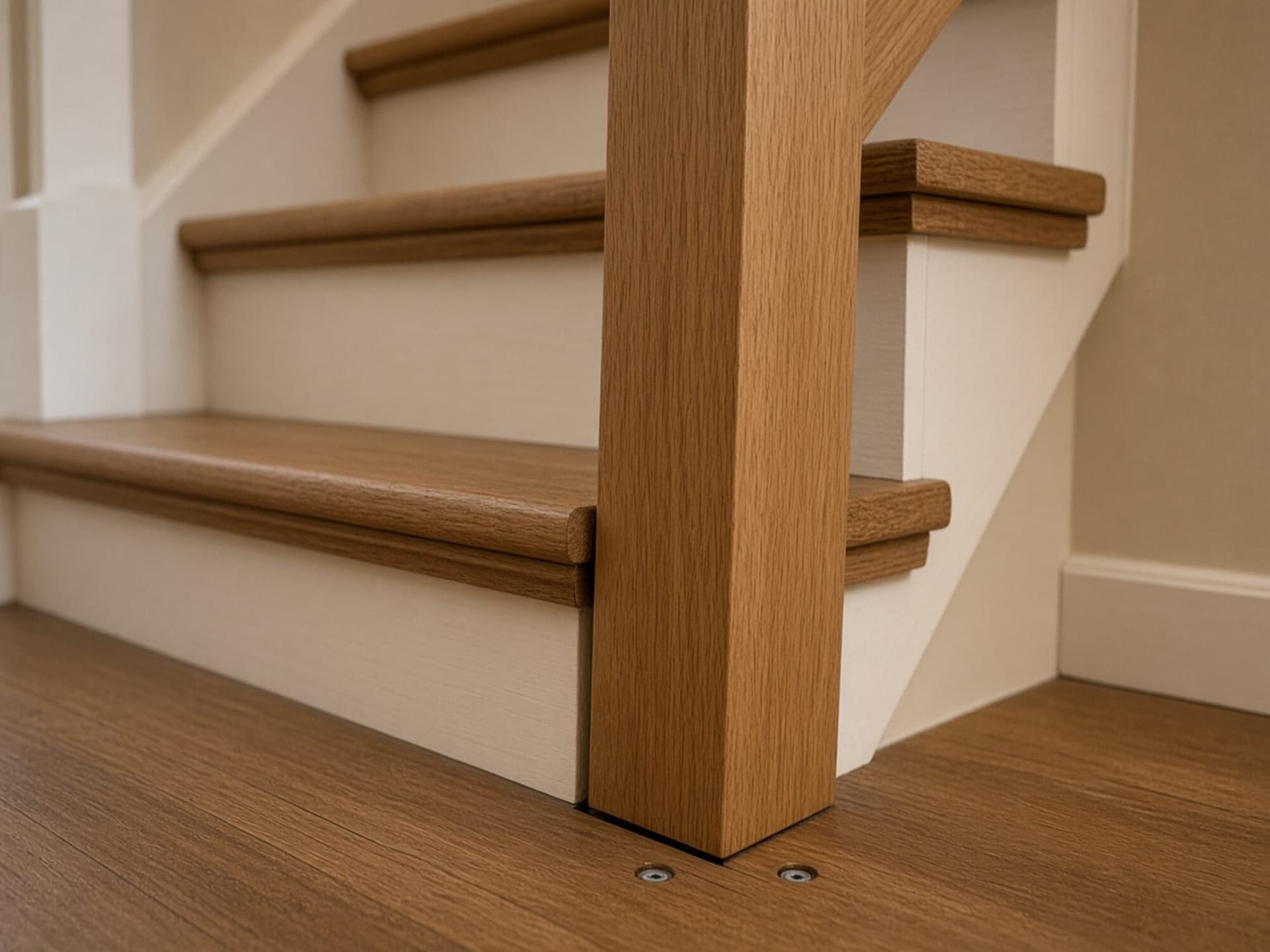
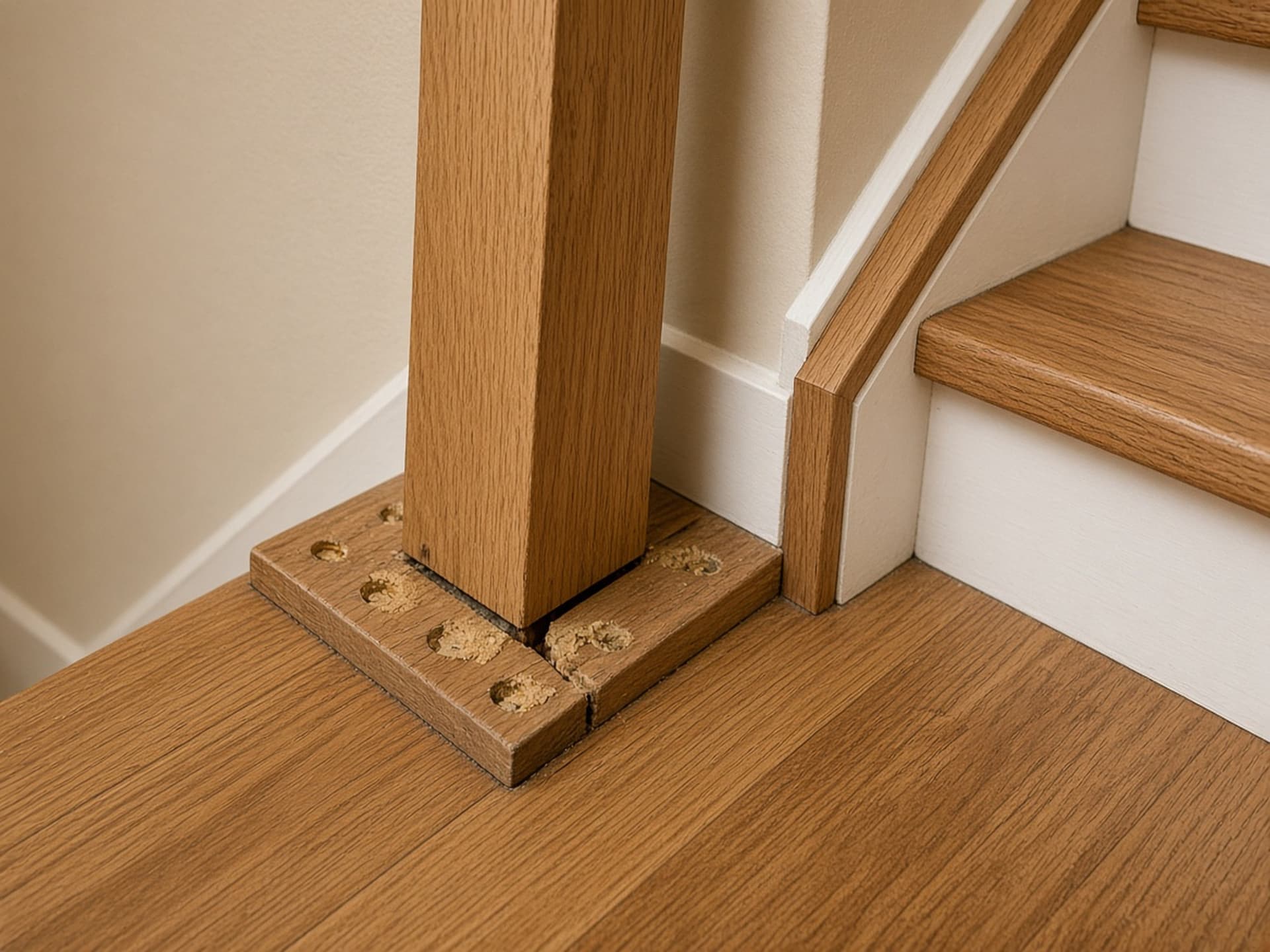
What prevents it: Railing anchorage: through-bolts and structural fixing
What causes it
In rough order of likelihood. Each one has a tell — the observation that separates it from the others.
The newel post was never fastened into structure
How to tell: The whole assembly rocks at its base. Extremely common where a rail was fitted to trim, to a tread nosing, or to a stringer with nothing behind it.
The rail-to-newel connection has worked loose
How to tell: The post is solid but the rail moves relative to it. Usually a rail bolt that has never been re-tightened.
Balusters bottomed into finish flooring rather than framing
How to tell: Individual balusters spin or rattle; the rail feels springy between posts.
Seasonal shrinkage on a joint that was tight but not mechanical
How to tell: It appears each winter and eases in summer, on an otherwise well-built stair.
What it actually means
This is the one item on this list that is genuinely a safety matter. A guard exists to stop a fall, and a rail that moves under sideways load is not doing that. It also means the original installer did not reach structure — which is worth knowing before someone leans on it hard.
Can it be fixed?
Usually repairableAlmost always fixable, but properly means through-bolting the newel into framing, not tightening what is there and hoping. Where the post was set on finish flooring with nothing beneath, the fix reaches below the floor.
What you can do yourself
- Test it honestly, and keep children off the stair until it is sorted if it moves.
- Look for a small wooden plug in the underside or side of the rail — that is a rail bolt, and it may only need tightening.
- Do not add brackets or angle iron to the visible face. It rarely holds and it makes the proper repair harder and more expensive.
When to call someone
Straight away if a guard moves under normal sideways load. This is the failure mode with a real consequence.
The work involved
Hardwood Railings
Custom oak, maple, and walnut handrails, box and turned newels, metal or wood balusters, volutes, goosenecks, and wall-mounted rails that actually meet code.
From $180–$420 / linear foot
Read further
Often confused with
Written from 15+ years of GTA callouts, not from a manufacturer's brochure. Every diagnosis here still ends with someone looking at the actual floor — a photograph and a moisture reading beat any web page, including this one.